Craig Paquette: A Look Back

On July 31, 1999, the St. Louis Cardinals traded Shawon Dunston to the New York Mets for Craig Paquette, a 30 year old corner infielder who had spent the entire season in the Mets’ AAA Norfolk affiliate.  When it happened, everyone assumed the trade was done as a favor to Dunston.  The Cardinals were a .500 team, 11 games back in the division, with a depleted pitching staff that didn’t have much hope of making the playoffs in the single Wild Card era.  The Mets were competing for their division and were 20 games over .500 at the end of July.  Dunston was a veteran and a favorite of the Cardinals’ front office who had spent the majority of his career on the Cubs and played in exactly one playoff series at the age of 36.  He even returned to the Cardinals as a free agent at the end of the season.

Craig Paquette was just supposed to be the piece going the other way–a place-holder in what was essentially a giveaway.  Paquette had spent his career shuttling between the minors and the majors, never making much of an impression.  He had one season, 1996, in which he came close to full time play.  Even then, he was mostly used as a utility player, splitting time between 1b, 3b, and RF.  Throughout the rest of his career, he’d been a part time player at best and now it seemed as if the Major Leagues had given up on him.  In 1998, he appeared in only seven games in the majors, then spent the entirety of 1999 until the trade in Norfolk.  On July 31, he had an OBP of .298 in AAA at the age of 30.  Who the hell would want Craig Paquette?

As it turns out, Tony La Russa wanted Craig Paquette.  La Russa had managed Paquette back in Oakland, where Paquette spent his first few seasons.  During their time together, Paquette put up a .217/.243/.382 line over 763 plate appearances and three seasons.  And apparently La Russa hadn’t seen enough of him. Paquette was in the lineup at RF on August 3, 1999 and promptly hit a double and a HR in his first Major League game of the season.

Over the next three seasons, Paquette would be something of an enigma for the Cardinals.  He had some of the most atrocious on-base skills of any position player I’ve seen and his glove was bad everywhere but first base.  Nevertheless, he got consistent playing time through 2001, when at the age of 32 he finally put up what felt like a decent season, hitting .282/.326/.465.  That still wasn’t great for his defensive profile, but it was good enough to earn him a deal worth almost five million dollars from the Detroit Tigers, after which he reverted back to a pumpkin and fell so far below replacement value that every replacement value player suffered from vertigo.

I will admit that I hated Craig Paquette.  At the time, I was vehemently opposed to all of Tony La Russa’s moves. Despite the fact that Tony helped bring in Mark McGwire, one of my favorite players of all time, La Russa’s managing style irritated the hell out of a fifteen year old kid who had just discovered Bill James and spent his days posting on rec.sports.baseball.  La Russa’s love of veterans, closers, and short-sighted match-ups infuriated me.  It would be years before I figured out that La Russa was actually better than most managers about the things I hated.  My distaste for La Russa seeped over onto Paquette, who was clearly one of La Russa’s “guys.”  Paquette stayed on the team and kept getting at bats despite his terrible OBP (which I thought was the most important thing in the world) and his less-than-impressive glove.

Now I realize how spoiled I was.

Craig Paquette wasn’t really that bad a of a player for the Cardinals.  Over his three seasons with the team, he hit .267/.309/.461, which is nothing to write home about.  But that .770 OPS would be second on the 2014 Cards, behind only Matt Adams.

There is an obvious caveat, of course, which is that comparing numbers from this season to those from 1999-2001 is like comparing apples to juiced oranges. Baseball-Reference tries to normalize for era and translates that .770 OPS to a 93 OPS+, which suddenly doesn’t seem so hot. But it’s still far better than any of the bench players the Cardinals have relied upon over the last couple years. Right now, I’d be thrilled with a slugging-heavy 93 OPS+ off the bench, and a .770 OPS would be starting and batting fifth.

Paquette isn’t the only name I suddenly find myself re-evaluating. The La Russa era Cardinals were rarely lacking in decent, if not inspiring, players off the bench. Lugo.  Felipe Lopez. Miles. Luna. Brian Barton. Spiezio. Mabry. Hell, the aforementioned Dunston fits too. I’m sure I whined and complained when I saw these names in the starting lineup, but they are all a hell of a lot better than the bench guys we’ve run out over the last two seasons. What I wouldn’t give to swap out Shane Robinson for So Taguchi, or Daniel Descalso for Nick Punto.

Sure, there were plenty of mistakes.  Joe Thurston hit better than anyone on our bench now (which is a damning statement considering his OPS was .645) but he got so lost on the basepaths that he was once found roaming East St. Louis, dehydrated and malnourished, five days after he hit a ground rule double. Wilson Delgado can only be evaluated once I have the results of a DNA test that will prove my theory about him and Daniel Descalso.  And remember the time the Cardinals traded a real, useful player for Pedro Feliz?

Still, something has changed. Either other teams have gotten better at picking out the wheat from the DFA and AAA chaff, or the Cardinals have gotten worse. The bench was a huge weak spot last season, and really the only black mark against Mozeliak’s recent record (Matheny hiring notwithstanding).

Until we’ve got a bench that can offer a little pop, I will just have to look back fondly on Craig Paquette.  Damn, that’s depressing.



Pete Kozma Is Here and He Makes the Team Better. Yes, Really.

I’m not going to say that I’m Pete Kozma’s biggest hater, because it might not be true. As far as I know, Kozma may have crippled a classmate with a baseball bat in a high school fight and gotten away with it because he was on the baseball team. That guy, if he exists, probably dislikes Pete Kozma more than me, though I doubt he exists because Pete Kozma couldn’t do that kind of damage with a baseball bat.

Even if I’m not Kozma’s biggest hater, I have made an extensive record of my criticism. And that is going to make what I’m about to write all the more shocking: bringing up Kozma was the right move and will actually improve the team.

Now, I certainly don’t like the circumstances of Kozma’s return. He shouldn’t be on the roster because two starting pitchers got hurt, but he should be on the roster. And not because he’s good. I’m never going to say that Kozma is good.

In 2013, Kozma hit .217/.275/.273, which is actually a bit worse than I expected because I thought he’d stumble into a few more HR and at least pull his SLG above his OBP. It was an atrocious year with the bat that silenced all his boosters and left him stranded in AAA. However, Kozma showed remarkable growth with the glove, especially for a player who had lost his position on the defensive spectrum just one year earlier to Ryan Jackson. I don’t think he was as good as, say, fangraphs which put him as 4th in UZR/150, but he had more range than he showed early in his minor league career and he wasn’t nearly as boneheaded as Tyler Greene.

Nothing in Kozma’s 2014 at AAA shows that he’s learned how to hit. A .234/.341/.372 slash line might indicate some improvement with his batting eye but comes with a hell of a small sample size warning. So what has changed? Why am I happy to see Kozma in the majors when I couldn’t wait for him to be gone last year? Well, it’s all about the other options.

Before Kolten Wong, who himself was struggling through a sore shoulder, went on the DL, the Cardinals had two infield bats on the bench. Mark Ellis is hitting .193/.280/.220 and Daniel Descalso is hitting a putrid .176/.233/.221. These are numbers that would even make 2013 Kozma shake his head.

Now one of those two is the starter at 2b. Maybe they’re in a platoon. It doesn’t really matter, because the result is the same. They are barely outslugging the Cards pitchers (.210) in over 200 PAs. Ellis could shake off the relentless encroachment of old age and return to form. But Descalso has never been good. Never this bad, but never good.  Most importantly, Descalso can’t play shortstop. Mike Matheny thinks he can, but he’s wrong and the experiments have to end.

Right now, Pete Kozma is a more useful player than Daniel Descalso. He might even be more useful than Mark Ellis. He’s probably also better to have around than Shane Robinson as well, since they have the same noodle bat but Kozma can give Peralta some rest. When Wong comes back, or when the pitching staff gets so thoroughly strafed in Colorado that we need a thirteenth arm, Descalso should be the one on his way out, not Kozma.

Until Ellis shows he’s not dead or Greg Garcia proves himself or Mo makes a trade, Pete Kozma is probably the best bench infielder the Cardinals have. Which makes me want to curl up in the fetal position and dream of Nick Punto.


Call Me Mabry

John Mabry stepped into the batters box in the top of the seventh inning with one out and a runner on first base.  He already had three hits on the night–a single, double, and a triple in that order.  Hitting for the cycle is never easy, but Mabry couldn’t have asked for a better scenario in which to knock the ball out of the park and finish the feat in style.  The year was 1996 and the “juiced ball” era was beginning its peak with a league average ERA of 4.60 and luminaries such as Jay Buhner, Todd Hundley, and Brady Anderson socking over 40 HR.  It was a balmy night in pre-humidor Coors Field, where the Rockies would give up a stunning 122 HR on the season (and hit 149 of their own).  The pitcher was Mike Munoz, whose career is a testament to both the time period in which he played and the ballparks in which he was moored (Coors and Arlington.  From 1989 to 2000 Munoz managed to pitch in 453 games despite a career ERA of 5.19.  Munoz was a lefthander, sure, but Mabry never had much of a platoon disadvantage.  In fact, in 1996 he crushed lefties to the tune of a .351/.382/.536 line.

After falling behind behind 2-0, Munoz grooved a pitch to Mabry and Mabry connected, crushing the pitch over the wall in right field. Just like that, John Mabry made baseball history.  He didn’t just hit for the cycle; he hit for the natural cycle. Single. Double. Triple. Home run. In that order.  Only fourteen players have ever hit for a natural cycle, making it a rarer feat than a perfect game or an unassisted triple play.

The Cardinals still lost the game.

There’s no more precarious position than the hitting coach of an underperforming team.  It’s not entirely fair, but the hitting coach has become something of a designated scapegoat for fans, media, and even teams themselves to heap all the blame of a faltering season. The reasons for this are clear enough.  There are three prominent coaching positions on any baseball team: manager, hitting coach, and pitching coach.  Teams are reluctant to fire their managers mid-season, and pitching is seen (perhaps incorrectly) as requiring patience.  Batting, however, is violent and quick.  Each at bat lasts only a couple minutes (unless Clay Buchholz is pitching) and ends with a definitive result.  Batters don’t often get injured while batting, and are known to have more control over the result of batted balls than pitchers. For these reasons, it’s easy to think that a change in batting coaches might fix a team whereas swapping pitching coaches might just disrupt the rhythm of a staff.

The 2014 St. Louis Cardinals present a particularly formidable challenge for a hitting coach.  In 2013, the Cardinals led the National League in runs scored on the strength of one of the most bizarre seasons in baseball history.

The 2013 Cardinals numbers with runners in scoring position weren’t just historic; they blew away the previous records and resulted in a split (versus bases empty situations) so huge that it will likely never be approached. I don’t particularly like the idea of taking an entire year of stats and declaring them meaningless, but projecting anything from the performance of the offense in 2013 is useless. You might as well be positing halfway through the 1941 season that Joe Dimaggio would never go hitless again.

Unfortunately, that’s what everyone has done. The Cardinals came into 2014 as favorites to retake the pennant, largely on the strength of the pitching but without much concern over a lineup that was losing one of its best hitters (Beltran), gaining one of the streakiest batters in the game (Peralta), and wasn’t nearly as good as it performed in the first place.

John Mabry had a rather unusual career as a player.  1996 was the only season he received more than five hundred plate appearances, and he put up a line of .297/.342/.431, which is respectable for just about anyone other than a firstbaseman in 1996. He had a couple more years clustered around ’96 in which he received 400 or so PAs. But other than that, he spent his fourteen season career as a bench and platoon guy.  That, by itself, isn’t strange except that Mabry was a corner OF/1b who played in one of the biggest offensive environments in baseball history and he was a rather unremarkable hitter. A career .263/.322/.405 line isn’t terrible, but it certainly doesn’t light the world on fire, either. Guys like him don’t usually stick around, since corner OF who can slug a little are some of the most fungible players in baseball. Most GMs probably think they have a RF who can manage a 90 OPS+ somewhere in their minors right now.

There are a few reasons Mabry was different. First, there was the impression he could play third base. He couldn’t, but still managed to be sent out there for 800 or so innings, in which he had .905 fielding percentage on the balls he could actually reach.  This perceived utility gave him a leg up on the Thomas Howards of the world. Second, Mabry had a hell of a sweet swing. Effortless yet strong, Mabry looked like he knew what he was doing, even when he struck out. He was Will Clark or Mark Grace without the results, but that’s often enough to get you onto a major league bench over a dozen similar guys. Third, Mabry was a classic clubhouse guy. Whenever he was in the lineup, you could guarantee that the announcers would talk about his intangibles, his willingness to play any position (he even pitched on two occasions), and his place as a role model for younger players. His future in coaching was a topic of speculation as early as 2004 during his last stint with St. Louis, three years before he would retire.

John Mabry is now the hitting coach for the St. Louis Cardinals and the St. Louis Cardinals aren’t hitting. The Cards are scoring 3.74 runs a game, good for third worst in the NL and fifth worst in baseball. They have scored fewer runs in more games than the Royals and the Phillies. The team’s OPS is .680. They look listless and lifeless at the plate, though struggling will do that for any lienup. And so, of course, people are calling for Mabry’s head.

In general, I’m reluctant to shift the blame from underperforming players to the coaching staff. Matheny and company deserve the heat for bad lineups, strange bullpen usage, and double switches that do nothing but cripple the heart of the order. But there are usually far more believable culprits-luck, age, regression-when it comes to poor performance. What could Mabry possibly be doing to turn Allen Craig into a pumpkin or to sabotage every prospect called up from Memphis? The idea is rather absurd, and it’s never seemed quite right to lump all the responsibility on the hitting coach.

So I won’t say that firing John Mabry is the answer to the Cardinals woes. But there might be enough to start asking the question. One stat I’ve left out above is the Cardinals’ home run totals. So far, through 66 games, the Cardinals have only hit 36 home runs. Barry Bonds started 2001 with a 66 game stretch in which he personally hit 38 home runs. Different era and Bonds was a freak. But god damn. The Cardinals slugging percent is at .360 as a team, third worse in the majors behind some pretty awful Mets and Padres squads, both of which have hit more balls out of the park.

What’s more, this squad shouldn’t be so anemic. You’ll never confuse Craig or Holliday with Mark McGwire, but they aren’t slap hitters, either. Matt Adams has been hurt, but he’s still had over 200 PAs to knock some pitches over the wall. So what’s going on? Just for a thought experiment, let’s look at some HR rates

In 2011, his breakout year, Allen Craig smacked 11 HR in 200 ABs, for a rate of one per every 18 at bats. In 2012 this number dipped slightly, to one HR for every 21 ABs. Not a big change, and arguably can be written off to the changing run environment. Then, in 2013 Craig’s HR power disappeared. He hit one HR every 39 ABs, but was still quite productive, in large part due to an almost unbelievable .474 BAbip with runners in scoring position. This season, Craig has hit one HR for every 42 ABs, his BAbip cratered, and he’s just now working back from a terrible slump that consumed the first part of the season.

Of course, Craig was injured and those injuries are clearly the most likely reason his power was sapped. So let’s look at Matt Holliday. In 2012/2013 he hit a HR for every 23 ABs. This season, it’s once every 59. Matt Adams 2012/2013 hit a HR every 20 ABs. For what it’s worth, throughout the minors he hit one every 18 ABs. In 2014, he has three HR in 194 at bats, a rate of one per 65 ABs.

I want to briefly stick with Adams for a moment, because he had a great few moments early in the season, in which opposing teams put a hard shift into play expecting him to pull the ball and he blooped it the other way instead. It was funny the first time, and still the second, but as it continued to happen you couldn’t help but wonder if he was letting the shift beat him after all. Adams had been a power threat and suddenly he was 2013 Allen Craig, relying on BAbip and misplayed balls turning singles into doubles.

Aside from Craig, Holliday, and Adams there aren’t any other good examples because no one else ever really hit for much power. Carpenter is hitting ever fewer balls out of the park than expected, but his totals last year were modest anyway. And then there is Jhonny Peralta, who leads the team with 10 HR, but if we’re theorizing that this is something that can be laid at the feet of the coaching staff, Peralta hasn’t been with these guys long. Also if I’m letting myself go down this rabbit hole, it’s worth pointing out that four of those HR were in the first couple weeks of the season.

So what am I suggesting here? That John Mabry is coaching the team to not hit home runs? No, because that’s silly. I don’t particularly like it when coaches and managers talk about how they don’t need the long ball to win (because it’s not true) but I don’t think anyone would coach HR power out of a player. But I do wonder if adjustments meant to improve, such as working with Adams on going to the opposite field, are leading to unintended results. Last season the Cardinals had such an inordinate amount of success “hitting it where they ain’t” with runners on that it looked more like a viable strategy than it really is. I think we’ve come to the point where I hope that John Mozeliak and the front office are at least asking for these questions. Find out what’s been going on at BP and in video sessions, and just make sure that Mabry and Matheny aren’t taking the wrong lesson from 2013 (and the only right lesson from 2013 is that baseball can be real god damn weird).

John Mabry’s final season as a player was a month-and-a-half-long stint in 2007 with the Colorado Rockies, the victim of his natural cycle all the way back when Bill Clinton was finishing his first term. His swing was as graceful as ever, though slowed by age, and it was clear it was time for him to move on.  He played the majority of his 30 inning at third base, even though at age 36 he really couldn’t play the position. He had four hits, including a HR, in 39 PAs and then he was released. He became a spokesman for a chain of stores selling hunting supplies, then a color commentator, and then a coach.

He finished 2007 with a .466 OPS, which is better than Daniel Descalso’s 2014.


The Hollow Manager

When Mike Matheny was hired to manage the St. Louis Cardinals, he had never managed a game above the little league level. Or at least that’s how the story goes. I can’t find any verification that he ever managed a game at the little league level, either.  Most of the articles from around the time of his hiring describe him as an “assistant little league coach”, which seems to put him a level below the guy who decides whether the team gets to go out for ice cream after the game.  But it doesn’t matter.  Even if Matheny was making the lineup and pitching changes for the 12-and-under TPX Warriors, he came into MLB with no meaningful professional experience.

At the time, I didn’t think it was such a bad thing. I still don’t, at least in theory.  When Mike Matheny was just rumored to be a candidate, I wrote this blog post discussing his surprising appearance among a list of expected names. I defended his potential hiring, because he’s always been a good clubhouse guy and I thought it was ridiculous to pay a ton of money for a good “tactical” manager because unlike on most sports, the tactical moves a manager can make are limited enough that anyone can probably learn to do them.

Maybe I was half right.

We are now two months into Mike Matheny’s third year as manager of the Cardinals and I think I need to start a change.org petition to expand the field of “profanity” so I don’t have to repeat myself so often. I honestly haven’t watched enough other teams lately to say, definitively, that Matheny is the worst tactical manager in baseball, but I’d believe it.

This might sound harsh or spoiled, since the Cardinals were in the World Series last season, but I don’t think it’s wrong. I stand by my earlier assertion that managerial tactics aren’t that important, so even the most bumbling manager isn’t going to implode a good team, which is why (along with some astronomically weird situational splits) the Cards were still incredibly successful last year. However, a bad manager can cost a team a couple wins over the season with his late-innings substitutions, and that number might just be important to a team on the cusp.

Despite everything I hoped, Mike Matheny never learned how to manage. Perhaps even worse than that, though, is that he did learn what managing should look like. Years of playing under Tony La Russa taught him several lessons: a manager meddles with the lineup. He looks at platoon matchups and player history, and makes substitutions that keep players fresh and puts them in the position to succeed. A manager isn’t afraid to cut back the playing time of a star or prospect who is struggling, hurt, or not giving his all.  He is quick to make a pitching change, but will let a starting pitcher he trusts work out of a jam.  And late in the game, he will use the double switch to control the lineup.

Tony La Russa did all these things and, while sometimes I would disagree with him, for the most part he did them well. The Cardinals experienced unbelievable success under La Russa, and Mike Matheny was around for a lot of that. So he emulates La Russa. He repeats the actions he has watched with precision but without purpose, like a teenage boy who has seen every Jackie Chan movie and thinks he can fight because his moves look the same in the mirror.

Over the last two months, the Cardinals have rarely utilized the same lineup two days in a row, rare for most teams but a staple of the La Russa era. But these changes were haphazard, never moving the struggling Matt Carpenter or Allen Craig out of their established roles, or based on sample sizes so small they would make even the stingiest caterer blush. Like La Russa, Matheny gives plenty of playing time to his bench, but never in a manner calculated to see them succeed. A few weeks ago, Bernie Miklasz detailed his usage of Daniel Descalso, who has gotten most of his time at SS, and in high leverage situations, both of which set him up for failure. Descalso isn’t a contact hitter or a shortstop, but he is constantly dropped into those roles at critical moments.

Matheny has treated several rookies on the team with the JD Drew and Colby Rasmus special, reducing playing time in favor of established veterans and Matheny favorites. I never liked TLR’s approach with Drew and Rasmus, but I at least understood where he was coming from. They were stubborn, set in their ways, and often looked like they weren’t hustling because they’d had every level of the game handed to them on a platter. TLR forced them to earn at bats they had already earned because he thought they needed the adversity. But using that tactic on Kolten Wong, who seems to grind and hustle as much as the grittiest fan favorite? I’m reminded of Mr. Burns on the Simpsons, demanding Don Mattingly trim his sideburns time after time.

And then there are the pitching changes. Despite going to the pen often, Matheny still hasn’t figured out how to use Randy Choate, who has faced righthanders about as much as lefthanders in 2014, echoing the 2013 World Series, which is basically Exhibit A in the case that Matheny doesn’t understand why La Russa came walking out of the dugout so often.

Maybe the biggest sign Matheny doesn’t understand what he is doing, though, has been his use of the double switch. These days hardly a game goes by without an important piece of the offense getting pulled in the late innings so that Matheny can rearrange the lineup. And with the team battling a shaky bullpen in low scoring games, it’s left them high and dry on multiple occasions.

Remember the infamous twenty inning game of 2010?  Position player Joe Mather took the loss in a brutal 2-1 battle of attrition against the Mets. Tony La Russa was ravaged by fans and the media for a double switch that pulled Matt Holliday from the lineup and allowed the Mets to pitch around Albert Pujols for the latter half of the game (and took out one of the team’s best bats).

We haven’t had a twenty inning game yet in 2014, but Matheny makes similar thoughtless double switches so often that it’s no longer remarkable. And worse, sometimes they’re done without any reason. On Thursday, Wong was removed from the game simply to push back the pitcher’s spot from 9 to 2, even though the pitcher wasn’t due to bat in the next inning. There was no tactical advantage in the double switch at all and, as a result, Shane Robinson was sent up at a critical moment rather than Wong.

Of course, this problem would be remedied with a better bench—lately the bats coming into the game aren’t much better than the pitchers they are theoretically replacing—but you should never be switching out guys in the 2-5 spots in the lineup unless there is a decided tactical advantage to doing so.

Mike Matheny knows what a manager is supposed to do, but he still hasn’t learned how or why. He plays the part, but only because he’s memorized the lines. It worked for two years, thanks to one of the best front offices in the game and a heaping portion of luck. But if the Cardinals continue to struggle this season, it’s only a matter of time before everyone grows tired of his hollow Tony La Russa act.


Allen Craig is Fine. Probably.

NOTE: Allen Craig is out of the lineup tonight versus a left-handed starter, which is crazy because this season he’s been like the CIA in the 1980s: all he can do is hit lefties. Maybe he’s hurt and this is all a moot point. Or maybe Matheny is just going to Matheny and there’s no explanation.

I doubted Allen Craig for a long time. I thought his 2011 was a flash in the pan, a right-handed version of 2006 Chris Duncan, boosting a championship team up on his shoulders when they needed him, before the league could figure him out. Even after 2012, when put together an almost full season slash line of .307/.354/.522, I thought it was only a matter of time until the clock struck twelve and he turned into a couple of mice dragging a pumpkin around the basepaths.

Craig reminded me of so many other players before him. Some people call these guys “quad-A” talent, to indicate that they are too good for the minor leagues but not good enough to hack it in MLB. I’ll put a finer point on it, because there are several types of quad-A players. I’m not talking about the Brad Thompsons or Tyler Greenes but a specific species of player that has tormented fans ever since stats went mainstream.

I’m talking about minor league sluggers. They are usually a year or two older than the competition, either because they were drafted out of college or they’ve been in the organization longer than you remember. You don’t remember when they joined the organization because they weren’t drafted in the first couple rounds or they weren’t highly touted international signings or because they joined as minor league free agents. They don’t play any position very well so they usually end up at first base or right field, but somewhere on their Baseball Reference page they’ve got some minor league innings at 3b or CF because scouts claim their bat won’t carry them at a corner. But those scouts have to be crazy, because these guys are smashing AAA pitching and you just read Moneyball and we’re not here to sell jeans.

I’ll call these guys “Kilas”, after their patron saint and Platonic ideal Kila Ka’aihue, who spent years in the Royals’ Omaha affiliate doing his best Albert Pujols impersonation, seemingly ignored by a Major League team content to give at bats to Ross Gload, Scott Podsednik, and the death rattle of José Guillen. When he finally got his shot at the Majors, Kila struggled to a career .221/.305/.382 line over about 450 plate appearances.

Every team has a Kila at one point or another, and every fan base rallies around him. You can hear them on the radio, you can read them on the message boards, and if you’ve got a co-worker who read some of Baseball Between The Numbers, you’re probably never free of it. “Bring up Kila.” “Have you seen John Rodríguez’s slugging percentage?” “Can’t wait to see what Izzy Alcantera can do in Fenway.” “Cut Tino, bring up John Gall!”

So I thought Allen Craig was a Kila. He had all the warning signs. He was never considered a serious prospect, he didn’t have a position, he isn’t terribly athletic, and his tools were limited to the power/eye combo that doesn’t always translate from the minors. I was wrong. Craig had better plate coverage and contact skills than I expected, allowing him to overcome the problem that faces most Kilas, which is the inability to handle a league (mostly) full of pitchers who can locate their pitches on the corners of the zone. Even once I figured this out, I was stubborn and I kept expecting a crash that never came. By the middle of last season I finally accepted that Craig could be a Major League hitter. I stopped waiting for the crash and let myself enjoy the hits.

I’m not writing all this now, with Craig slumping harder than Nintendo’s marketing department, to say that I was right before. I’m not bragging about being right on Craig, because I’m a Cards fan and I always want to be wrong when I’m doubtful of a player. Rather, I just want to give some background for what I’m about to say:

Allen Craig is going to be fine. He may never be what he appeared to be in 2013, but that shouldn’t come off as a surprise. Anyone evaluating the Cardinals offense should probably treat 2013 like season four of Community and just assume what we think we experienced was just the result of fumes from a gas leak. We’re probably never going to see an entire team hit .330/.402/.463 with RISP again in our lifetime, and we’re certainly never going to see it from a team that hit .236/.297/.356 with the bases empty. Allen Craig was arguably the biggest beneficiary of the 2013 gas leak, putting up a line that looks more Ted Williams than Torty: .454/.500/.638

Craig probably won’t be the same hitter we saw in 2011-2012 either, as his home run power has seen a dramatic drop since his first full season. Whether this is the byproduct of nagging injuries or a conscious attempt to trade fly balls for line drives, I’ll leave up to your imagination. There is no way to know for sure, at least not until Peter Bourjos pulls an Edward Snowden and releases tapes from the batting cages before seeking asylum in Chicago.

So why am I optimistic about Craig? First, his BAbip is floating around .225, a hundred points below his career numbers. A big part of his slump has been terrible luck. So far this season he’s hit 64 balls on the ground and only 8 have squeaked through for hits. That’s only good for a .125 BAbip, when his career numbers on ground balls put him at .258. Twice as many hits on just grounders would go a long way to reversing the slump. Second, and on a related note, Craig is hitting way more grounders in total. His gb/fb rate in 2014 is 1.56, almost twice his career rate and high enough that even Ichiro Suzuki might give a respectful nod.

So Craig is hitting twice as many grounders as would be expected, and grounders are producing half as many hits as would be expected. Unless there is a hidden injury here or Craig suddenly has turned into the Kila I feared, unable to cover the inside corner of the plate, expect his numbers to bounce back. He might not make another All Star game, and it might not be enough to stave off Oscar Tavares, but don’t go writing him off based on a month and a half of bad luck just because it follows a year of the stupidest good luck.

Report: Angels GM Demanded Unicorn in Exchange For Erick Aybar

Sources inside the St. Louis Cardinals front office have confirmed that talks to expand the Freese-for-Bourjos trade to include Angels shortstop Erick Aybar stalled late last week after Jerry Dipoto requested a unicorn in exchange for the 29 year old infielder.

“Mo thought it was a joke,” one scout said.  “You know, just playing around with how desperate we were to fill the position.  We all had a good chuckle back in the office, but then we realized Jerry wasn’t laughing with us. The other end of the phone was dead silent.”

Once they realized that the Los Angeles General Manager of Anaheim was serious, the front office began considering euphemistic definitions that could explain the demand.  “We moved on,” the scout continued. “And thought he might be asking about a hard throwing lefty, like Kevin Siegrist. Those guys are pretty hard to find.  Maybe he wanted Yadier Molina, a catcher that could hit and play defense at an all-star level. We weren’t going to trade Yadi, but we checked to see if that’s what he meant.”

The Cardinals moved on to non-baseball definitions  of the word unicorn, offering up a creative artist who can do extensive computer coding and a single woman interested in multiple-partner sexual encounters. Eventually even John Mozeliak had to admit that there was only one plausible explanation for the continued lack of response from the Angels front office.

“We thought the only thing left to think: they really were asking for a horse with a fucking horn growing out of its head.”

An extensive search of Midwestern ranches, racetracks, and farms finally yielded hopeful results for the Cardinals.  The team was able to acquire Bo, a nine year old stallion with a fibrous tumor on the upper right side of its head that, at the correct angle, appeared to be a horn. Bo only cost the team a few hundred dollars and a set of season tickets, and for a brief moment Mozeliak thought he could pencil Aybar into the 2014 Cardinals lineup.

Then word came back that Bo had failed his physical exam in Anaheim. The reason for the failure was relayed to the team in a curt, one sentence note that accompanied the creature back to St. Louis:

“This is a horse.”

The Cardinals promptly signed Jhonny Peralta for his demands and never looked back.

When reached for comment, the Angels front office would neither confirm nor deny past negotiations surrounding Erick Aybar, but issued this statement:

“Looking at available shortstops, it is not unreasonable that a player of Aybar’s caliber would command a high price on the trade market. We are looking at many options, but we believe that a fair return would have to include a mythological creature that is entirely devoid of sin.”

Experiences in Old Sports Games: High Heat Baseball and Dogme 95

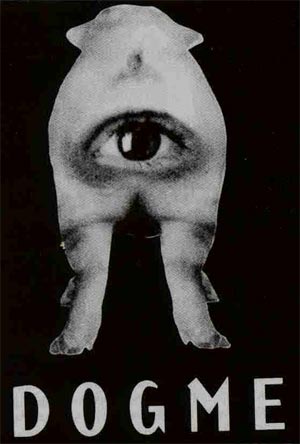
In 1995, two Danish filmmakers by the names of Lars von Trier and Thomas Vinterberg got together and decided to do the most Danish thing possible, which was to write a manifesto about film making.  The Dogme 95 Manifesto (which roughly translates to “The Manifesto of My Dog”) detailed a new philosophy of film, which wasn’t really all that new because it was largely just French New Wave on steroids.  Once the manifesto was complete, von Trier and Vinterberg followed up by doing the second most Danish  thing possible, which was to use government subsidies to fund films based on their manifesto.

This is the third most Danish thing possible.

This is the third most Danish thing possible.

Along with the manifesto, von Trier and Vinterberg developed a “Vow of Chastity”.  I am tempted to list the restrictions imposed by the Vow of Chastity but there are  10 or 11 of them, depending on how you read them, and they all work towards the same goal. Dogme 95 seeks to strip film down to the mere act of capturing light and sound on 35mm film, and remove all other trappings of cinema.  No period pieces. No genre films.  No special effects. No non-diagetic sound. No props. No fancy lenses, placed lighting, or even tripods.

Without tripods, the Dogme 95 adaptation of War of the Worlds told the story of a day-long picnic on the lawn of the Moesgård Museum.

Without tripods, the Dogme 95 adaptation of War of the Worlds told the story of a day-long picnic on the lawn of the Moesgård Museum.

I don’t know how in the mid-1990s a couple of talented filmmakers could have stumbled into the trap of Realism that other art forms had clawed their way out of decades, if not centuries, before.  A backlash against mainstream cinema was understandable, but Dogme 95 didn’t just throw out the baby with the bathwater.  It launched every other baby on Earth into the sun and boiled the oceans in the hopes that bathwater could never be created again.

If I let myself, I could probably write this entire post about Dogme 95.  As theory and thought experiment, it’s an interesting set of concepts.  But like raising a child for eighteen years without human contact to see how their mind develops in a vacuum of language, Dogme 95 is better left to theoretical discussions and never applied in the real world. It constricts a filmmaker from using the massive potential of film as an art in the name of achieving objective realism.  In the realm of video games, I’ve mentioned in my reviews for Brunswick Circuit Pro Bowling and Sensible Soccer that I don’t think that absolute objective realism is a noble goal.  The same is (mostly) true of film, and I think at least Lars von Trier has come around on this point of view based on the last decade or so of his films.  Just off the top of my head, the only part of the Vow of Chastity that Melancholia follows is that it is shot on 35mm film, and if Dogme 95 were written today I can almost guarantee that it would require the use of digital video rather than film.

Okay, let's face it, they were probably just doing the fourth most Danish thing possible: trolling the shit out of everyone.

Okay, let’s face it, they were probably just doing the fourth most Danish thing possible: trolling the shit out of everyone.

But what does any of this have to do with sports video games?

In 1998, 3DO released High Heat Baseball for the PC.  3DO is probably better known for their ill-fated console, the 3DO Interactive Multiplayer, rather than their later publishing efforts.  And there’s a good reason for this.  The 3DO console had all sorts of problems, but it was an interesting attempt to jumpstart the CD era of gaming, as well as an experiment in console funding that sought to undercut the licensing fees of Nintendo and Sega.  The games published by 3DO following the console’s failure were almost universally bad.  Remember Cubix?  Battletanx?  GoDai: Elemental Force?  So many Army Men games that the words “army” and “men” stopped having any meaning in the years between 1999-2002?  The only really good games that 3DO published were Might and Magic titles acquired from New World Computing and, of course, the High Heat series.

Sadly, in 1999 the naming conventions of video game websites and publications reached their zenith with GamerzEdge and we will never see those halcyon days again.

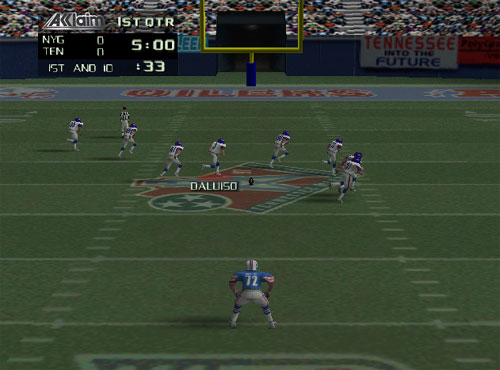
High Heat Baseball was a mixed bag upon its immediate release.  It had the unfortunate distinction of arriving in the wake of the early Triple Play games published by EA.  By the end of its life, the Triple Play series became something of a joke, but ’97 and ’98 were absolute revelations in sports game presentation and features.  They didn’t play the best, and they were plagued by Early Playstation Graphics Syndrome but at the time they were absolutely something special.  That wasn’t the only thing working against 3DO, though.  Just months before High Heat, Acclaim released All-Star Baseball 99 for the N64.  Like Triple Play, All-Star Baseball 99 looks so dated that it might as well be carrying a beeper.  But, again, at the time it was amazing.  You wouldn’t believe it from looking at it today, but the graphics outclassed anything on the market.  See also NFL Quarterback Club for the N64.

"The high resolution graphics of NFL Quarterback Club don't just move the chains...they're off the chain!" - GamerzEdge

“The high resolution graphics of NFL Quarterback Club don’t just move the chains…they’re off the chain!” – GamerzEdge

So the odds were stacked against High Heat Baseball and it honestly didn’t do itself any favors.  It didn’t have flash or glitz.  The learning curve was far more drastic than the pick-up-and-play Triple Play franchise.  It was missing the management aspects that were present in the Hardball series, and that’s without getting into the very early days of the Baseball Mogul franchise.  But High Heat did have one thing going with it: beyond the graphics, beyond the menus, and beyond the half-hearted presentation, it played a game of baseball better than anything on the market.  The variety of hits was unparalleled.  The AI was better than the competition. The interface was simple, but it produced results that felt like baseball.

Except I refuse to believe that Kyle Farnsworth ever threw a pitch slower than 90 mph.

Except I refuse to believe that Kyle Farnsworth ever threw a pitch slower than 90 mph.

The series diverged briefly in 1999 and 2000, with High Heat Baseball 2000 and Sammy Sosa High Heat Baseball 2001 respectively.  The PC game continued to evolve as a nuanced simulation while 3DO simultaneously released godawful arcade-style Playstation games under the same name.  The 2001 Playstation installment (of course named High Heat Baseball 2002) was the first decent console version of the series, and was followed up with a good PS2 port. For the next couple years, development was primarily focused on the PS2, with ports to the Xbox and Gamecube for the final installment, High Heat Baseball 2004.

All of the good High Heat Games (read: not the early Playstation ones) had one thing in common: they played great and they looked terrible.

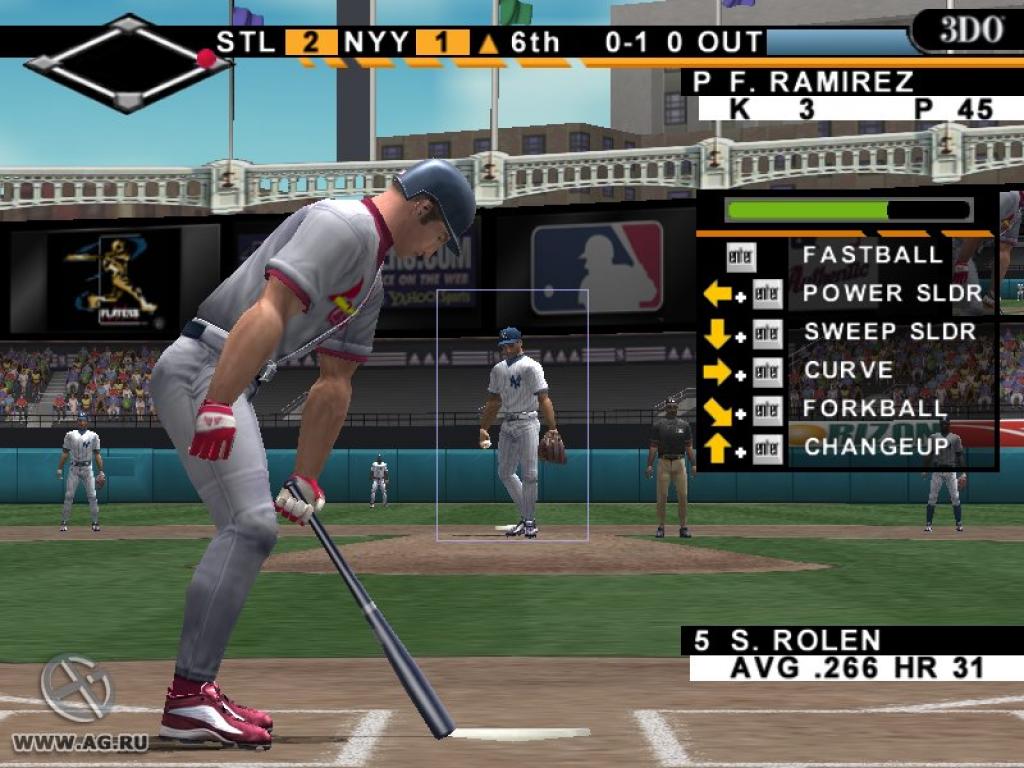
We have replaced Scott Rolen's forearms with tied-off socks full of oatmeal.  Let's see if anyone notices!

We have replaced Scott Rolen’s forearms with tied-off socks full of oatmeal. Let’s see if anyone notices!

This brings us full circle, back around to Lars von Trier, Thomas Vinterberg, and Dogme 95. Even fans of Dogme 95 would have to admit that it produces ugly cinema. 35mm film is finicky stuff and it doesn’t always play nice with natural sources of light. And that’s without even getting into capturing sound or lack of music or any number of restrictions that makes Dogme 95 films rather somewhat unpleasant.

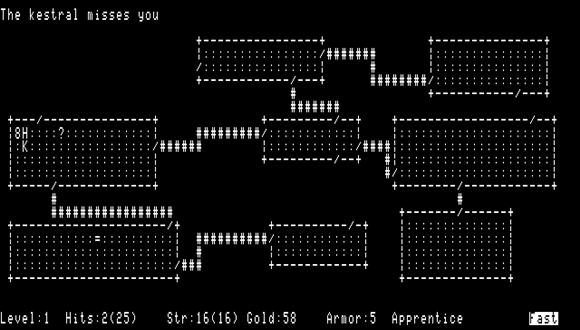
Now, I’m not about to claim that High Heat Baseball is the Dogme 95 of video games.  That’s ridiculous, as High Heat actually has graphics and sound, even if they’re terrible.  If there is any Dogme 95 of video games, it’s roguelikes without tilesets that use ASCII symbols for visual representations and PC speaker for all (if any) sound.

C'mon, let's be honest, you have to be a little autistic to understand this interface intuitively.

C’mon, let’s be honest, you have to be a little autistic to understand this interface intuitively.

Nevertheless, the High Heat philosophy comes from the same place as the Dogme 95 philosophy: strip out the extraneous production value, focus on the fundamentals.  The broadcast presentation of Triple Play or the “high resolution” of All-Star Baseball don’t lend anything to how their relative games actually play.  And, I suppose if you want to be reductive about everything, visual effects, props, lighting, and any number of other things don’t truly lend anything to the storytelling of a film.  If a stage play can convey a story, then a film can do the same without all the trappings of a film.   Rogue is playable on an ASCII terminal and a lot of people have spent a lot of time playing as an @ symbol in a field of punctuation.

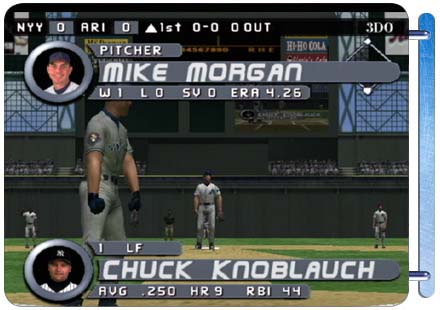
Well thanks to this game I just remembered Chuck Knoblauch's career and got really depressed.

Well thanks to this game I just remembered Chuck Knoblauch’s career and got really depressed.

Of course, like Dogme 95, High Heat Baseball didn’t last. This wasn’t the fault of the High Heat developers.  3DO went under, and if anyone is to blame it is the people behind those god damn Army Men games.  Even if High Heat was a huge fiscal success–and it wasn’t–it couldn’t possibly be enough to keep the entire publisher afloat.

But that’s not to say that High Heat and Dogme 95 didn’t leave their marks.  The echoes of Dogme 95 can, naturally, be seen in the later works of von Trier and Vinterberg.  But also in the later work of Harmony Korine, an American and one-time Dogme director himself, and mainstream/indie crossover master Steven Soderbergh.  The minimalism is tempered with the ridiculous rules falling by the wayside.  Meanwhile, Sony’s MLB: The Show has felt largely like a spiritual successor to High Heat, providing realistic scores, impressive hit variety, and a brutal learning curve.  But for The Show, good game play doesn’t come at the cost of  washed-out colors, marionette players, and presentation that never quite left the original Playstation era.  The Show has been a fantastic success, reviewing consistently well and selling better than a console-exclusive sports game should.   More than that, it’s become one of the best reasons for baseball fans to continue to buy Sony hardware.

Maybe the lesson is this: spectacle isn’t everything, but strip it away and you’ll see that it can be pretty important.

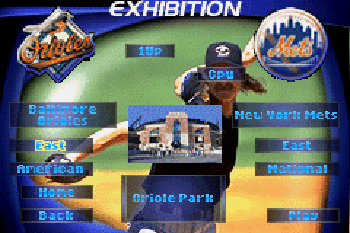
Oh dear god look at the graphic design on this menu.

Oh dear god look at the graphic design on this menu.  It’s like they’re trying to hide Randy Johnson’s identity with the word CPU but nothing can truly hide Randy Johnson’s identity.

The Beltran And The Sea

Carlos Beltran was and outfielder who hit from both sides of the plate with a Marucci maple bat and he had gone fifteen years now without taking a ring. This was not for lack of effort. In the first six years he been in Kansas City where he learned to regard their logo, a crown, with a certain sense of irony. But after six years he traveled to Houston then New York then St. Louis and he proved his worth every October. But each year he would come home with his fingers bare.

In his first years in baseball he was really very fast. He stole bases and went stood out in centerfield. He was so fast that he flattened Mike Cameron with just his running speed. But now he was an old outfielder. His knees were crooked and his arm ached when he pulled it back for a throw. Everything about him was old except the crack of his bat which was the same tenor as a thunderclap and was bold and undefeated.

“Carlos,” Miller said to him as they climbed the stairs of the dugout. “I could go out there with you. We’ve won some games.” Beltran had taught Miller about baseball and the boy loved him.

Beltran looked at him with confident eyes. “If you were my player, I’d take you,” he said. “But you are Matheny’s and there are match ups.”

“He hasn’t much faith.”

“I know,” Beltran said. “But haven’t we?”

They sat on the bench and many of the other players made fun of Beltran. Others looked at him and were sad. The successful players of Boston and St. Louis already won their rings and displayed them in glass cases with wooden plaques and now only looked to add to their glory.

“Carlos,” Miller said. “Can I get your batting gloves for you? If I cannot play with you, I would like to help in some way.”

“You brought us here,” Beltran said. “You are already a man.”

“This is your sixth post season series in St. Louis. Do you think that is a lucky number?”

“Six is a serious number,” Beltran said. “How would you like to see me bring in a ring dressed out with six hundred diamonds? Think perhaps I can?”

“Keep your bat warm, old man,” Miller said. “Remember we are in October.”

Keep my bat warm, Beltran thought. He hoisted the maple stick on his shoulder and, swinging it back and forth with a certain menace, he stepped onto the field. There were other players at other positions stretching and sprinting on the grass and Beltran could hear the roar of the crowd cheering for them but not for him. Beltran stopped in in the on deck circle and waited.

Beltran watched as Matt Carpenter faced the pitcher. Lester was left-handed but Beltran was ready.

This is the World Series. Beltran’s at-bat will be only one at-bat in all the at-bats that will ever be. But what will happen in all the other at-bats to come will depend on what Beltran does in this at-bat. It had been that way all year. All of baseball is that way.

He had no mysticism about baseball though he had played it for so many years.  Most players had superstitions. Beltran had facts. He did not wear a phiten necklace because of its magnetic properties but because its color gave his eyes a certain comforting warmth. He did not eat an entire chicken before each game for luck but to be strong in October for the truly important home runs. He did not tap his bat to hear its sound as a ritual. It was a science. The sound of a good bat is different than the sound of a bad bat. Beltran did not use a bad bat.

Carpenter fouled a pitch back towards the on deck circle. The ball rolled towards Beltran. He knelt down and picked it up.

“Baseball,” he said. “I love and respect you very much. But I will kill you dead before this day ends.”

Beltran  would have liked to come to the plate with a man aboard but the next pitch retired Carpenter. It was a cutter out over the plate and Carpenter should have taken hold of it for a drive but this was baseball. Baseball is a game of skill and a game of luck. The wind always blows harder in your face than at your back. Beltran knew that better than anyone. But he did not dwell on that.

After fifteen seasons without a ring Beltran knew he was not a lucky player. It was good to be lucky. Ryan Theriot was lucky. Pete Kozma was lucky. It was better to be exact. Every at-bat is a new at-bat. When the luck came Beltran ‘s way he would be ready for it.

Beltran stepped to the plate for the first time in a World Series game. He would not be defeated.

Experiences in Old Sports Games: Not Tony La Russa’s Ultimate Baseball

I’m late on making this post because I threw out what I wrote last night.  The subject of my post was going to be Tony La Russa’s Ultimate Baseball for the Commodore 64, both because I can’t stop picking baseball games and because I was using the post as an excuse to rant about Mike Matheny.

See, for a long time I disliked Tony La Russa.  In 2000, he started Rick Ankiel against the New York Mets in the NLCS, giving him a little-needed second chance to implode.  In 2001, he brought in Jeff Tabaka to face Lance Berkman and it arguably cost the Cardinals the division.  I realize it was foolish to get so hung up on a single bad move, but using Tabaka there may still be the single worse bullpen call I’ve ever seen (bringing in Boggs on May 30 of this year comes close).  So after 2001 I was done with La Russa and couldn’t wait for him to leave.  Of course, he didn’t leave, the Cardinals won a shit-ton, and my hatred of La Russa lessened all the way to the point that I finally want him back.

This is the 17th result for a google image search for "Jeff Tabaka", which says everything about his career and also the result of bringing him into that game.

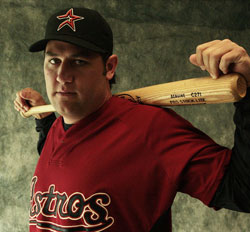
This photo of Lance Berkman is the 17th result for a google image search for “Jeff Tabaka”, which says everything about his career and also the result of bringing him into that game.

Basically, the post I had written up Thursday night was only half about Tony La Russa’s Ultimate Baseball. I discussed how it innovated the presentation of fly balls within the game.  Rather than render every hit as a ground ball, or use a shadow texture to indicate the height of the ball, the interface marked the spot the ball would eventually land.  This made fielding much easier, and allowed for a greater variety of hit types.  This innovation and the fantasy draft, like the bullpen innovations of Tony La Russa himself, was imitated by everyone who came afterwards and is now a standard part of the genre.

Tony La Russa also innovated the use of the conga line on the basepaths.

Tony La Russa also innovated the use of the conga line on the basepaths.

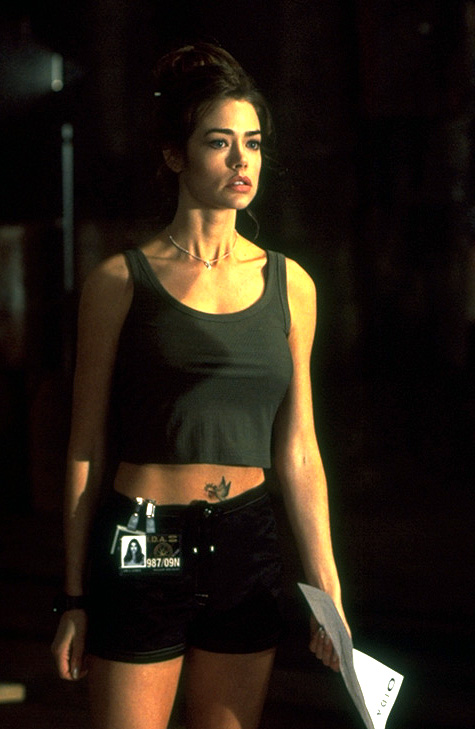
The other half of my post was about how I missed La Russa, and how sick of Mike Matheny I was.  This was coming off games 4 and 5 of the NLCS, in which he put on a bad managing clinic.  It was like watching Denise Richards in The World is Not Enough: the performance was so terrible that if I wanted to teach someone how to be godawful, it would be shown in class on day one.  However, after last night I just couldn’t go through with the post.

Denise Richards could play a nuclear physicist in the same sense that Matt Adams could play shortstop.

Denise Richards could play a nuclear physicist in the same sense that Matt Adams could play shortstop.

It’s not because my mind has changed about Matheny.  I still think he’s lost out there and carried by a very talented team and front office.  Most managers are.  But it seemed light the pinnacle of Being A Spoiled Cardinals Fan to put down so many words about the manager’s mistakes on the same day that the team advanced to the World Series.  My team is about to appear in the fourth World Series out of the last ten, and I wasn’t about to write a post critical of the team while that was happening.

Yeah this looks like the face of a guy who would make the ~1,500 words I wrote on Thursday completely meaningless.

Yeah this looks like the face of a guy who would make the ~1,500 words I wrote on Thursday completely meaningless.

So in place of the post I was going to put up yesterday, I’m just going to end on a picture of Adam Wainwright and Carlos Beltran celebrating a World Series trip together, posted on twitter by Beltran’s wife, @ivanalenin.

wainbelt

Even if you hate the Cardinals, you should be cheering for Beltran to get a ring.  He’s arguably the best post-season hitter of all time, and while he shouldn’t need to bolster his Hall of Fame credentials, the truth is he’s going to need as much help as he can get.

A Modest Proposal: The Three-way Tie

Currently, the St. Louis Cardinals lead the National League Central by two games over the Pittsburgh Pirates and the Cincinnati Reds. Due to the latest turn in Uncle Bud’s Wildcard Ride, all three teams are guaranteed to make the playoffs, but only the division winner will automatically advance to the NLDS. The other two will play in a single Wildcard game to reach the division series. With the division coming down to the wire, everyone wants to talk about the worst-case scenario–or the best case scenario if you’re a Braves or Dodgers fan–a three-way tie that forces the NL Central teams into a brutal series of single game showdowns.

I have a better idea for resolving this potential problem. I think that everyone can agree that the Braves and the Dodgers are the real bad guys here, so how about we show some Central solidarity and solve this problem with some creativity.

One game. Three teams.

How is this possible? Well, to quote the classic 1997 film Air Bud, “Ain’t no rules say a dog can’t play basketball.” Each team will face both of their opponents in a single game. Each team will get a full nine innings on either side of the ball. It just won’t be at the same time.

Instead of halves, each inning will be divided into thirds. Home field and batting order will be determined by record against the other two teams. Best record plays at home, bats last. Second best record will bat in the middle third of the inning. Worst record will bat first.

Currently, the Cards have a .526 record against the Pirates and Reds, the Pirates have at .514 record against their opponents and the Reds have a .457 record. So the game would take place in St. Louis, Reds would bat first, then Pirates, then Cards. The Pirates pitchers would throw to the Reds batters in the first third of the inning, the Cardinals pitchers would throw to the Pirates batters in the middle of the inning, and finally the Reds pitchers would face the Cardinals batters. This way, each team faces one another. The team pitching would always bat in the following third of an inning, and then get a third of an inning to rest.

Winner of the three team game takes the division, then the team with the second most runs gets home field advantage for the play-in game. Given that each team has to outscore the other two to win the division, everyone will be equally motivated, even though each team’s batters are facing a different opponent than their pitchers. The only problem that could theoretically come up is if in the bottom of the ninth the Pirates are winning, the Cards are batting, and the Reds are pitching to preserve the Pirates lead with no interest in the outcome of the final third of the inning because they’ve already lost the division.

In this very unlikely situation, the Pirates will just have to hope that the Reds pitcher will be sufficiently motivated to become the first player to record a save for an opposing team because, hey, that’s pretty historic.

So let’s do it. Save some time. Three teams. One game. Twenty seven half innings. Baseball.