Experiences in Old Sports Games: High Heat Baseball and Dogme 95

In 1995, two Danish filmmakers by the names of Lars von Trier and Thomas Vinterberg got together and decided to do the most Danish thing possible, which was to write a manifesto about film making.  The Dogme 95 Manifesto (which roughly translates to “The Manifesto of My Dog”) detailed a new philosophy of film, which wasn’t really all that new because it was largely just French New Wave on steroids.  Once the manifesto was complete, von Trier and Vinterberg followed up by doing the second most Danish  thing possible, which was to use government subsidies to fund films based on their manifesto.

This is the third most Danish thing possible.

This is the third most Danish thing possible.

Along with the manifesto, von Trier and Vinterberg developed a “Vow of Chastity”.  I am tempted to list the restrictions imposed by the Vow of Chastity but there are  10 or 11 of them, depending on how you read them, and they all work towards the same goal. Dogme 95 seeks to strip film down to the mere act of capturing light and sound on 35mm film, and remove all other trappings of cinema.  No period pieces. No genre films.  No special effects. No non-diagetic sound. No props. No fancy lenses, placed lighting, or even tripods.

Without tripods, the Dogme 95 adaptation of War of the Worlds told the story of a day-long picnic on the lawn of the Moesgård Museum.

Without tripods, the Dogme 95 adaptation of War of the Worlds told the story of a day-long picnic on the lawn of the Moesgård Museum.

I don’t know how in the mid-1990s a couple of talented filmmakers could have stumbled into the trap of Realism that other art forms had clawed their way out of decades, if not centuries, before.  A backlash against mainstream cinema was understandable, but Dogme 95 didn’t just throw out the baby with the bathwater.  It launched every other baby on Earth into the sun and boiled the oceans in the hopes that bathwater could never be created again.

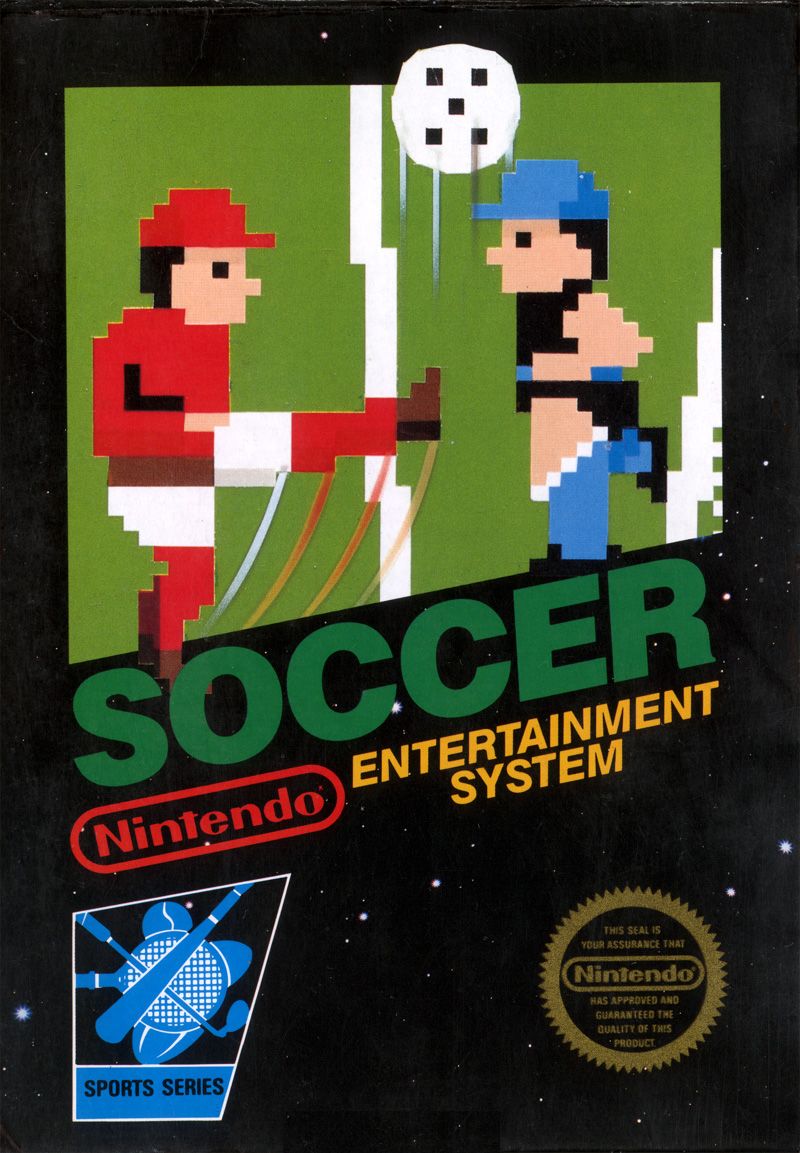
If I let myself, I could probably write this entire post about Dogme 95.  As theory and thought experiment, it’s an interesting set of concepts.  But like raising a child for eighteen years without human contact to see how their mind develops in a vacuum of language, Dogme 95 is better left to theoretical discussions and never applied in the real world. It constricts a filmmaker from using the massive potential of film as an art in the name of achieving objective realism.  In the realm of video games, I’ve mentioned in my reviews for Brunswick Circuit Pro Bowling and Sensible Soccer that I don’t think that absolute objective realism is a noble goal.  The same is (mostly) true of film, and I think at least Lars von Trier has come around on this point of view based on the last decade or so of his films.  Just off the top of my head, the only part of the Vow of Chastity that Melancholia follows is that it is shot on 35mm film, and if Dogme 95 were written today I can almost guarantee that it would require the use of digital video rather than film.

Okay, let's face it, they were probably just doing the fourth most Danish thing possible: trolling the shit out of everyone.

Okay, let’s face it, they were probably just doing the fourth most Danish thing possible: trolling the shit out of everyone.

But what does any of this have to do with sports video games?

In 1998, 3DO released High Heat Baseball for the PC.  3DO is probably better known for their ill-fated console, the 3DO Interactive Multiplayer, rather than their later publishing efforts.  And there’s a good reason for this.  The 3DO console had all sorts of problems, but it was an interesting attempt to jumpstart the CD era of gaming, as well as an experiment in console funding that sought to undercut the licensing fees of Nintendo and Sega.  The games published by 3DO following the console’s failure were almost universally bad.  Remember Cubix?  Battletanx?  GoDai: Elemental Force?  So many Army Men games that the words “army” and “men” stopped having any meaning in the years between 1999-2002?  The only really good games that 3DO published were Might and Magic titles acquired from New World Computing and, of course, the High Heat series.

Sadly, in 1999 the naming conventions of video game websites and publications reached their zenith with GamerzEdge and we will never see those halcyon days again.

High Heat Baseball was a mixed bag upon its immediate release.  It had the unfortunate distinction of arriving in the wake of the early Triple Play games published by EA.  By the end of its life, the Triple Play series became something of a joke, but ’97 and ’98 were absolute revelations in sports game presentation and features.  They didn’t play the best, and they were plagued by Early Playstation Graphics Syndrome but at the time they were absolutely something special.  That wasn’t the only thing working against 3DO, though.  Just months before High Heat, Acclaim released All-Star Baseball 99 for the N64.  Like Triple Play, All-Star Baseball 99 looks so dated that it might as well be carrying a beeper.  But, again, at the time it was amazing.  You wouldn’t believe it from looking at it today, but the graphics outclassed anything on the market.  See also NFL Quarterback Club for the N64.
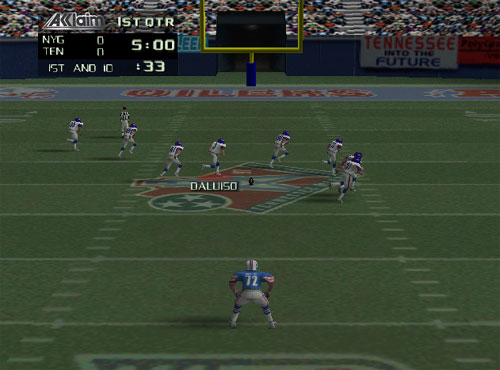
"The high resolution graphics of NFL Quarterback Club don't just move the chains...they're off the chain!" - GamerzEdge

“The high resolution graphics of NFL Quarterback Club don’t just move the chains…they’re off the chain!” – GamerzEdge

So the odds were stacked against High Heat Baseball and it honestly didn’t do itself any favors.  It didn’t have flash or glitz.  The learning curve was far more drastic than the pick-up-and-play Triple Play franchise.  It was missing the management aspects that were present in the Hardball series, and that’s without getting into the very early days of the Baseball Mogul franchise.  But High Heat did have one thing going with it: beyond the graphics, beyond the menus, and beyond the half-hearted presentation, it played a game of baseball better than anything on the market.  The variety of hits was unparalleled.  The AI was better than the competition. The interface was simple, but it produced results that felt like baseball.

Except I refuse to believe that Kyle Farnsworth ever threw a pitch slower than 90 mph.

Except I refuse to believe that Kyle Farnsworth ever threw a pitch slower than 90 mph.

The series diverged briefly in 1999 and 2000, with High Heat Baseball 2000 and Sammy Sosa High Heat Baseball 2001 respectively.  The PC game continued to evolve as a nuanced simulation while 3DO simultaneously released godawful arcade-style Playstation games under the same name.  The 2001 Playstation installment (of course named High Heat Baseball 2002) was the first decent console version of the series, and was followed up with a good PS2 port. For the next couple years, development was primarily focused on the PS2, with ports to the Xbox and Gamecube for the final installment, High Heat Baseball 2004.

All of the good High Heat Games (read: not the early Playstation ones) had one thing in common: they played great and they looked terrible.
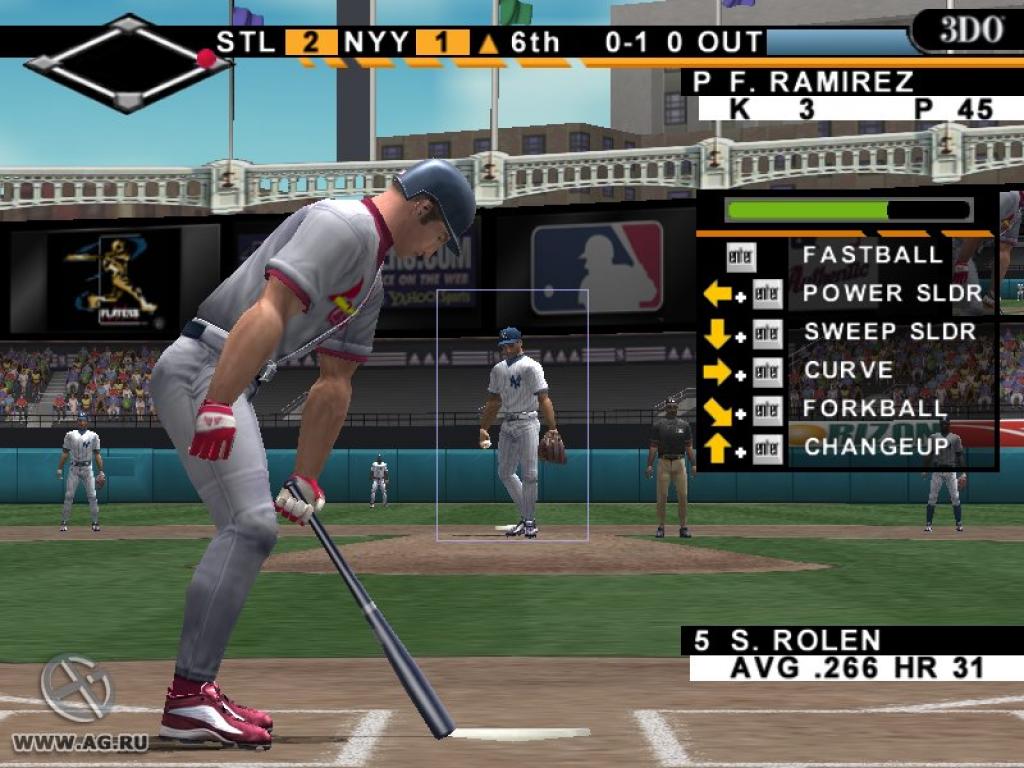
We have replaced Scott Rolen's forearms with tied-off socks full of oatmeal.  Let's see if anyone notices!

We have replaced Scott Rolen’s forearms with tied-off socks full of oatmeal. Let’s see if anyone notices!

This brings us full circle, back around to Lars von Trier, Thomas Vinterberg, and Dogme 95. Even fans of Dogme 95 would have to admit that it produces ugly cinema. 35mm film is finicky stuff and it doesn’t always play nice with natural sources of light. And that’s without even getting into capturing sound or lack of music or any number of restrictions that makes Dogme 95 films rather somewhat unpleasant.

Now, I’m not about to claim that High Heat Baseball is the Dogme 95 of video games.  That’s ridiculous, as High Heat actually has graphics and sound, even if they’re terrible.  If there is any Dogme 95 of video games, it’s roguelikes without tilesets that use ASCII symbols for visual representations and PC speaker for all (if any) sound.
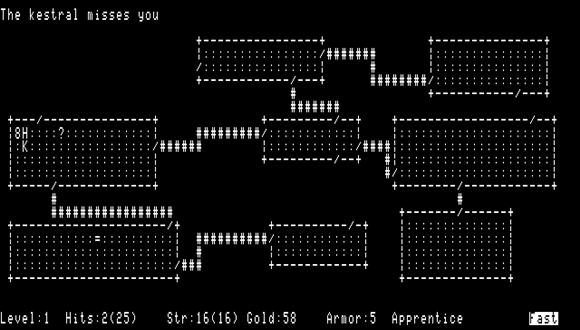
C'mon, let's be honest, you have to be a little autistic to understand this interface intuitively.

C’mon, let’s be honest, you have to be a little autistic to understand this interface intuitively.

Nevertheless, the High Heat philosophy comes from the same place as the Dogme 95 philosophy: strip out the extraneous production value, focus on the fundamentals.  The broadcast presentation of Triple Play or the “high resolution” of All-Star Baseball don’t lend anything to how their relative games actually play.  And, I suppose if you want to be reductive about everything, visual effects, props, lighting, and any number of other things don’t truly lend anything to the storytelling of a film.  If a stage play can convey a story, then a film can do the same without all the trappings of a film.   Rogue is playable on an ASCII terminal and a lot of people have spent a lot of time playing as an @ symbol in a field of punctuation.
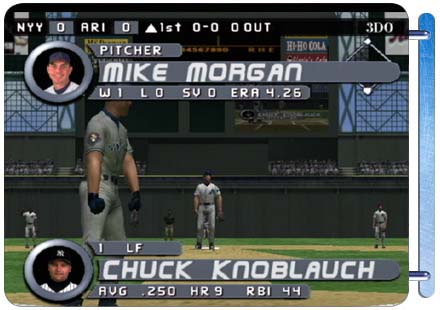
Well thanks to this game I just remembered Chuck Knoblauch's career and got really depressed.

Well thanks to this game I just remembered Chuck Knoblauch’s career and got really depressed.

Of course, like Dogme 95, High Heat Baseball didn’t last. This wasn’t the fault of the High Heat developers.  3DO went under, and if anyone is to blame it is the people behind those god damn Army Men games.  Even if High Heat was a huge fiscal success–and it wasn’t–it couldn’t possibly be enough to keep the entire publisher afloat.

But that’s not to say that High Heat and Dogme 95 didn’t leave their marks.  The echoes of Dogme 95 can, naturally, be seen in the later works of von Trier and Vinterberg.  But also in the later work of Harmony Korine, an American and one-time Dogme director himself, and mainstream/indie crossover master Steven Soderbergh.  The minimalism is tempered with the ridiculous rules falling by the wayside.  Meanwhile, Sony’s MLB: The Show has felt largely like a spiritual successor to High Heat, providing realistic scores, impressive hit variety, and a brutal learning curve.  But for The Show, good game play doesn’t come at the cost of  washed-out colors, marionette players, and presentation that never quite left the original Playstation era.  The Show has been a fantastic success, reviewing consistently well and selling better than a console-exclusive sports game should.   More than that, it’s become one of the best reasons for baseball fans to continue to buy Sony hardware.

Maybe the lesson is this: spectacle isn’t everything, but strip it away and you’ll see that it can be pretty important.
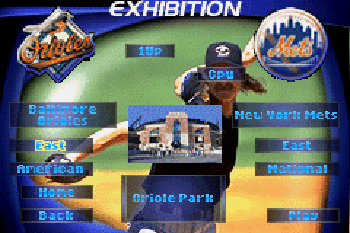
Oh dear god look at the graphic design on this menu.

Oh dear god look at the graphic design on this menu.  It’s like they’re trying to hide Randy Johnson’s identity with the word CPU but nothing can truly hide Randy Johnson’s identity.

Experiences In Old Sports Games: Mario and Sonic at the Olympic Games

I’m not sure if there is any subset of the sports video game genre more maligned than the Official Video Games of The Olympics. Football games may be stale in the age of Madden. Wrestling titles may be gloriously dumb. Horse racing games may be completely impenetrable to everyone except one Japanese kid who does nothing but watch VHS recordings of triple crown races. But none are as bad as video games based on the Olympics. No matter who develops them, they are always buggy, awful looking messes with controls that range from awkward to borderline war crimes.

I was just thinking that there weren't enough video games about shooting guns.

I was just thinking that there weren’t enough video games about shooting guns.

The exception to this rule is Track and Field, an arcade, home, and Game Boy classic.  Even Track and Field is merely good for its time. It has held up about as well as an NES controller used to play Track and Field. Like all video games based off the Olympics, it was nothing more than a minigame collection with frustrating input issues. Unlike the games that came afterwards, however, it at least had decent graphics and didn’t feel rushed out the door to beat a close deadline and make a fast buck.

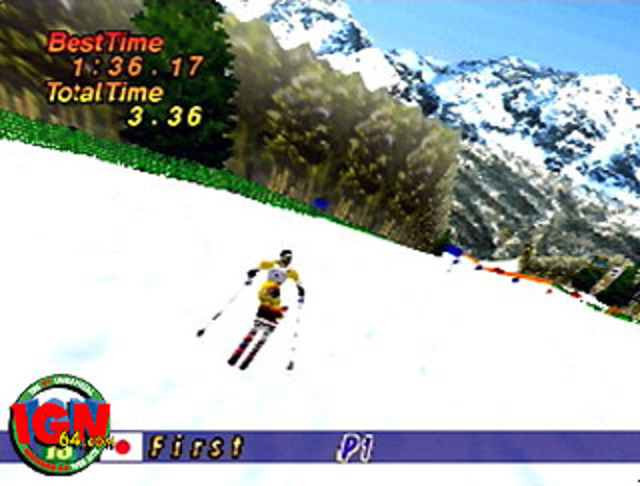
There has been an Official Game of the Olympics for twenty years now and they have all been terrible. The license has been passed around to a number of developers, starting with U.S. Gold, which somehow is neither a United States company nor a company specifically formed for releasing video games based on the Olympics.  U.S. Gold had released a number of unlicensed Track and Field-esque games prior to acquiring the license, and produced official Olympics games from 1992-1996. For the 1998 Winter Games, the license was picked up by Konami, makers of Track and Field, who promptly squandered all their good will with Nagano Winter Olympics ’98. I actually played Nagano Winter Olympics ’98 for the N64 and as a result I am a carrier for a previously unseen form of hepatitis.

There's NagaNO way I'm going to play a game with graphics like this again.

There’s NagaNO way I’m going to play a game with graphics like this again.

Eidos took over the license for the 2000 and 2002 games, and farmed out development to Attention to Detail, a studio best known for Cybermorph for the Atari Jaguar and for stretching the meaning of the phrase “best known for” to its absolute limit.  After Eidos came Eurocom, which has a track record of remarkable mediocrity for a number of decades. They couldn’t solve the Olympics Video Game problem, so 2k Sports took a crack at it in 2006.

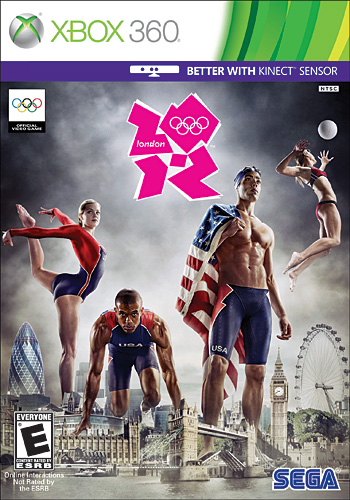
Despite the publisher pedigree, Torino 2006 was particularly godawful. Development returned to Eurocom, now under the banner of SEGA for 2008 and 2010.  Finally, the license was farmed out to SEGA Australia for London 2012, which won a gold medal for being damned with faint praise as various websites called it the best official Olympics title but still gave it middling-to-poor reviews.

This image is a good example of how male and female athletes are objectified in different ways but I'm too distracted by the hideous logo of the 2012 Olympics.

This image is a good example of how male and female athletes are objectified in different ways but I’m too distracted by the hideous logo of the 2012 Olympics.

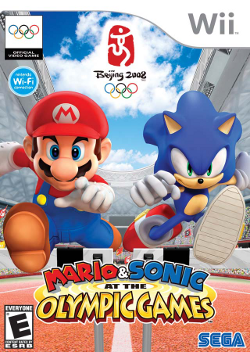
Along with its predictably terrible standard Olympics video games, SEGA actually did something interesting with the license and developed a second series of titles exclusively for the Nintendo Wii and DS. Leveraging the legacy and long history of SEGA and Nintendo, in 2008 they released the first Olympics game that could actually get anyone excited about an Olympics game: Mario & Sonic at the Olympic Games.

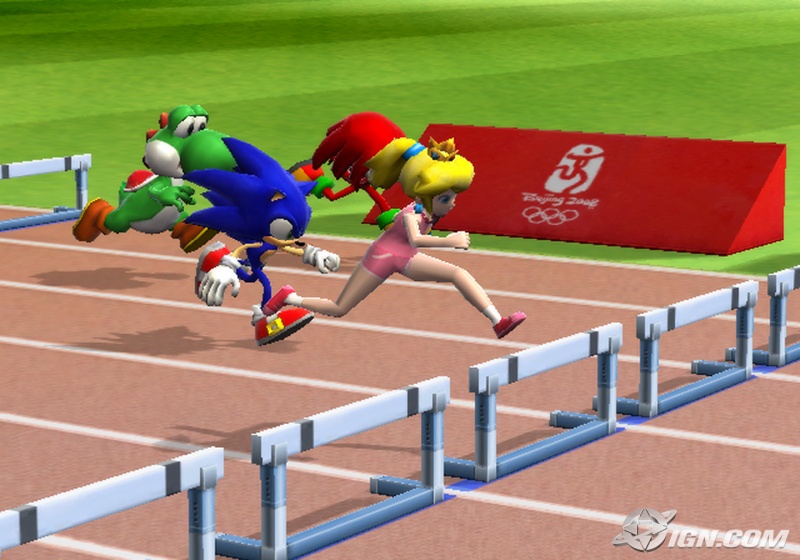
Jumping hurdles in denim overalls? Really? This is why the Chinese don't take Americans seriously.

Jumping hurdles in denim overalls? Really? This is why the Chinese don’t take Americans seriously.

Of course, people weren’t excited about yet another sports-themed minigame collection on the Wii, they were excited because this title represented the first crossover between the universally-beloved Nintendo mascot, Mario, and the still-beloved-on-parts-of-the-internet-I-avoid SEGA mascot, Sonic the Hedgehog. For years, Mario and Sonic had been virtual rivals of a sort, as they starred in the flagship games on Nintendo and SEGA platforms. Putting them in the same game was a landmark event for people who care too much about video games. There was even a sort of thematic relevancy to the mascots joining together in an Olympics themed game, as the Olympics have often served as a kind of neutral ground, where geopolitical enemies can meet up and engage in peaceful competition.

For a notable exception to when countries did not put aside their differences, see the 1980 Moscow Olympics co-sponsored by Atari.

For a notable exception to when countries did not put aside their differences, see the 1980 Moscow Olympics co-sponsored by Atari.

But the real meaning of Mario and Sonic at the Olympic Games goes much deeper than that. This isn’t a game about just sports or mascots or the commonalities of nations. This is a game about the decline of the Japanese game industry. This is a game about hopelessness.

First off, as we all know, Sonic the Hedgehog represents death. He always has. There’s no reason to re-examine that point, as it was so eloquently proven in the acclaimed 2009 article “Gotta Go Fast: Sonic, Tails, and the Rapid Approach of the Inevitable End”.

They say that it is certain that “death” comes. They say it and overlook the fact that, in order to be able to be certain of death, Da-sein itself must always be certain of its ownmost nonrelational potentiality-of-being not-to-be-bypassed. They say that death is certain, and thus entrench in Da-sein the illusion that it is itself certain of its own death. - Sonic Adventure 2, quoting "Being and Time" by Martin Heidegger

They say that it is certain that “death” comes. They say it and overlook the fact that, in order to be able to be certain of death, Da-sein itself must always be certain of its ownmost nonrelational potentiality-of-being not-to-be-bypassed. They say that death is certain, and thus entrench in Da-sein the illusion that it is itself certain of its own death. – Sonic Adventure 2, quoting “Being and Time” by Martin Heidegger

With that out of the way, let’s examine the core concept. Mario, a rotund Italian man, is set to compete in a series of athletic events against Sonic, a anthropomorphic hedgehog whose defining attribute is his running speed. Granted, over the past few years Mario had found himself participating in a number of sports–golf, tennis, baseball and basketball–but he’s really no match for Sonic at any Olympic activity that requires speed or agility. This is an analogy to the growing disparity between Japanese and “western” game industries.

Mario represents the Japanese game industry. At one point he was the biggest thing in the world. Mario games were the gold standard of console titles. Now, he’s doing the same thing he’s always done but found less success in a more competitive, broader world. There are still plenty of great Mario games, and great Japanese games, but they’ve been overshadowed and the business model hasn’t caught up with the rest of the world.

And now Cat Mario is a thing.

And now like Japanese games, everything in Mario has cat ears.

Sonic, on the other hand, represents the western game industry. I realize “western” is a somewhat senseless distinction founded in sketchy outdated categorization, but off the top of my head I can’t think of a better term for the parts of the game industry scattered about North America and parts of Europe. Sonic was a character designed to appeal to audiences in these “western” territories. His character aesthetic and especially his “attitude” is founded in what adults thought American boys liked in the 1990s. The same can be said of a large portion of the western game industry, which has thrived despite (or perhaps because of) an obsession with continuing to blatantly pander to the tastes of American boys. Of course, as someone who purchased both the new Call of Duty and Battlefield games, perhaps I’m just hurling rocks straight through the walls of my glass house.

I don't even know which Call of Duty game this screenshot is from and I have played all of them since Modern Warfare.

I don’t even know which Call of Duty game this screenshot is from and I have played all of them since Modern Warfare.

Of course, Mario and Sonic aren’t the only playable characters in the game. A variety of faces from both franchises make up the roster of playable characters.  Now, to anyone who has played at least one spinoff Mario game, all the Nintendo choices will be recognizable. Mario has built up a regular supporting cast over the last decade-plus and they’re mostly inoffensive.  But take a look at the SEGA side and suddenly everything gets confusing.  Sonic, Tails, Knuckles, Robotnik/Eggman and then shit starts to get dicey.  I had to go to the List of Sonic the Hedgehog Characters Wikipedia entry to figure out who any of the other strange animals were. And let me tell you, it is absolutely terrifying how much effort has been put into the various Wikipedia entries for Sonic the Hedgehog characters.

Waluigi is the least legitimate Mario character on the roster and if you don't think something as ridiculous as Waluigi deserves to stick around you can get out.

Waluigi is the least legitimate Mario character on the roster and if you don’t think something as ridiculous as Waluigi deserves to stick around you can just get out.

On one hand, the diverging paths of the Mario and Sonic series, which led to a mostly reasonable cast of Mario characters and some very questionable decisions regarding Sonic characters, seems to undermine the theory that the two are counterposed  representing the Japanese and Western game industries.  The Sonic series has gone off of the rails, and by that I don’t mean that SEGA is considering a Sonic/Train Simulator 2014 crossover entitled Sonic Derailed.  Though if you told me that was a real game I would probably believe you.  Sonic introduced a dumb as hell antihero called Shadow the Hedgehog, started Dragonball-style super saiyan bullshit, gave Shadow his own game with guns, had a hedgehog/human romance for some terrible reason,  released a Bioware RPG, and then Sonic became a werewolf because there was no way to dig the hole the series was in any deeper without striking werewolf coal. Meanwhile, Mario is still going relatively strong.  Cat Mario notwithstanding.

Ultimately, though, we have to recognize that this is a SEGA game, and they probably think that Sonic is still doing perfectly fine.  Maybe in some ways it is.  I’m willing to acknowledge that Tyler Perry movies aren’t made for me, that I don’t have the patience for Kazuo Ishiguro, and that there’s a whole new era of adolescents who think they’re being edgy by watching the twenty-billionth season of South Park.  Maybe I’m just not the audience for Sonic.  Or maybe SEGA is using this game as a self-critique, realizing that it has fallen into the same dark path as so many Western developers, pandering to the point of insanity.

Or maybe I’m just making shit up.

Nah, I wouldn't make shit up. not about Sonic the Hedgehog.

Nah, I wouldn’t make shit up. Not about Sonic the Hedgehog.

Experiences in Old Sports Games: Sensible Soccer

Is there anything more insufferable than citing to a dictionary? Using the dictionary to make a point is not only obnoxious, but it demonstrates a failure to understand the mutability of language.  The very idea that some book somewhere can be more accurate in the meaning of a word than either the person using the word or the person interpreting the word is frankly absurd.  At best a dictionary can be helpful in mitigating or preventing confusion between the signifier and the signified, or maybe preventing an unscrupulous friend from winning a game of Scrabble, but using the dictionary to prove a point is just horrendous.  It’s the worst thing you can do. Outside of felonies, of course. Most felonies are probably more reprehensible than citing to the dictionary. That said…

There are two dictionary definitions for the word “sensible”. The first, and probably the one that most readily comes to mind for the American reader, is “having or showing good judgment.”  The second definition, which Google calls archaic (and Google knows everything, including the kind of pornography you watch), is “readily perceived”.  You probably haven’t heard the word “sensible” used in this context  Typically, one would use the word “perceptible” instead, despite the fact that it’s a better use of the word.  Sensible = sense-able: able to be sensed.  Like catch-able, as in a whole lot of baseballs hit towards the Cardinals outfield this season that fell in for hits.
Let's just say that it's easier to have an errorless streak when you don't get to a lot of baseballs.

Let’s just say that it’s easier to have an errorless streak when you don’t get to a lot of baseballs.

All of this bullshit has to do with our many definitions of the word “sense”.  “Sense” is a goddamn ridiculous word in the English language.  It has a ton of meanings.  We talk behind the back of the Eskimos about how many words they have for “snow” and, meanwhile, the Eskimos give us all sorts of shit about how many concepts we lump into the word “sense”.  Sense can mean perception through one of the major functions by which humans (or other animals) receive external stimuli–sight, smell, hearing, touch, taste.  Sense can also denote a meaning given to other words and concepts.  It can refer to conscious awareness or rationality (i.e.: after cheering for the Cubs for ten years, the man developed some common sense).  It has a separate meaning in the realm of math that I’m not even going to explain because Fuck Math.

The Swedish cover of the film "Sense and Sensibility" uses two different words, and can (roughly) be translated to "Emotion and Reason", destroying the cleverness of the title and also my faith in English.

The Swedish cover of the film “Sense and Sensibility” uses two different words, and can (roughly) be translated to “Emotion and Reason”, destroying the cleverness of the title and also highlighting the problem with the English word “Sense”.

Most importantly, however, is the following meaning of the word “sense” as a verb: “to understand or be aware of (something) without being told about it or having evidence that it is true”. That’s straight from the Merriam-Webster site if you care, which you shouldn’t because citing to the dictionary is basically a war crime.

Essentially, the word “sense” can both refer to the faculties through which we receive perceivable evidence–our five senses–as well as the gut feelings we get which have nothing to do with those faculties.  Think of the term “common sense”.  What is common sense?  It’s not facts.  It’s not truth.  It’s not anything we can back up with any evidence that our senses can provide us. There was a time when it was “common sense” that an unmarried woman living alone who had no children was a witch.  There was a time when it was “common sense” that people of a certain skin color were somehow not actually people. There was a time when it was “common sense” to stop eating fat because fat caused people to become overweight.  There currently exists a time where it is “common sense” for a whole lot of people to take antibiotics for influenza even though that is entirely counterproductive for most everyone except MRSA fetishists.

Once again I bring back the black box to stress just how important it is for you never to image search "MRSA fetishist".

Once again I bring back the black box to stress just how important it is for you never to image search “MRSA fetishist”.

Let’s bring this all back around.  Because English has no clue what to do with the word “sense”, the word “sensible” has two contradictory meanings.  And this week’s game is Sensible Soccer.

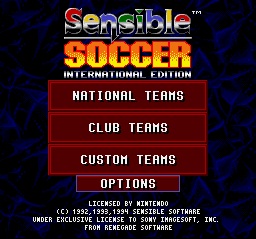
Unfortunately "Club Teams" does not allow you to take a wooden cudgel to Man U.

Unfortunately “Club Teams” does not allow you to take a wooden cudgel to Man U.

Sensible Soccer was released in 1992 and followed up with a sequel in 1994 called Sensible World of Soccer, which received a number of sequels up until 1998 when the creators tried to move the game to 3d and ended up destroying it in spectacular fashion.  The first game was ported to almost every system known to man, including something called an Acorn Archimedes which I almost refuse to believe actually existed.  The rest of the series was confined to home computers and the Amiga. I’m sure to some people, exclusivity to the PC and Amiga is actually a selling point, but this meant that the audience of the game was somewhat restricted and the series ended up as something of a cult classic.  But there’s no doubt that the members of that cult were completely devoted.

In some ways, Sensible Soccer isn’t the most accessible game to start with.  The controls are simple, and easy to pick up.  But the game doesn’t take it easy. The action is fast paced, but it also attempts to simulate the difficulty of maintaining ball control. Sharp turns with the ball aren’t impossible, but they have to be carefully managed or the ball will drift away from your player.  It requires quick reflexes and careful control in a way that very few sports games before or after have really attempted.  As such, it’s more of an arcade title rather than a simulation.  If I wanted to be reductionist, I would compare it to a fighting game in that it strips away a lot of bullshit to expose the skill of players, especially in multiplayer matches.

Moving my hand off the controls to take a  screenshot basically means fucking up.

Moving my hand off the controls to take a screenshot basically means fucking up.

The first thing that anyone notices about Sensible Soccer is the name. Because we are so comfortable with the second use of the word “sensible” it sounds ridiculous.  It gives us the idea that the game is somehow a rational interpretation of soccer: a conservative and even-handed adaptation of the game that appeals to a person who wants to balance their budget or find a pair of shoes that can be worn comfortably for eight hours or has decided that they need more fiber in their diet.  As if that wasn’t strange enough, the game is anything but “sensible”.  As I noted, it’s fast paced and can be chaotic for a first time player.  It is full–perhaps even bloated–with teams, options, and features. It was one of the earliest series to include massive, multi-year franchise control.

I'm pretty sure the Euro Superleague is also the only thing that can save Greece from falling into chaos right now.

I’m pretty sure the Euro Superleague is also the only thing that can save Greece from falling into chaos right now.

But if we look at the other definition of “sensible” the pieces fall into place.  Sense-able Soccer.  Soccer that feels so real it’s like you can smell the grass, hear the shrill sound of the whistle, and feel the cold shackles of a freedom hating, un-American country that enjoys the sport of soccer.

Of course, that isn’t the greatest literal description of Sensible Soccer, which is more of an arcade title than a sim.  On its face, Sensible Soccer doesn’t accurately represent the game of soccer–not in the way, for example, Brunswick Circuit Pro Bowling strives to replicate the so-called game of bowling.  But if anything can be proven by the failures of Brunswick Pro Circuit, it’s that realism is not necessarily a good thing.  In fact, realism may actually detract from a correct portrayal of a sport.  Abstracting elements of the sport out to simpler, faster paced gameplay elements may actually represent the sport more accurately.  It’s effectively the same reason that quarters in Madden are shorter that fifteen minutes.  Because Madden plays faster than real football, shortening the game provides more realistic results.  A faster, more frenetic soccer represents how soccer fans view the sport better than detailed simulation.

So could someone please explain what the guy in the blue hat is supposed to be wearing?  I can't see it as anything but a black one piece swimsuit and blue thigh-highs.

So could someone please explain what the guy in the blue hat is supposed to be wearing? I can’t see it as anything but a black one piece swimsuit and blue thigh-highs.

The word sensible has two separate and very distinct meanings.  One describes a rational approach based on gut feelings that are probably just dictated by the subconscious whims of society (thanks for Common Sense, Tom Paine).  The other describes a visceral experience, informed by the faculties by which we can actually observe the world.  How do you reconcile this?  Well, if you want to read way too much into it–and I usually do–this is informed by the way in which people are willing to ignore facts in favor of their opinions.  Whether it’s death panels, the percent of the budget spent on foreign aid and food stamps, or what exactly the Fourth Amendment protects, people are quick to assume that their gut feelings–their common sense–are just as valuable as actual, perceptible facts.  If sense (common) = sense (perception) then clearly that twinge you get in your stomach that lets you know that Obama is either stealing your guns or reading your e-mail is true.  Right?

Now, maybe that isn’t just a problem with English.  I’m sure confirmation bias and cognitive dissonance are everywhere.  Nevertheless, English is fucked up.  Fortunately, Sensible Soccer isn’t fucked up.  It’s a pretty fun game.  There’s an Xbox 360 port out there that is pretty faithful if you want to check it out without going through the hassle of setting up Amiga/DOSBox emulation.  Just don’t put too much thought into the name.

Experiences in Old Sports Games: Brunswick Circuit Pro Bowling

Bowling is such a weird sport.  It’s barely even really a sport.  It’s more of an activity.  Calling bowling a sport is almost like calling pinball a sport,  Then again, there are people who unironically use the world “e-sports” to describe Starcraft and DOTA/League of Legends so that particular hair has been split so many times that it would give a beautician a heart attack.

What makes bowling so strange is that it’s almost exclusively a secondary activity.  When most people go bowling, they don’t really want to bowl.  It’s an excuse to socialize, hang out, eat crappy food, and drink beer if they are over 21 or bowling at an establishment that cares more about cash payments than state IDs.

I’m not sure I’ve ever met anyone who enjoys bowling.  It’s just a thing to do.  If you’re not rich enough to go yachting, not coordinated enough to go dancing, and not addicted enough to shoot up heroin in the parking lot of a Wal-Mart, you and your friends go bowling.  Nobody likes it, but everyone tolerates it well enough.  At least that’s been my experience.

Never trust anyone who is genuinely enthusiastic about bowling.

Never trust anyone who is genuinely enthusiastic about bowling.

This makes bowling a difficult sport (or activity) to translate into a video game.  It isn’t particularly fun on its own, and its entertainment value is usually entirely dependent on the people who you are bowling with.  Video game golf carries similar baggage, in that the game is often more about socializing than playing, but there is far more appeal to virtual golf.  Golf fans can appreciate the replication of real world courses, and there are at least a number of high-profile golf tournaments that can be leveraged into a game.  Bowling alleys, on the other hand, all look alike.  And unless you can somehow get the smell of stale nachos to waft out of your Xbox 360’s cooling vent, there is nothing about the ambiance that a video game can replicate.

Cook, Serve, Delicious! should have been a bowling game.

Cook, Serve, Delicious! should have been a bowling game.

The best bowling game ever made, by far, is Wii Sports.  Not because it pays any attention to detail or makes any attempt to accurately portray the game.  It doesn’t.  Rather, it successfully simulates the social aspect of bowling.  It turns bowling into a party game, which is what bowling has always really been.  Bowling and Wii Sports are both something to do in the background, with family or friends, while talking and eating and having a good time that only tangentially has anything to do with the game you’re playing.  And that’s fine.  Hell, the bowling in Wii Sports may have single-handedly supported the entire Wii Console.  It was the best part of Wii Sports (Tennis being a close second) and Wii Sports was everything to the Wii.

Where Wii Sports succeeded, someone had to fail.  Someone had to think that an accurate simulation of bowling was a good idea.  Someone had to misunderstand the appeal of the game, and strive to impart every aspect of bowling except the discomfort and horror of wearing someone else’s shoes.  And someone had to think that the best platforms for this game were the PS1 and N64.  And so we are brought to this week’s game: Brunswick Circuit Pro Bowling.

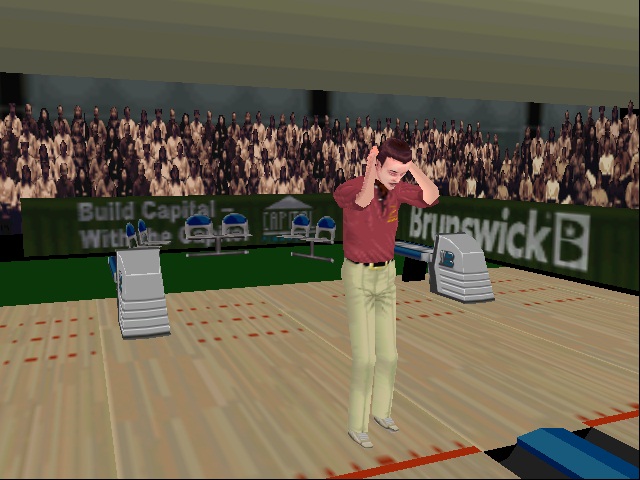
Go to your happy place, amorphous bowler.

Go to your happy place, amorphous bowler.

Brunswick Circuit Pro is another product of the late, somewhat great folks over at THQ. It’s not surprising that THQ keeps showing up as I go through these games. THQ is responsible for many high quality games, but has a history of misguided ambition and questionable decisions in chasing the mass market. Recently, this was their undoing as they bet their company on a conceptually terrible Call of Duty clone Homefront and the frankly bizarre uDraw peripheral.

The uDraw sought to respond to the needs of a chronically under-served audience, people who wanted to play video games using a Wacom tablet. These people realized the faults of the controller and the mouse/keyboard and had spent years wishing for a better option, like a tool designed exclusively for drawing and digital art. Now, I don’t own a uDraw, but I have at least heard that it is reasonably well-designed hardware. For its price, apparently it worked quite well. Unfortunately for THQ, the only people who wanted to hook up a tablet to their video game consoles all either owned Wiis and were desperate for anything that didn’t require waggle to play or worked at THQ. The PS3 and Xbox 360 uDraw tablet was a disaster and so many uDraw devices were manufactured, left unsold, and liquidated in bankruptcy that the tablets are now a secondary currency throughout sub-Saharan Africa.

THQ had it coming for releasing this promotional image, showing two girls enjoying a video game where the objective is to clean floors.

THQ had it coming for releasing this promotional image, showing two girls enjoying a video game where the objective is to clean floors.

Like the uDraw, Brunswick Circuit Pro is a product designed for an audience that doesn’t exist.  It wants to be the Madden or Fifa of bowling, except that unlike football or “football”, if someone wants to go bowling they don’t have to lower themselves to a blocky n64 representation of bowling.  They can just…go bowling.  There are bowling alleys everywhere, and in my experience they’re not usually packed.

Reports from near death experiences indicate that right before the heart stops, the patient often sees the phrase "Welcome to fabulous Akron, Ohio."

Reports from near death experiences indicate that right before the heart stops, the patient often sees the phrase “Welcome to fabulous Akron, Ohio.”

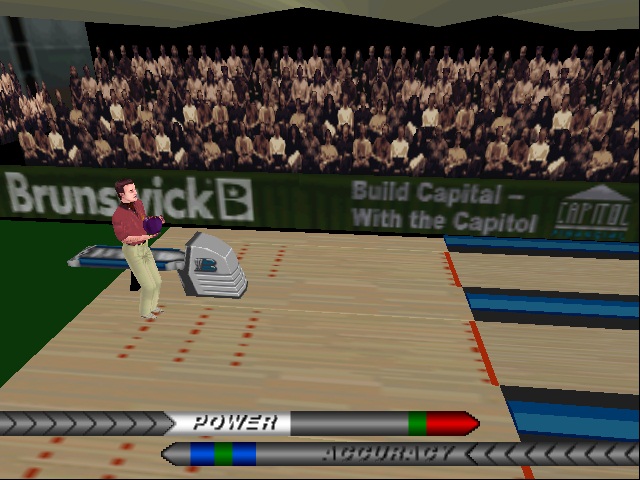
I hesitate to go into much detail regarding the gameplay of Brunswick Circuit Pro because it is about as generic as possible.  Pick a trajectory for the ball, then two meters pop up on the screen  for power and accuracy.  You want to stop both of these meters in the green to keep the ball on target.  Variations on the dual power/accuracy dynamic has been around forever, and it’s nothing special.  I don’t mean this as a knock on Brunswick Circuit Pro specifically.  This is a control scheme well implemented in a bowling game.  The fact that the entire game can be boiled down to the same mechanic used for kickoffs in Madden is mostly an indictment of bowling itself.

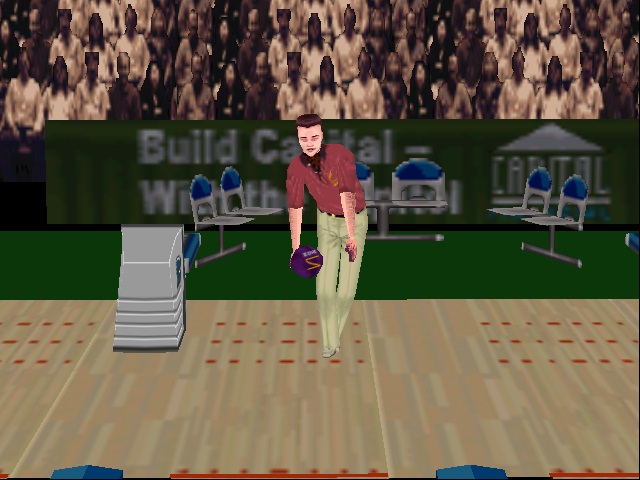
This game could actually be pretty deep if the words were switched around to read "Build the Capitol -- With Capital!"

This game could actually be pretty deep if the words were switched around to read “Build the Capitol — With Capital!”

Despite my criticism, I will say that Brunswick Circuit Pro is faithful to my experiences bowling, which have taught me that no matter how well you think you hit the pins, two or three will always stay standing.  Yes, there are factors to consider like spin and hook that would solve this problem and these factors probably make sense to the kind of people who would appreciate Brunswick Circuit Pro.  As for me, I learned early on that I had my best success at bowling when I threw the ball relatively slowly, in an awkward fashion that probably would have destroyed my wrist if I attempted to do it on a regular basis.  I never did attempt to do it on a regular basis because it made me look like an idiot and I had enough of that outside of bowling.

The only way to see worse crowd animation is to watch a Braves home game.

The only way to see worse crowd animation is to watch a Braves home game.

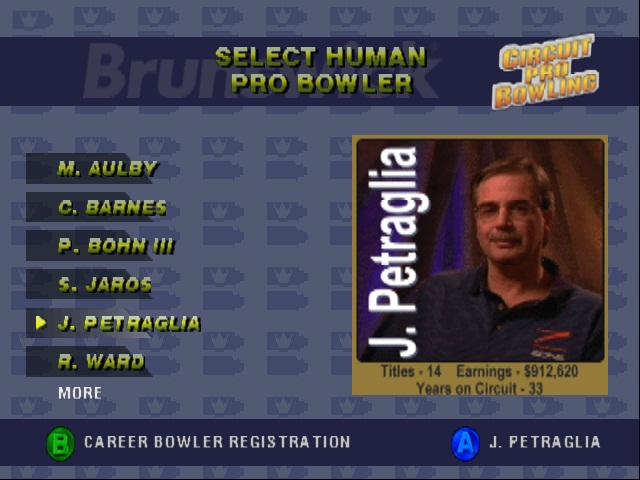
Not only does Brunswick Circuit Pro attempt to faithfully recreate bowling as a sport rather than a social activity, but it also features the names and likenesses of a number of famous bowlers. That’s right; there are exist people who have some right to be called famous bowlers.  This isn’t a joke. These aren’t characters from “The Big Lebowski”. They are real human beings who have made a career out of bowling. Their names include such luminaries as Mike Aulby, Parker Bohn III, and one real motherfucker named Johnny Petraglia.

THIS BASTARD RIGHT HERE.

THIS BASTARD RIGHT HERE.

Let me tell you about Johnny Petraglia.  I started up an exhibition match against this jerk.  Don’t know why i chose him.  Maybe I subconsciously knew what was coming and I hate myself.  After I was done, I looked him up and found out that Johnny Petraglia was a loyal promoter for Brunswick products for decades, so maybe I picked the absolute wrong opponent.  But keep in mind,  I set the game to rookie difficulty.  This was my first time out.  I was just getting used to the controls.  Most games have some sort of learning curve.  Brunswick Circuit Pro has this:

This is the worst thing to ever happen to me in an alley and I’ve lived in South Central Los Angeles.

As you can see, Petraglia obliterated me.  He was Carlos Beltran and I was an AJ Burnett fastball.  I didn’t stand a chance as he threw eight strikes and manages splits on every other frame.  Now, as I understand competitive bowling, this is how it usually goes.  Strikes are common.  Scores routinely reach into the 200s.  That’s fine, but again it speaks to the misguided motivation behind Brunswick Circuit Pro.  Who the hell wants to wants to play professional bowling? There’s little variation of outcome in a bowling match where strikes are expected.

Ultimately, Brunswick Circuit Pro is a failure because it doesn’t understand why people bowl.  It represents the fundamental mistakes that THQ would make over ten years later, resulting in its demise.  From Homeland to uDraw, to the Red Faction series, which stripped out literally everything that people liked about Guerrilla, THQ seemed to fail to comprehend why people enjoyed video games.  And it can all be traced back to a day when they believed that anyone actually wanted to go bowling.

Fuck you too, Petraglia.

Fuck you too, Petraglia.

Experiences in Old Sports Games: NBA Jam

Legend has it that basketball was invented on a rainy day in the December of 1891. At the time, James Naismith, a physical education teacher and aspiring medical doctor, was teaching at a Massachusetts YMCA when the idea struck him. He had just attained the age of thirty, and being that life expectancy was far shorter at this time, he had begun to suffer a terrible midlife crisis. He’d taken up the opium pipe, he had spent the last of his cash on a sleek red soft-top horse, and now he was reconsidering future medical career. His mind was full of wistful thoughts of his childhood dream of becoming a great actor, dashed by Federal law preventing the exhibition of Canadians upon a stage.

It was this shattered dream, his professional training, and the need to make enough quick cash for his next horse payment that led to the development of the game that would be his legacy. Basketball, a sport played by actor-athletes, requiring both the skill to accurately lob a ball and the talent to pretend to be injured. Each match would appear to be decided by the players on the court, but the outcome would ultimately be controlled by the referees, allowing Naismith, who hand-picked the refs, to profit from the burgeoning sports betting industry without appearing suspicious.

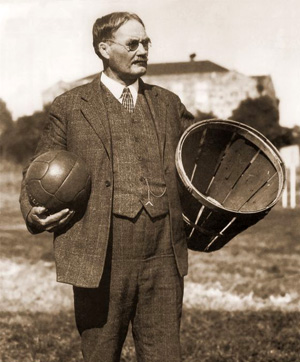
I can't believe there is literally a picture of James Naismith with a ball in one hand and a basket in the other.

I can’t believe there is literally a picture of James Naismith with a ball in one hand and a basket in the other.

Basketball was a hit at the YMCA, where a number of boys had been seeking a socially acceptable outlet for their theatrical talents. The game spread to classical repertory companies, art schools, and even theatrical prep academies across the country. Professional squads, barnstorming and hustling from town to town, turned massive profits and soon consolidated, like the WWF, into a National Basketball Association. This brings me to this week’s game: NBA Jam.

nba_jam_title_screen

NBA Jam, a 1993 release in arcades which was followed up by ports onto almost every conceivable home console, is one of the most successful sports games of all time.  It didn’t just make it big across multiple platforms, but also helped spawn an entire genre: the ridiculously over the top arcade sports game.  Sure, we had Base Wars before NBA Jam, and even NBA Jam owes a debt to its predecessor Arch Rivals, but the idea of taking a sport and distilling it down to the most simple actions, then cranking those actions up to Michael Bay levels originated here.  Without NBA Jam, we would have never seen NFL: Blitz, The Bigs, NHL Hitz, or the only good argument I’ve ever seen for owning a Kinect, Diabolical Pitch.

In NBA Jamthe number of actors allowed on the court per team is lowered from five to two.  This services multiple purposes.  First, it is a function of NBA Jam’s origins as an arcade game.  With only four actors on the court at any given time–two per team–each one can be controlled by a different person standing at the arcade cabinet.  A four player arcade game can generate twice as much revenue as a two player game, and the idea of having every single participant in the basketball game controlled by a human was appealing.  Second, it limited the number of sprites on screen, allowing a level of detail in the players that was fairly remarkable for 1993.

Wow, it really looks like a horribly monstrous version of Patrick Ewing.

Wow, it really looks like a horribly monstrous version of Patrick Ewing.

Like all video games, NBA Jam was a product of its times.  In 1993, the United States was still reeling from the hangover after the raucous party that was the 1980s.  In my post about RBI Baseball, I referenced the singular focus on individuality that was mocked by the simplification of the game of baseball.  NBA Jam does not subvert that fixation, but rather embraces it.  Basketball ceases to become a team performance, and rather focuses on the acting skills of two players.  But this isn’t about the way that media downplays collaborative effort in favor of individual performances.  This is about something else.

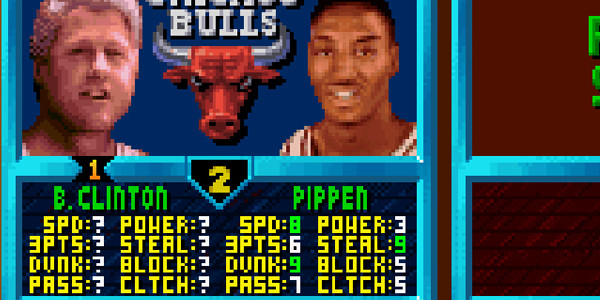
Known for signing the North American Three Point Agreement, President William Jefferson Clinton was fond of sinking the three pointer from down town, if you know what I mean.

Known for signing the North American Three Point Agreement, President William Jefferson Clinton was fond of sinking the ball from downtown, if you know what I mean.

On February 28, 1993, the Bureau of Alcohol, Tobacco, and Firearms commenced a raid on the Mount Carmel Center compound, home of the Branch Davidians religious sect.  The raid resulted in a siege of the compound that lasted almost two months, captivated the American public, and ended in a massive fire that killed the majority of the Branch Davidians, including their leader David Koresh.  The Waco siege was a particularly unusual chapter in modern U.S. history, and set the stage for everything from the entrenchment of the survivalist ethos to the Oklahoma City bombing of 1995.  It was also the unconscious inspiration for NBA Jam.

To understand the relationship between the Waco siege and an arcade basketball game, we have to start at the beginning.  Specifically, with the Branch Davidian religion.  Branch Davidianism is a sect of a sect of a sect of a sect.  They broke off from the Davidian Seventh Day Adventists, which based their teachings off of a two book series (entitled Shepherd’s Rods) by the reformist Victor Houteff.  The Davidian Seventh Day Adventists were, naturally, a sect of the Seventh Day Adventists, which themselves are the largest sect of the Adventist protestant movement.

This image of the siege is the very first google image search result for "Waco", which really sucks for a town with a rich history like that other time it exploded just last April.

This image of the siege is the very first google image search result for “Waco”, which really sucks for a town with a rich history like that other time it exploded just last April.

Adventism has its roots in the teachings of William Miller, a mid-19th century preacher who taught that the return of Jesus was just around the corner.  Miller’s downfall was like that of so many similar men, in that he gave a precise date to the second coming–October 22, 1844–and when it didn’t happen most people rightfully stopped taking him so seriously. Some, however, decided to cut Miller a bit of slack and give him the benefit of the doubt.  Jesus didn’t come back on October 22, 1844, but that didn’t mean he didn’t start getting ready.  Essentially, the remaining Adventists decided that William Miller had the right date, but that it wasn’t the date of Jesus’s return but rather the day he started packing his bags to eventually return.

See, my son, I told you that satan does not have a kickin' rad rear projection TV like I do.  ...what?  He has a plasma?

See, my son, I told you that satan does not have a kickin’ rad rear projection TV like I do. …what? He has a plasma?

Now, as we all know, Jesus doesn’t have to worry about having a variety of daywear and eveningwear on his journey back to Earth, so he isn’t packing his bags with clothes.  Rather, he’s filling his luggage with souls.  And the reason he is taking his time is because he wants to make sure he takes along the right souls.  This process is known as “Investigative Judgment”.  Seventh Day Adventists are big into Investigative Judgment, which has led to a conservative mindset among the movement.  They also have returned to celebrating the Sabbath on a Saturday, but that makes perfect sense because it makes NCAA Football players heathens rather than NFL players.

Salvation up front, party in the back.

Salvation up front, party in the back.

The Davidians shared the belief in the Investigative Judgment, but specifically diverted from the mainstream Seventh Day Adventist movement by embracing the importance of prophecy, vegetarianism, and, later, disclaiming Israel as the pre-Millennial kingdom.  Meanwhile, the Branch Davidians differed from the Davidians by moving up the date of Jesus’s judgment to 1955 and, for a time, incorporating some unexpected feminist teachings into the religion.  Unfortunately, all the good–or at least pleasantly radical–stuff was stricken from the religion and upon the death of Lois Roden, who was their leader throughout the late 70s and early 80s.  The majority of the religion was taken over by David Koresh, who banned the feminist teachings of Roden and turned the Branch Davidians into a run-of-the-mill crazy survivalist sect led by a run-of-the-mill charismatic who wants to be Jesus except without all the Teaching Good Things and instead Molesting Underage Girls.

NBA Jam is basically to basketball what Branch Davidianism is to mainstream Christianity.  The rules and customs of the sport have been filtered through a number of iterations.  Basketball evolved into NBA Basketball, which was forced into the two-on-two format NES game Arch Rivals, which, like the splintering of the Davidians into the Branch Davidians, transformed into the madness of NBA Jam.  

And then everyone caught on fire.

That's it.  That's the punchline.

That’s it. That’s the punchline.

I was lazy with this one because I’m still playing too much Grand Theft Auto V and watching near-playoff baseball.  Also fuck trying to get a Sega Saturn emulator working, that’s just a time sink.  I’ll be back with a real post next week, I promise.


Experiences in Old Sports Games: Grand Theft Auto V

All sports games are divisive. Either you are a fan of the sport and its digital representation, or you find them utterly boring. And no sports game is quite as divisive along these lines as the golf video game. To most people, the idea of virtual golf is duller than than the pain of a lingering bruise. But to others it is a joy, if not an obsession. These players range from folks who enjoy a drunken game of Golden Tee at the bar, to the fans of EA’s Tiger Woods series, and finally to the madmen who still play Links. Capturing this audience is difficult, as there are only so many ways to distinguish a  new golf game from those that came before. This brings me to this week’s game:

This is the only game I've played since Tuesday so this is the game you're going to get.

This is the only game I’ve played since Tuesday so this is the game you’re going to get.

In 2013, Rockstar Games released its first foray into the highly competitive golf market with Grand Theft Auto V for the Xbox 360 and Playstation 3. Rockstar was previously known for its work in revolutionizing the world of virtual ping pong with Rockstar Games Presents Table Tennis as well as the wildly successful bowling title, Episodes from Liberty City. However these were just warm-ups for the Scottish developer as they prepared to tackle the national sport of their homeland.

Thank God no one is sensitive about racism towards the Scottish because this picture.  This picture.

Thank God no one is sensitive about racism towards the Scottish because this picture. This picture.

The name Grand Theft Auto V originates from a phrase in the Doric dialect of Old Scots, “graend ‘heft otta V”, which refers to a very specific set of circumstances in the game of golf, when the ball is removed from play on the green (the “graend ‘heft”)  by an otter or other woodland creature (the “otta”). This permits the golfer to take another swing from the “V”, which was the ancient equivalent to the golf tee–a v-shaped piece of wood used to hold the ball on the first drive that was in fashion before industrialization allowed for the mass production of proper tees.  Up until the invention of otter traps, this phrase was common parlance on the Old Course at St. Andrews.

“Aye! Ye baill gyan missin’.  Looken like a graend ‘heft otta V, taik ‘er back.”

Aye!  Nah again!

Aye! Nah again!

As demonstrated by its choice of title, Grand Theft Auto V seeks to return the sport of golf to its Scottish roots. Unlike in the United States, where golf is considered s port of privilege, only open to the wealthy, in Scotland it is considered a far more egalitarian affair. Some of the most famous courses in the world, including the aforementioned St. Andrews, are open to the public. There are several government-owned courses with subsidized fees that are accessible to everyone.

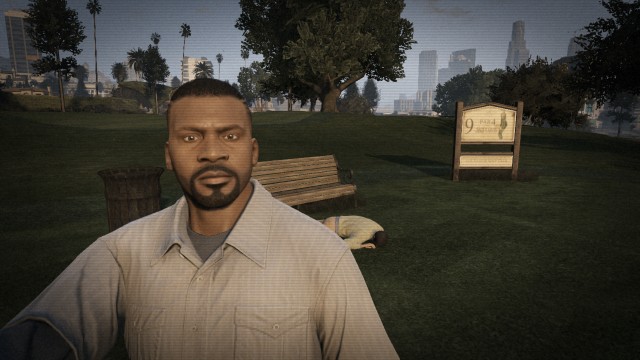
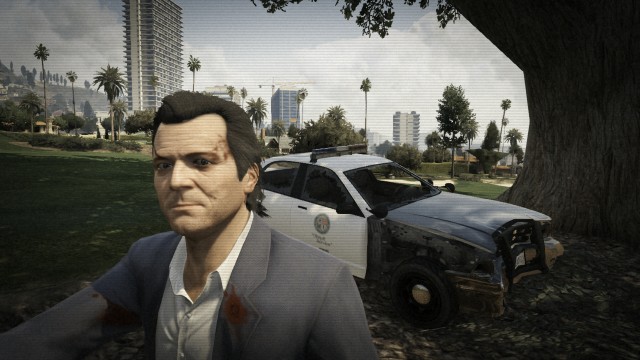
To further its goal of the democratization of golf, Grand Theft Auto V allows you to play as three characters from across the spectrum of social privilege. Rather than provide a selection of real golfers, these three golfers–Michael, Franklin, and Trevor–are fictional. Michael is a retired, wealthy man.  The kind you would expect to see on the golf course.  Franklin is an African-American of limited means, and Trevor is white trash incarnate.  In St. Louis, we would call Trevor a hoosier but anywhere else that’s just going to sound like he’s from Indiana.  St. Louis is weird about the word “hoosier”.  I don’t think Trevor is from Indiana.

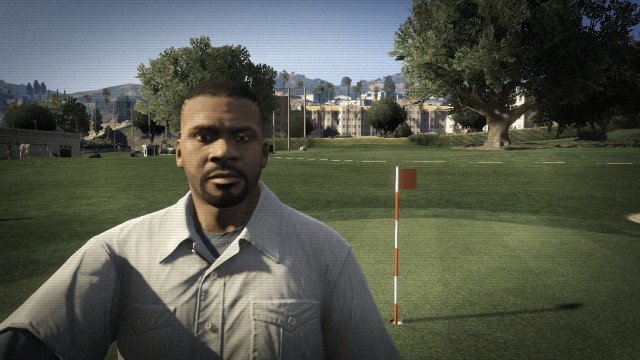
Franklin enjoys a day on the golf course.

Franklin enjoys a day on the golf course.

Back in the Nintendo 64/Playstation 1 era, the days of games like Waialae Country Club: True Golf Classics, only including one golf course was acceptable. However, for a 2013 release, the inclusion of only a single 9 hole course was rather disappointing. This may be a reflection on Rockstar’s Scottish view of golf.  Rather than offer a variety of locations, which would be available to a jet-setting celebrity or CEO, Grand Theft Auto V encourages a laser-like focus on a single local course.

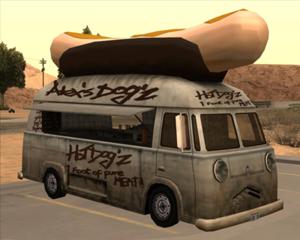
The location, in this case, is the fictional city of Los Santos. This is likely a licensing issue, as representing the existence of the course in any real city would pose a risk of brand confusion with any real course within that city. This may be disappointing to hardcore golf fanatics who have grown accustomed to the realism of the Tiger Woods series, but it’s not without reason. The specific layout of golf courses are protected from duplication or adaptation by the International Links Protection Agreement of 1998, which states that any recreation–physical or otherwise–of a protected property must be approved by a joint panel of judges selected from the U.S. judiciary, the Scottish Court of Session, and the International Court of Justice. EA, with its long-running series, has been willing to draft the necessary petitions and pay the necessary bribes, but Rockstar chose to forgo the hassle for its first attempt at a golf game. Incidentally, the poorly drafted definition of “links” in the 1998 ILPA is also the reason very few video games directly use the phrase “hot dog”, and instead use the generic “processed sausage”.

Two German diplomats had to die to make this possible. Don't ask which ones.

Two German diplomats had to die to make this possible. Don’t ask which ones.

The gameplay in Grand Theft Auto V is simple, and like Rockstar Games Presents Table Tennis easy for a beginner to jump into. The game automatically suggests the club, trajectory, and desired strength for each swing of the club. These suggestions aren’t perfect, and if you want to get under part, you’ll have to learn to tweak them, but they do just fine for the first time on the green. There’s also some light RPG elements, as each character levels up as you play. Swings can increase your strength, and running from hole to hole has a chance to increase stamina. Diving into the water hazards can also increase lung capacity, presumably allowing your golfer to yell “FORE!” with greater power.

In Grand Theft Auto V, golf is a surprisingly brutal sport.

In Grand Theft Auto V, golf is a surprisingly brutal sport.

As you’ll note in the screenshot above, Grand Theft Auto V fills the background of the golf course with virtual buildings.  Unlike most sports games, however, GTA V supplements its rather simple gameplay with the option to explore the area surrounding the course. You can walk your character off of the course and into the city. You can go through the streets on foot, in a car, or in a number of aerial vehicles.

The purpose of this side activity is twofold.  First, it adds depth to a golf experience that can take less than thirty minutes to complete.  Second, it gives context to egalitarian theme that persists throughout the game. In exploring the various neighborhoods within a short distance of the golf course, the lines between the wealthy and the poor become blurred.  Within a few seconds, you can pass between mansions and slums, construction sites and beaches.

GTA V represents a message from the shores of Scotland to the heart of the United States: Golf is for everyone.

Franklin continues to enjoy golf, and doesn't want you to look at what's in the background of his picture.

Franklin continues to enjoy golf, and doesn’t want you to look at what’s in the background of his picture.

Now that I have horribly shoe-horned GTA V into the theme of this blog, I’ll write quickly what I think of the real game, as I have been surprised by just how much I’m enjoying it. I didn’t come into this year, or even this month, with much excitement for GTA V. Games like the Saints Row series, Sleeping Dogs, Just Cause 2 and Infamous had all progressed the open world action genre so much that I wasn’t sure if I wanted another GTA. I didn’t even particularly like GTA IV, though I can’t say for sure how much of that was due to a sluggish opening act and a lack of mid-mission checkpoints. Then I watched a trailer for GTA V, found out Tangerine Dream was working on the soundtrack, and heard some of the boasts about the size and scope of the game. I realized I had to play it, if only to keep up with the zeitgeist and to see how in God’s name it ran on the current, outdated consoles.

Turns out, GTA V is a pretty great game. In a lot of ways, it is more of the same, the radio/TV attempts at humor are oddly dissonant with the themes of the rest of the game, a female protagonist would have been nice, and there are some undeniably problematic issues that shouldn’t be ignored. But the formula has been refined to a point. The city and the countryside are gorgeous. And maybe for the first time since Vice City the storyline missions are actually fun to play.

Something has gone incredibly wrong.

Something has gone incredibly wrong.

Most remarkable, though, is how GTA V feels like an attack on itself and the forces that created it. Five years ago, Rockstar Games tried to dramatically chang its formula, reeling in the silliness of San Andreas and focusing on a more personal storyline about the cyclical terror of violence with GTA IV. The game was a huge success, but complaints about nagging side characters and the dissonance between the story and the typical GTA player’s desire to rampage around the city abounded.

Like Michael in GTA V, Rockstar wanted to move on from a life of creating mayhem and do something different. But mayhem is what is expected of them, and it’s the one thing that the world thinks they are good at. So they are dragged back in. The silliness is back. Mini guns, blimps, gas cans, drug trips, and exploding smartphones. But GTA V doesn’t thank its fans for pulling it back in. Rather, it forces the player to think about how awful it all is. The world of GTA V is full of vile, unlikable people. None more than Trevor, and literal embodiment of what fans want Rockstar to make. His character lives like every GTA player acts outside of missions. He is violence for violence’s sake. But he is also a pathetic sociopath, and the commentary couldn’t be clearer. You don’t want to play as Niko Bellic or John Marston, whose characters make you question your desire for indiscriminate violence? Then you have to be Trevor, and Trevor ain’t pretty. He’ll drag you, and Michael, and Franklin, and Rockstar itself into the darkest of places, where you’ll wish your cousin could give you a call to go bowling.

So maybe you should just stick to the golf course.

Experiences in Old Sports Games: Baseball Stars

I understand why some people don’t like baseball. For the most part, it’s a boring game. Most of your time at a baseball game is spent waiting for something interesting to happen. Most pitches don’t result in solid contact, and most contact results in an out. Watch baseball long enough and you understand. The game makes sense, and several minutes of nothing happening suddenly becomes exciting. In fact, it’s even better when one team makes nothing happen for the entire game. A perfect game. One of the most thrilling things to happen in the entire sport of baseball is for 27 consecutive batters to fail to make anything thrilling occur.

This film is actually about the New York Yankees repeatedly failing, making it the  greatest film of all time.

This film is actually about the New York Yankees repeatedly failing, making it the greatest film of all time.

In a way, baseball teaches us to expect disappointment. It makes us cynical, and lulls us into a sense of false security that the game will continue to disappoint. The crack of the bat is nothing but a loud strike, fouled down the line. The soaring fly ball will stay in the stadium. No amount of effort can push the runner to first base before the ball beats him on the throw.  And then, once our expectations are ground into dust, baseball surprises us. It gives us the moment we stopped hoping for. All the excitement is condensed into a series of quick bursts. Suddenly there are runners on base. The pitcher is sweating. And now that hit–that unlikely hit–could actually put the run on the board.

This is why I’m writing about a baseball game again, less than two months into this project. Because while some people don’t like baseball, I love it. That doesn’t explain, however, why I’m writing about another NES baseball game developed in Japan and released in the late 80s.

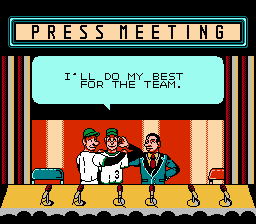
"Yes, I have a question for the man in the blue suit. Why do you need six microphones for three people?"

“Yes, I have a question for the man in the blue suit. Why do you need six microphones for three people?”

Baseball Stars came out over a year after RBI Baseball, in 1989. These two games, along with Bases Loaded, comprised the three major baseball games for the NES. I promise I won’t write about Bases Loaded, though the third installment does suddenly reinvent the game of baseball as a grueling saṃsāra, in which the player must play game after game until achieving the developer’s idea of perfection by following Ryne Sandberg’s Eightfold Path.

Karma Above Replacement Player.

Karma Above Replacement Player.

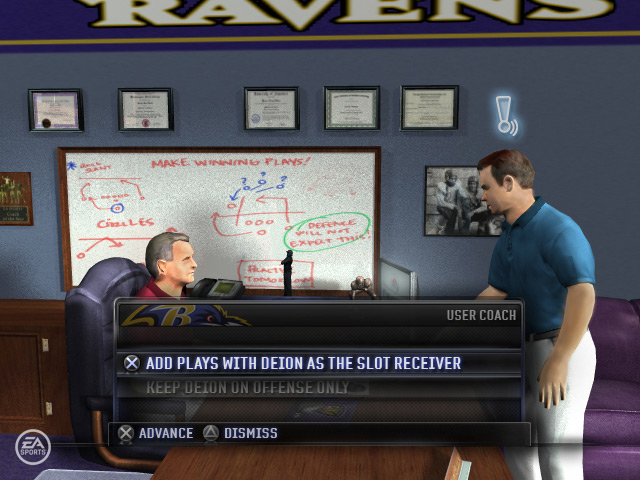
The real reason I am writing about Baseball Stars has little to do with my love of baseball. Any sport could have been the one to implement the two features that really stood out in Baseball Stars. The first is a bare-bones GM mode, allowing players to create their own teams, organize their own league’s, hire, fire, and trade players. This is was critical to the success of Baseball Stars , since it didn’t feature MLB or MLBPA licenses. This level of customization was unprecedented in console gaming at the time and paved the way for similar features: roster editing, franchise modes, and the bizarre abomination that was NFL Head Coach.

It's a good thing he wrote down his cunning strategy of "make winning plays!" because he might have forgotten otherwise.

It’s a good thing he wrote down his cunning strategy of “make winning plays!” because he might have forgotten otherwise.

The second unique feature about Baseball Stars hasn’t become so ubiquitous. Unlike any mainstream team sports game of its time, and unlike almost every single one to come after, Baseball Stars allowed female characters. More specifically, the default set of teams featured an all-womens squad (the Lovely Ladies, which is an unfortunate name but it was 1989), created players could be women, and with a cheat code you could make an overpowered female team.

I sure hope RO Kelly pitches better than Joe Kelly last night.

I sure hope RO Kelly pitches better than Joe Kelly last night.

Representation of women in gaming has been a hot topic recently, as the world is beginning to wake up and realize that the demographics have changed. For years, playing video games was perceived as “for boys”. It’s important to note that this isn’t just a sexist assumption, based in the dumb gender roles that have seen boys scolded for playing with dolls and girls steered away from the t-ball squad, but also fixated on youth. Video games were for kids, specifically male kids and no matter what Midway wanted everyone to believe, even so-called mature games like Mortal Kombat were marketed in that direction.

Video games, and specifically the phrase "rated M for Mature" have been singlehandedly responsible for the semantic drift of the word "mature".

Video games, and specifically the phrase “rated M for Mature” have been singlehandedly responsible for the semantic drift of the word “mature”.

As consumers grow up, gaming is trying to grow up.  Everyone involved is realizing that the market is–and always has been–much larger than just boys. People are starting to understand how the industry has been pandering to a very specific demographic for a long time, and how that pandering is excluding other groups.  And the very boys who have spent the last twenty years being pandered to in video games are FURIOUS if anyone suggests this should change.

Can you imagine the internet death threats that would have been sent in 1989 over this picture?

Can you imagine the internet death threats that would have been sent in 1989 over this picture?

Progress is slow. Call of Duty: Ghosts will be the first in the series to allow players to use a female avatar in multiplayer, but it took until 2013 for a series with a billion entries to finally make this addition.  Assassin’s Creed only featured a woman in the lead role in a Vita spinoff, Assassin’s Creed: Liberation. Grand Theft Auto V, probably the biggest game of the year, has three main characters and they are all, for some reason, men.  Granted, there are indications that you will be able to choose a female character in the online component, but Rockstar is so so secretive about everything that there is no telling what the options will be and you’ll probably have to pick which former U.S. President to play as in an homage to Point Break.

Baseball Stars was an extreme outlier, to the point where sequels to Baseball Stars removed the ability to make women’s teams and female players.  Granted, it was a cosmetic change and the implementation of it was rather weak–the brief animated cutaways and even the fielding didn’t feature female player models–but removing it was still a shitty thing to do.

Female players looked identical to male players in the field, which is to say that they looked like chubby men in skin tight jumpsuits

Female players looked identical to male players in the field, which is to say that they looked like chubby men in skin tight jumpsuits.

At least in sports games, the inclusion of female characters has been dire since the first Baseball Stars.  Tennis games and the occasional golf game have featured women, but the major U.S. team sports have been devoid of the option.  Arguably, the reason is because women don’t play these sports in the leagues that are being portrayed within the game.  There are no female MLB, NFL, or NBA players.  Baseball Stars proved in 1989 that this is not a good excuse.  Understandably, developers will not stick women on a roster where there aren’t any female players. However, there’s no reason to disallow created players to be female.  And don’t say it’s player models.  Most modern create-a-player modes allow for a wide variety of height, weight, and body shape.  

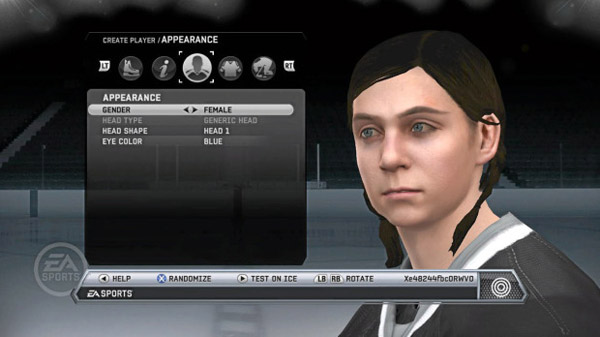
The absurdity of this was made evident when EA decided (much to their credit) to add female created characters to their NHL series in NHL 12.  After receiving a letter from a fan, who wondered why she couldn’t create herself in the game, EA received permission from the league and…they added few female faces and a wider range of create-a-player sizes when switching gender to “female”.  That was it.  that was all it took.

And all the sudden the other half of the population can see itself represented in your game, at barely any cost to anybody.

And all the sudden the other half of the population can see itself represented in your game, at barely any cost to anybody.

I feel like I should throw out some credit to another sports franchise, an old favorite Baseball Mogul, which for as long as it’s been around has had a feature in which you can determine the year women enter baseball.  When setting up a league, you can determine the year in which female rookies can be drafted/show up in minor league systems.  Again, this is an incredibly tiny thing, since Baseball Mogul is only a step above an interactive spreadsheet and adding female players only means changing the pool of first names that the spreadsheet pulls from for generating rookies.  But the fact that it’s such a small thing is an indictment on other developers who don’t put in the same functionality.

Yep.

Yep.

I will concede that sports games have the best excuse of any for the minimal representation of women. There may be licensing issues related to the league, or other similar hurdles to be cleared.  I believe that EA had to seek approval of the NHL to add female characters, and there’s no telling what the offices of Bud Selig or Roger Goodell would do with such a request. I would hope they would realize that it was a gesture that didn’t hurt them, didn’t hurt their league, and potentially create a whole new vector for a larger audience. But the world of professional sports can be just as pig-headed and pandering as the world of video games, so who knows.

That doesn’t mean there shouldn’t be a change. And because of games like Baseball Stars and NHL 12, it seems like maybe some of that change can happen in sports games. As far as I’m concerned, it’s not happening fast enough elsewhere.  Arguably the two biggest games so far of 2013, Bioshock Infinite and The Last of Us were extended escort missions in which the main character was an older, world-weary man protecting a young, naive girl.  And they actually represent progress because the female characters in them aren’t helpless and develop as characters. Saints Row IV, the fourth installment of a series in which your character is repeatedly turned into a walking toilet, unfortunately represents a high water mark for equal opportunity representation in big budget, big release games this year.  And that’s because it lets your character be anything from a young skinny black man to an old, fat white woman to Nolan North and doesn’t change the story or script one bit based on your choice.

If you're not using Laura Bailey or the cockney guy for your Saints Row 4 boss I don't know what's wrong with you.

With the exception of MAYBE the cockney guy the female voices in Saints Row 4 are the only way to go. Russian spy, southern belle, or Laura Bailey? What the hell are you doing playing a male character?

Gamer culture needs to change. Any culture that produces examples like these should be taken out behind the woodshed and shot like a rabid dog.  Unfortunately, it takes more than one bullet to take down a monstrous, societal behemoth like toxic gaming culture. It needs to be attacked on every end, from every angle, and that includes sports games, as unlikely as they might be.

Baseball Stars had the right idea. Maybe there are reasons that a women couldn’t make it in professional baseball. It may be decades before we know, because a whole lot of old men are going to have to die before it’s even considered.  But why can’t a woman make it in video game baseball?  Why can’t video games let us play in a better world?

Experiences in Old Sports Games: WWF No Mercy

In 1989, the owner of Titan Sports, Inc., admitted that professional wrestling was staged. This wouldn’t have been a big deal, except for the fact that the owner of Titan Sports, Inc. was named Vince McMahon and that his company was better known as the World Wrestling Federation, or the WWF.  At the time, the WWF was arguably the biggest it would ever be.  McMahon had built it from a loose conglomeration of regional competitions into something resembling a nationwide league.  Millions of people watched Wrestlemania every year.   The steroid scandal of the early 90s hadn’t reared its head yet, Hulk Hogan was a household name, and the USA was in the brief period when people with disposable income unironically wore mullets.

Pete Sampras's rival Andre Agassi proudly demonstrating just about everything you need to know about 1989.

Pete Sampras’s rival Andre Agassi proudly demonstrating just about everything you need to know about 1989.

McMahon didn’t reveal the secret of professional wrestling because it was the honorable thing to do, or because he wanted to prevent young fans from emulating the stunts of their WWF heroes.  No, he did it because he wanted to make a little bit more money.  New Jersey, the site of Wrestlemania IV and V, taxed the broadcast and exhibition of sporting competitions.  McMahon was willing to swear that there was nothing competitive about professional wrestling to get around the tax.  It didn’t work (you can read a court decision discussing these matters, and more, here) meaning that the WWF stayed clear of New Jersey until the tax was lifted in 1997.  When they came back, they were absolutely puzzled that they still couldn’t pump their own gas.

Of course, the fact that professional wrestling was not a sport was not a complete revelation.  In 1957, Roland Barthes wrote of the spectacle of professional wrestling.  He noted how the rules, the costumes, and even the very physiques of wrestlers were just a series of signs, pitted against one another in a performance that was far more drama than sport.  But, let’s face it, the typical WWF fan in 1989 didn’t read Barthes, and at the time the shows were almost plausible enough that they could be real.  This was pre-Undertaker, folks, and while the storylines were obviously scripted perhaps–just perhaps–the matches were not.

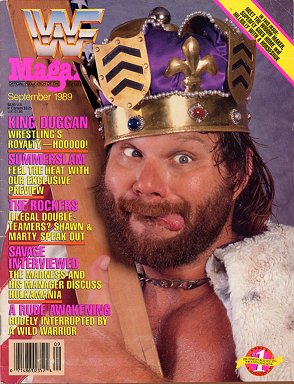
The September 1989 issue of WWF Magazine. Okay, no one could possibly have believed that this was real.

The September 1989 issue of WWF Magazine. Okay, no one could possibly have believed that this was real.

I won’t talk too much about professional wrestling itself, if only because Barthes did it a whole lot better 60+ years ago and nothing has really changed.  Check out The World of Wrestling, which I am only linking here because I assume that if MIT put it online then it’s probably okay to read without buying a copy of Mythologies.  Go check it out.  The important point I wanted to make was that, as early as 1989, the WWF was officially fake.  There were no pretensions to reality, except to the kids I went to grade school with but I suppose they can be forgiven for being unaware of New Jersey Tax Court filings.

The Ultimate Warrior reacts to reaching the limitations of structuralism and realizing, as Barthes did before him, that no matter how much rocket fuel he loads the spaceship with, his powerslam will never produce a transcendental signifier.

The Ultimate Warrior reacts to reaching the limitations of structuralism and realizing, as Barthes did before him, that no matter how much rocket fuel he loads the spaceship with, his powerslam will never produce a transcendental signifier.

The real subject this week is the WWF: No Mercy for the N64.  No Mercy was the sequel to the previous THQ WWF joint, Wrestlemania 2000, released in 1999 because everyone was going by Madden years at that point.  THQ, via developer AKI, had previously worked on games for the WCW/nWo wrestling license.  Many people consider No Mercy the last truly great professional wrestling game, as THQ afterward moved primary development from AKI to Yuke’s, who worked on the contemporaneously released Playstation wrestling titles.  God help me, I also played a bit of a recent Yuke’s title, WWE ’13, and it seems perfectly acceptable, if a bit workmanlike, but some people stand by the AKI N64 titles.  AKI continued to ply their trade, though, and went on to develop the Def Jam: Fight for New York, a fighting game featuring Snoop Dogg and Ludacris, so I think the world won out in the end.

What’s most interesting about WWF: No Mercy, and honestly all WWF/WWE games as a whole, is their utter, slavish devotion to kayfabe.  Kayfabe, for those who are unaware, is the official, unofficial term used to refer to the illusion of professional wrestling as reality.  Kayfabe is the believe that the rivalries are real, the matches are not pre-determined, and everything that that happens in the ring is a true, competitive sporting event.  In WWF: No Mercy  there is no acknowledgment of what people have known since 1989 (and before), which is that wrestling is a staged performance that is more about telling a story than athletic competition.  WWF: No Mercy presents wrestling as nothing other than any other sport.  It features a campaign not terribly different from Pete Sampras Tennis, pitting the player’s chosen wrestler against a series of opponents in a quest for a championship.

Too soon?

Too soon?

The player controls only the performer, and wrestles only against other performers.  The AI similarly does not act as an actual WWF wrestler, working off a script and struggling to portray an inevitable victory or defeat as the result of a competitive match.  In the WWF and WWE video games, the wrestlers do face off in a competitive match.  Either side can win or lose.  There is no script, no bible… Not even Faces or Heels. The player can inhabit any wrestler, whether good or evil, and bring them victory.  The player can even create wrestlers to challenge the existing WWF superstars.

Getting ready to introduce the nWo to the power of the BwO.

Getting ready to introduce the nWo to the power of the BwO.

The closest that WWF: No Mercy comes to an awareness of wrestling’s true nature is the bizarre Guest Referee mode, in which the player takes control of a wrestler who, for some reason, has been given the job of referee.  In this mode, the player can observe and referee a match, calling both submissions and disqualifications for remaining outside of the ring during a  match.  The goal appears to be to arrange a situation in which both wrestlers lose simultaneously, giving the referee the win.  Of course, your ref can play dirty, smacking the two wrestlers around to create this situation.  At least in this single mode, the game acknowledges that the matches are not controlled by the skills of the participants, though it chooses to do so in a roundabout fashion.

#1reasonwhy

#1reasonwhy

Why is this?  Throughout almost the entire history of WWF/WWE video games, none has portrayed professional wrestling for what it really is.  Yukes’ later Smackdown v. Raw and WWE games on the current console generation come close, allowing players to script out story lines in a (rather impressive) comprehensive mode that includes scripted cutscenes and dialog.  However, the matches are still won and lost by the skill of the player.  And the WWE Universe mode, implemented in recent versions of the game, buys into kayfabe to the point where roughing up an opponent during a match can lead to legitimate, non-accidental injury. In the real WWE, both wrestlers are doing everything they can to prevent injury, which given the stunts they are performing is the real, impressive measure of their athletic talent.

It’s not necessarily easy to imagine how a game would successfully break kayfabe, acknowledge that matches are staged, and incorporate this into gameplay.  But it’s also not impossible.  Losing a match as a professional wrestler takes as much–if not more–skill than winning a match.  Selling a loss isn’t easy.  The player would still be required to wrestle “better” than her opponent to a certain point in the match, but also take enough hits to make a throwing the match at the last second believable.  Prior to 2010, wrestling games could have incorporated the application of fake blood as a gameplay mechanic.  There could be storyline penalties for no-selling a loss and winning anyway.  Hell, losses could be forced on the player in a dusty finish.  The goal might be to win a championship, but it also might rather be to get over on the fans, and earn their adoration or hatred as a face or heel.  It would be more interesting gameplay than what WWF: No Mercy has to offer in the ring, which is really just a slow, grapple heavy fighting game, and especially more interesting than Yukes’ system.  So Why Not?

Being able to turn off "attitude" undermines everything that the WWF was attempting to do in the late 90s.

Being able to turn off “attitude” undermines everything that the WWF was attempting to do in the late 90s.

In The World of Wrestling, Barthes describes a professional wrestling match as a display that “takes up the ancient myths of Suffering and Humiliation”.  The act of one man putting another in a hold, immobilizing him while his face contorts in agony, symbolizes an agony that goes beyond defeat.  It represents torture and submission in a way that no touchdown, homerun, or even bloody hockey fight can convey. There is duration and struggle to these moments, and they are used to multiple effects.  These moments of submission can be a great injustice, like when a heel breaks the rules and catches his opponent off guard with a well-placed folding chair.  But they can also signify redemption when the heel gets what’s coming to him in the end.

The blocky figures of the wrestlers represents how boys are forced into rigid stereotypes of masculinity from a young age.

The blocky figures of the wrestlers represents how boys are forced into rigid stereotypes of masculinity from a young age.

When professional wrestling is treated as a voyeuristic morality play, the idea of putting the player in the position of the actor suddenly becomes problematic.  No one wants to suffer, but suffering is part of life.  Whether it’s a hard day at work, or breaking up with a girlfriend, or being pinned to a soft mat in front of thousands of people by a man covered in gold paint, everyone accepts that they have to deal with a little pain.  But there’s nothing worse than faking pain.  Getting hurt is bad, but it happens.  Accepting that you are hurt is worse, but it is just an acknowledgment of an obstacle to overcome.  Pretending to be hurt, though, is inexcusable.  And, for the most part, professional wrestling is built on the backs of men who pretended to be hurt.

Losing a fixed fight isn’t the most awful part, though.  The real reason that a wrestling game will never subvert kayfabe and present the sport accurately is that no one wants to win a fixed fight.  Throwing a match realistically is an interesting gameplay idea, and fixed fights resulting in losses are a storyline staple of RPGs.  But players simply would not accept, under any circumstances, a game in which the victories were staged. No one wants to believe that the hard work put in to achieving success was in any way pre-determined by a larger, powerful system that they will never have control over. Wrestling video games are ultimately built on the same deception as the myth of the American dream.

More than that, victory in professional wrestling is supposed to be an act of justice.  The heel is brought before the crowd and humiliated.  Eventually, the face always wins (or the heel becomes a face, but that’s a whole different recipe that the Rock is cooking).  A video game that forces the player to actively participate in the forgery of righteousness hits too close to home for the intended audience.  It would serve as a reminder that retribution is often more symbolic than meaningful.  Whether it is the trial of a murderer, the bombing of a country that used chemical weapons, or a cringe-inducing hold that leaves the Iron Sheik pretending to be crippled, violence does not create justice.  We like to believe that it does, but at best an act of violence is a deterrent and at worst it is an accelerant towards greater strife.

These acts of violence are inflicted upon a target, but they are directed at the audience who watches from afar.  And that audience–the people who play games like WWF: No Mercy–are not interested in participating in the kabuki.  They want to watch.  They want to believe that it’s real, or at least that it means something. That is why they cannot be allowed to participate. As soon as you let them participate–as soon as you let people in on the portrayal of the act and make them the perpetrators of fake or meaningless violence–they are turned off by the idea.  No one would buy that video game.  No one bought Spec Ops: The Line, after all.

Simply, a WWE game that broke kayfabe would be too subversive.  It would reveal too much about why we inflict violence and perceive victory .  And that’s why it needs to be made.

Experiences In Old Sports Games: Madden 2003

On the morning of September 11, 2001, I was seated in my junior year English class, listening to someone struggle to read a portion of The Scarlet Letter. I look back on that moment and I wonder two things. First, how much has the world changed  because of what happened in New York, Washington DC, and the skies above Pennsylvania that morning? Second, why in God’s name were we wasting time by reading aloud in a high school level English class?

Since the events of that morning, we have lived in what Op-Ed columnists call a “Post-9/11 World”. They use this phrase to denote a loss of innocence, or perhaps an abandonment of naïveté, brought about by a vicious attack carried out in a method that only Tom Clancy saw coming.

My first day in the Post-9/11 World was not my proudest. I deal with tragedy the same way I deal with everything else, by making jokes, and my sixteen year-old self didn’t possess nearly enough tact to handle this properly. Just hours after the collapse of the twin towers, I pitched an updated version of the classic cartoon “Rocky and Bullwinkle” which would reflect a new geopolitial era. Boris and Natasha were replaced by Bashir and Nadirah. They hailed not from Pottsylvania, but the middle-eastern nation of Pottistan. Their nefarious plans to destroy American monuments were foiled by the heroic moose and squirrel as well as their own ineptitude, like when they failed to blow up the St. Louis riverfront because their twin-engine biplane kept flying through the Arch rather than into it.

For his next trick, Rocky is going to turn Bullwinkle into an open-ended authorization for use of military force.

For his next trick, Rocky is going to turn Bullwinkle into an open-ended authorization for use of military force.

Never mind that I predicted a decades-spanning, open ended conflict with an ill-defined religion and culture, this wasn’t something I should have been discussing openly. But I wasn’t alone in my poor judgment. A lot of bad decisions were made on that day, and in the coming weeks, such as the passage of the Patriot Act and the institution of God Bless America during the seventh inning stretch.

Everything changed on that day.  Al-Qaeda became a household name.  The United States entered two wars, one of which didn’t really have anything to do with 9/11 other than geography.  Immigration to the United States plummeted. The climactic scene of every romantic comedy, in which the protagonist rushes through the airport to stop their one true love from boarding a plane to the other side of the country, had to be awkwardly rewritten.

Released just three weeks before 9/11, the film Summer Catch ends with a climactic airport scene in which Freddie Prinze Jr. dashes to an airport gate and stops Jessica Biel from leaving by impressing her with a home-made box cutter.

Released just three weeks before 9/11, the film Summer Catch ends with a climactic airport scene in which Freddie Prinze Jr. dashes to an airport gate and stops Jessica Biel from leaving by giving her four ounces of perfume and his lucky box cutter.

This brings me to the topic of this week’s piece: Madden 2003, the first post-9/11 entry in sports gaming’s biggest franchise. Now, I know what those of you who do not play Madden are saying: how the hell is Madden 2003 the first game in the series to release after September 11, 2001?  With the exception of Madden II, which did not release in 1 A.D., and this week’s Madden 25, which I sure hope did not release in 2024, games in the series have always been named with the year following release.  The reason for this is that John Madden suffers from a strange physical disorder that affects how he perceives time. He rarely speaks of it, because the nature of the disorder leads him to believe that he has already spoken about it at length and, as a consummate professional, he never wishes to bore people by telling the same story twice.

Imagine four turkeys stuffed inside one another.  Say a direct copy of the smallest turkey materialized around the table.  The outer turkey becomes the inner turkey.  Time works the same way.

Imagine four turkeys stuffed inside one another. Say a direct copy of the smallest turkey materialized on the outside. The exterior turkey becomes the interior turkey. Time works the same way.

Madden is, by its nature, an iterative series. That is the criticism most often levied against it, that each new title offers little more than a roster update and a few tweaks on the same game.  In many ways, Madden 2003 was a particularly incremental installment. It built heavily off of the version released two years prior, 2001, which was the first in the series to be developed for the PS2 generation. But there were some significant changes, and ultimately Madden 2003 is a reaction to the loss of control felt by millions of Americans following the events of September 11, 2001.

More than ever, Madden 2003 was a pure power fantasy for the typical American football fan. It allowed players to exert control over the sport that they love, filling the void left by the control they no longer believed they had over their own lives. The standard customization options from 2002 remain intact, with create-a-player and create-a-team modes giving football fans the ability to reinterpret the fabric of the league, and build a new universe free from the cold, harsh truths of reality forced upon them by the actions of terrorist and governmental actor alike.

Create-a-player allowed you to put anyone you wanted in the game.

Create-a-player allowed you to put anyone you wanted in the game.

2003 expanded this customization to playbooks. For the first time, fans could build their own formations and plays. For Americans who felt that the rest of their lives were suddenly being directed by the brutal playbook of Osama bin Laden, this was a welcome relief. Players could map out receivers’ routes, and then test them on the fly before implementing them in a real game, which appealed to the cautious nature of a country still reeling from a national tragedy.

Jets vs. Washington if you know what I mean

Jets vs. Washington if you know what I mean

Mini-camp and “Football 101” modes were added to the game, evidencing early attempts to improve the accessibility of the Madden franchise. One of the most common critiques of the series is its high barrier of entry. Iteration upon iteration has led Madden to become one of the most complicated video games outside of strange ASCII-based PC RPGs. These modes eased players into the complexity. The mini-camp games in particular, which picked out one very specific part of the game and called on players to repeat it for a higher score, were very helpful in teaching the mechanics of early 2000 era Madden. They also spoke to a strong need for preparedness that emerged after a deadly terrorist attack caught the entire nation off guard. On September 10, the entire country was like a rookie pounding the “Ask Madden” button on defense and we never saw the tight end streak coming. No one wanted to see that happen again.

Football 101 demonstrates that players with red/green colorblindness are subhuman and unworthy of instruction on the game of football.

Football 101 demonstrates that players with red/green colorblindness are subhuman and unworthy of instruction on the game of football.

While the aforementioned features appealed to our need for greater control, modifications to the Franchise mode reflected the stark awareness of an unpredictable world. The draft was now coupled with scouting reports that offered only a window into the potential of upcoming rookies. Player progression was now dynamic, rather than dictated by a single “potential” rating assigned to each player upon creation. This allowed for draft steals and busts, and acknowledged that if it was impossible to predict that foreign nationals could take control of multiple jetliners and steer them into otherwise well-guarded buildings, it was unrealistic to be able to predict the development of virtual footballers.

Ah yes I will draft this 6'6" quarterback in the first round that is exactly what I will do.

Ah yes I will draft this 6’6″ quarterback in the first round that is exactly what I will do.

With Madden 2003, EA introduced a new feature that would eventually be used throughout its sports and racing titles “EA Trax”. This was just a fancy name for a partnership with a number of music labels, allowing EA to use licensed songs in its products, and labels to advertise bands in popular EA games. Generally, EA Trax were a mixture of well known artists with up and coming bands sprinkled in. In Madden 2003, popular mainstream artist Bon Jovi headlined, but the game was used to promote a number of bands that (at least in 2002) were less known, including the Nappy Roots and OK Go. But anyone who played a lot of Madden 2003 probably remembers only one song:

Madden cards were the gamification of games before Steam trading cards were even a twisted seed in Gabe Newell's mind.

Madden cards were the gamification of games before Steam trading cards were even a twisted seed in Gabe Newell’s mind.

The immaculate blond coif of Jon Bon Jovi aside, the real coup of EA Trax was Andrew W.K.’s 2001 hit “Party Hard.” It was the first song that played every time the game booted up, and set a frenetic pace for everything that would follow, even if it was often the somewhat dull task of roster management.

Now, I could write an entire blog post about Andrew W.K., who is a classically trained pianist, new age hippy, and the son of the law professor who wrote my Property casebook but made his name playing head-banging hard rock anthems. Everything about him, from the calculated formulaic nature of all his songs to the bizarre hoax/controversy claiming he was an actor playing a part, makes Andrew W.K.’s career almost feel like a satirical performance art piece. Some people pore over the 9/11 Commission report and say that there is a cover up because jet fuel can’t melt steel girders. I look at Andrew W.K. and assume something is wrong because no one man could ever party that hard.

If you examine the pixels, it is clear that one of these Cheetos is actually the wreckage of a cruise missile.

If you examine the pixels, it is clear that one of these Cheetos is actually the wreckage of a cruise missile.

The biggest change to Madden, however was online play.  For the first time in the history of the franchise, players could hook up their consoles to the internet and challenge each other.  This was provided, of course, that they were some of the few who owned the PS2 network adapter.  This wasn’t a surprising development.  While the internet and internet gaming had been around for years, it was only around this time that broadband connections were becoming available and affordable to most Americans.  The adoption of internet play by Madden, the most mainstream of mainstream video games (despite its complexity) was indicative of the penetration of the internet into our everyday lives.

Whatever you do, do not image search "internet penetration" on the internet.

Whatever you do, do not image search “internet penetration” on the internet.

The internet as we know it–the fast, mostly reliable internet that provides us with streaming video and games that aren’t lagged to hell and web-based e-mail and bronies–is largely a product of the post-9/11 world. Its development from the days of AOL free trial CDs to device the size of a pack of playing cards streaming video through the air coincided with the rise of an era of paranoia, war, and fear. This is something that most people had forgotten until recently, and we were only reminded by the revelations about the extent to which the government was monitoring internet communications.

Now, of course the NSA isn’t watching you play Madden, and if they are, there certainly aren’t several agents laughing about your decision to go with that slant route on third down, falling just short of the marker even though you had to squeeze the pass into tight coverage. That’s absurd. They are watching people play FIFA because under the minimization procedures approved by the Court, enthusiasm for soccer is sufficient to determine that a communication is not based in the United States.

pw2

While it’s easy to write off Madden as a piece of cultural detritus consumed only by the popped-collar bottom feeders between downing bottles of Smirnoff Ice “ironically”, there is always something to learn about society from examining its most popular entertainment products. Whether it is EA Tiburon using the QB vision cone in 06 to comment on how media focuses the attention of the masses away from class conflict, or the glitchy, sensitive Infinity Engine in 13 and now 25 serving as an artistic representation of the damage caused to players’ bodies by the everyday contact of football, Madden can teach us about the the way we perceive the world.

Experiences in Old Sports Games: Pete Sampras Tennis

The George Foreman Grill launched in the year 1994, when I was only nine years old.  We had one early on in my home, and then when I moved out to go to college it was relatively quick purchase.  As such, I think it’s fair to say that I’ve either owned a George Foreman Grill, or lived in home containing a George Foreman Grill, for at least half of my life.

I’ve used the George Foreman Grill–either the one we had growing up or the one I purchased later on–maybe twenty times.  On its face, the George Foreman Grill seems like  fantastic idea.  A simple way to cook lean meat dishes?  Easy toasted sandwiches?  Sign me up.  But the reality of the product isn’t nearly as glamorous as its promise.  Burn anything and it’s a hassle to clean.  There’s no way to adjust the temperature, so it’s a crapshoot whether you can fully cook anything thick before the outside sears onto the “non-stick” surface. And that fat that’s draining out of your chicken or hamburger?  Turns out that wasn’t all that bad for you anyway.

I don’t know why I bought my own George Foreman Grill.  At that point, I should have known that it wasn’t really my thing.   I was aware that I preferred a cast iron skillet.  So why did I get one?  It was probably hope.  Hope, and this man’s smiling face:

Note how one hand is touching the hot surface of the grill, and yet the other hand is wearing a protective mitt.

Note how one hand is almost touching the hot surface of the grill, and yet the other hand is wearing a protective mitt.

Celebrity endorsement is a transformative act in which the celebrity allows a product to take on some of the qualities generally ascribed to the celebrity.  When I use the word “celebrity”, I do not mean it to refer to the person George Foreman, but the symbol George Foreman.  The nature of fame and exposure is that certain facets of personality and identity are either expressed, suppressed, or made up out of whole cloth.  George Foreman the celebrity has qualities that are not wholly representative of George Foreman the person.  In 1994, he symbolized toughness, longevity, and athleticism.  Now, after almost two decades of peddling grills, he is probably better known for his salesmanship.

When George Foreman allowed his name to be put on the grill, he loaned the grill some of his meaning as a celebrity.   Subconsciously, people associated it with the same significance they associated with George Foreman.  In turn, competitors have sought out similar endorsements over the years, leading to the Hulk Hogan Ultimate Grill, the Evander Holyfield Real Deal Grill, and the Paul Wall Fast Life Grill.

WITH THIS PATENTED TECHNOLOGY, THE FAT AND GREASE JUST DRAINS INTO MY MOUTH.

WITH THIS PATENTED TECHNOLOGY, THE FAT AND GREASE JUST DRAINS INTO MY MOUTH.

For a long time, sports video games traded on the power of the celebrity endorsement.  Of course, they didn’t just use any celebrities. They used players or managers from their respective sports.  There are tons of examples: Ken Griffey Jr. presents Major League Baseball, named after the Seattle CF phenom in 1994.  Wayne Gretzky 3d Hockey, the arcade (and later N64) game that endorsed by the Great One.  Nester’s Funky Bowling, named after Nestor Carbonell from LOST, for the Virtual Boy.

You don’t see it so much these days, with almost all sports titles being as minimalist as to only include the league and the year.  The exception, of course, is the grandaddy of them all, Madden Football, but for a long time every other sports title bore the name of a famous figure.  This brings us to today’s old sports game:

Momma Sampras warned you your face would stick like that.

Momma Sampras warned you your face would stick like that.

Tennis has appeared in some form on just about every video game system known to man and also the Ouya. It holds a special place in the history of video games. Everyone knows about Pong, which first popularized the coin-op arcade machine and the home video console, even if it was predated by Computer Space and the Magnavox Odyssey on both fronts.  But the sport of tennis was also the inspiration for Tennis For Two, a 1958 oscilloscope device that has at least a tenuous claim to be the first video game.  If nothing else, Tennis for Two is easily the first computer game to simulate physics, specifically gravity. Unfortunately, no one could figure out how to display the Havok logo on startup of an oscilloscope, so Tennis for Two never saw the light of day outside of a laboratory.

Pete Sampras Tennis came out for the Mega Drive and Genesis in 1994 which was the same year as the George Foreman grill, and it was approximately just as useful for cooking a chicken breast evenly all the way through. Unlike the grill, which was specially formulated to appeal to the twin American desires of eating more meat and buying things from television that enable the eating of more meat, Pete Sampras Tennis was only given a limited release in the United States. Its sequels, on the Mega drive and PlayStation, didn’t even make it across the Atlantic .  It was developed by Codemastersa U.K. development house and publisher which has been around forever.

Did you know that Pete Sampras Tennis was the inspiration for the God of War series?

Did you know that Pete Sampras Tennis was the inspiration for the God of War series?

Codemasters has some decent successes in their length history-specifically the Game Genie and the Dirt series-but they could cure cancer tomorrow and to me they’d still be the monsters who allowed Leisure Suit Larry: Box Office Bust to exist. Many Codemasters games never made it to the United States and stayed in Europe forever. Sometimes this was a good thing. Be sure to call up your grandparents and thank them for their sacrifices, because without them we’d all be speaking German and waxing nostalgic about Dizzy Kart for the ZX 64.

Pete Sampras Tennis doesn’t necessarily take any risks, and the AI is terrible, but it generally succeeds in representing the game about as well as any other title at the time. The control pad moves your player around the screen, and the three Mega Drive/Genesis buttons each give different strengths for a swing, letting you choose to lob the ball, shoot it, or try and nail it with some topspin.  Basic stuff, but a step above, say, Jimmy Connors Tennis for the NES, released the year before.

F U

Several characters are available, both male and female, but the only real tennis player featured is, naturally, Pete Sampras.  What, did you expect he would let Andre Agassi into his game?  It’s a well known fact that Pete Sampras and Andre Agassi had a long-standing rivalry.  In 1994, it was so bad that Pete Sampras visited the set of the children’s film Andre during post-production and literally murdered half of the crew before he discovered that it was about a friendly sea lion and not Agassi.  The only reason that Sampras didn’t go to prison was because the judge’s kids made him see Andre in the theaters and the killings were dismissed as justifiable.

Pete Sampras is an American.  This is a game developed in Europe, for a European audience, and yet it trades on the celebrity of a man halfway around the world.  It–or its Europe only sequels–could have been Stefan Edberg Tennis or Boris Becker Tennis. Yet an American was chosen, despite the target demographic being almost entirely from other countries. The simple reason is that Sampras transcended nationality. He was the best player of his time, and 1994 was hardly a time of great anti-American animosity.

This fundamentally conservative game portrays most of the USA with lady liberty, a symbol of freedom, but assigns to California a picture of a government-funded bridge.

This fundamentally conservative game portrays most of the USA with lady liberty, a symbol of freedom, but assigns to California a picture of a government-funded bridge.

But why wasn’t Pete Sampras Tennis, a game featuring one of the biggest American athletes in the world, successful in the United States of America? Codemasters making poor decisions aside, tennis simply didn’t rate in the USA during the mid-90s. Americans simply didn’t care about the game, and generally haven’t with the exception of the careers of John McEnroe during the 80s and the Williams sisters in the late 90s/early 00s.

Why is this? Ultimately, tennis is perceived as a high class sport. Matches are silent, players are expected to act respectfully, everyone is wearing white, and no one would dare sew a Pennzoil patch onto their jacket. It’s generally accepted that talent and hard work alone are insufficient to succeed, and that the teachings of a highly paid professional are required to even be a decent amateur player. While this is true of many sports, Americans hate this shit. They want to believe the story of the poor kid from Montana who fine-tuned his baseball swing chopping wood or the quarterback who kept his arm fresh chucking toilet paper roles as a stocker at the grocery store.

Americans hate to be reminded that class exists. A key part of the American national mythology is that everyone is born equal and has the same opportunities to succeed. It’s bullshit, and all it takes to know that it’s bullshit is the the fact that George W. Bush of all people was elected to the highest office in the country on two separate occasions, but all the popular spectator sports in the United States feed into this mythology.

Pete Sampras approved every single pixel in this representation of his hair.

Pete Sampras approved every single pixel in this representation of his hair.

Not tennis. Professional tennis embraces its status as a privileged sport for privileged people. It has adopted the trappings of an aristocratic duel, rather than the brawls and street fights that Americans prefer to see. See my last post on hockey, and try to imagine how Tony Twist would fare on the courts of Wimbledon. Americans don’t want to see that shit. They don’t want to watch a man named Federer (only two letters away from Federal, so he’s probably trying to take your guns away) who speaks multiple languages fluently, and was coached at age 10 by a man named Adolf at The Old Boys Tennis Club in Switzerland.

Ultimately, unlike George Foreman, Pete Sampras wasn’t the kind of celebrity that would be embraced by Americans enough to lead to a successful product. Sampras was, like Federer, a symbol of privilege. He represented country club training and the luck of a prodigy. He wasn’t like Foreman, a poor kid from Houston who dropped out of school and made it big throwing punches then became a Baptist minister. Sampras was known for taking up tennis before he could read. That’s genetics. Foreman was known for battling the odds to make a comeback at age 38. That’s hard work, and Americans love hard work up until the point when it tries to unionize.

It’s a shame, because if Codemasters does anything right, its simulation/arcade hybrid sports titles. Their F1 series is quite beloved, though F1 is ignored in America for largely the exact same reasons as tennis [citation: Talladega Nights: The Ballad of Ricky Bobby. Dir. Adam McKay. Perf. Will Ferrell, Sacha Baron Cohen. Sony Pictures. 2006. Film.] They hitched their hopes of American success to the wrong American. If only they’d found the right celebrity endorsement, maybe we’d still be buying Codemasters tennis games.

Next time, think about who Americans admires. I suggest going out of the box and shocking the states with the one thing they can’t get enough of: those guys on Duck Dynasty.