Experiences in Old Sports Games: Baseball Stars

I understand why some people don’t like baseball. For the most part, it’s a boring game. Most of your time at a baseball game is spent waiting for something interesting to happen. Most pitches don’t result in solid contact, and most contact results in an out. Watch baseball long enough and you understand. The game makes sense, and several minutes of nothing happening suddenly becomes exciting. In fact, it’s even better when one team makes nothing happen for the entire game. A perfect game. One of the most thrilling things to happen in the entire sport of baseball is for 27 consecutive batters to fail to make anything thrilling occur.
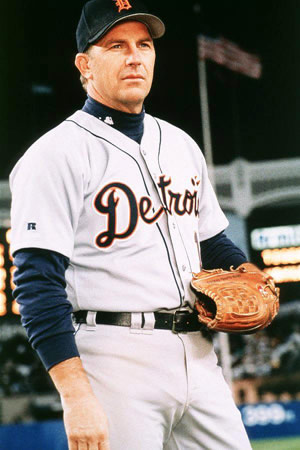
This film is actually about the New York Yankees repeatedly failing, making it the  greatest film of all time.

This film is actually about the New York Yankees repeatedly failing, making it the greatest film of all time.

In a way, baseball teaches us to expect disappointment. It makes us cynical, and lulls us into a sense of false security that the game will continue to disappoint. The crack of the bat is nothing but a loud strike, fouled down the line. The soaring fly ball will stay in the stadium. No amount of effort can push the runner to first base before the ball beats him on the throw.  And then, once our expectations are ground into dust, baseball surprises us. It gives us the moment we stopped hoping for. All the excitement is condensed into a series of quick bursts. Suddenly there are runners on base. The pitcher is sweating. And now that hit–that unlikely hit–could actually put the run on the board.

This is why I’m writing about a baseball game again, less than two months into this project. Because while some people don’t like baseball, I love it. That doesn’t explain, however, why I’m writing about another NES baseball game developed in Japan and released in the late 80s.
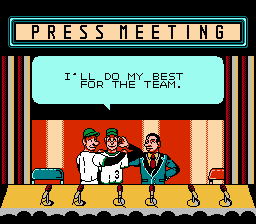
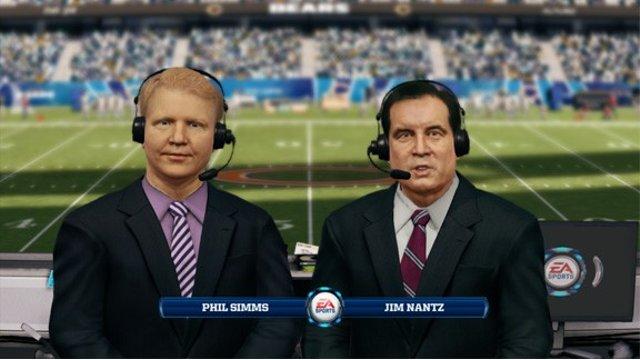
"Yes, I have a question for the man in the blue suit. Why do you need six microphones for three people?"

“Yes, I have a question for the man in the blue suit. Why do you need six microphones for three people?”

Baseball Stars came out over a year after RBI Baseball, in 1989. These two games, along with Bases Loaded, comprised the three major baseball games for the NES. I promise I won’t write about Bases Loaded, though the third installment does suddenly reinvent the game of baseball as a grueling saṃsāra, in which the player must play game after game until achieving the developer’s idea of perfection by following Ryne Sandberg’s Eightfold Path.
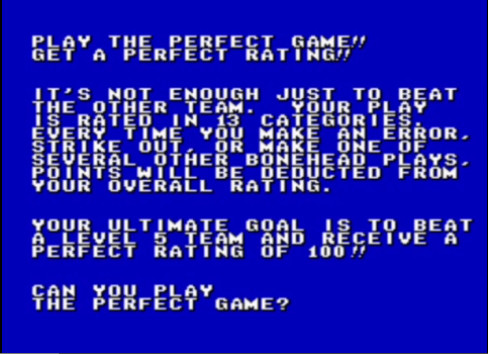
Karma Above Replacement Player.

Karma Above Replacement Player.

The real reason I am writing about Baseball Stars has little to do with my love of baseball. Any sport could have been the one to implement the two features that really stood out in Baseball Stars. The first is a bare-bones GM mode, allowing players to create their own teams, organize their own league’s, hire, fire, and trade players. This is was critical to the success of Baseball Stars , since it didn’t feature MLB or MLBPA licenses. This level of customization was unprecedented in console gaming at the time and paved the way for similar features: roster editing, franchise modes, and the bizarre abomination that was NFL Head Coach.
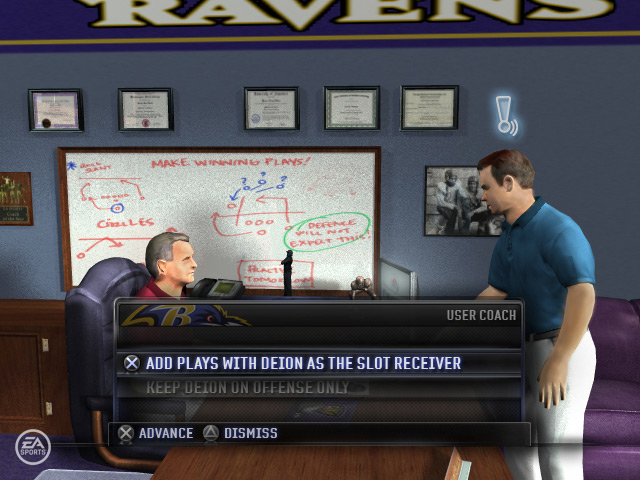
It's a good thing he wrote down his cunning strategy of "make winning plays!" because he might have forgotten otherwise.

It’s a good thing he wrote down his cunning strategy of “make winning plays!” because he might have forgotten otherwise.

The second unique feature about Baseball Stars hasn’t become so ubiquitous. Unlike any mainstream team sports game of its time, and unlike almost every single one to come after, Baseball Stars allowed female characters. More specifically, the default set of teams featured an all-womens squad (the Lovely Ladies, which is an unfortunate name but it was 1989), created players could be women, and with a cheat code you could make an overpowered female team.

I sure hope RO Kelly pitches better than Joe Kelly last night.

I sure hope RO Kelly pitches better than Joe Kelly last night.

Representation of women in gaming has been a hot topic recently, as the world is beginning to wake up and realize that the demographics have changed. For years, playing video games was perceived as “for boys”. It’s important to note that this isn’t just a sexist assumption, based in the dumb gender roles that have seen boys scolded for playing with dolls and girls steered away from the t-ball squad, but also fixated on youth. Video games were for kids, specifically male kids and no matter what Midway wanted everyone to believe, even so-called mature games like Mortal Kombat were marketed in that direction.

Video games, and specifically the phrase "rated M for Mature" have been singlehandedly responsible for the semantic drift of the word "mature".

Video games, and specifically the phrase “rated M for Mature” have been singlehandedly responsible for the semantic drift of the word “mature”.

As consumers grow up, gaming is trying to grow up.  Everyone involved is realizing that the market is–and always has been–much larger than just boys. People are starting to understand how the industry has been pandering to a very specific demographic for a long time, and how that pandering is excluding other groups.  And the very boys who have spent the last twenty years being pandered to in video games are FURIOUS if anyone suggests this should change.

Can you imagine the internet death threats that would have been sent in 1989 over this picture?

Can you imagine the internet death threats that would have been sent in 1989 over this picture?

Progress is slow. Call of Duty: Ghosts will be the first in the series to allow players to use a female avatar in multiplayer, but it took until 2013 for a series with a billion entries to finally make this addition.  Assassin’s Creed only featured a woman in the lead role in a Vita spinoff, Assassin’s Creed: Liberation. Grand Theft Auto V, probably the biggest game of the year, has three main characters and they are all, for some reason, men.  Granted, there are indications that you will be able to choose a female character in the online component, but Rockstar is so so secretive about everything that there is no telling what the options will be and you’ll probably have to pick which former U.S. President to play as in an homage to Point Break.

Baseball Stars was an extreme outlier, to the point where sequels to Baseball Stars removed the ability to make women’s teams and female players.  Granted, it was a cosmetic change and the implementation of it was rather weak–the brief animated cutaways and even the fielding didn’t feature female player models–but removing it was still a shitty thing to do.
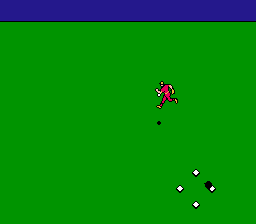
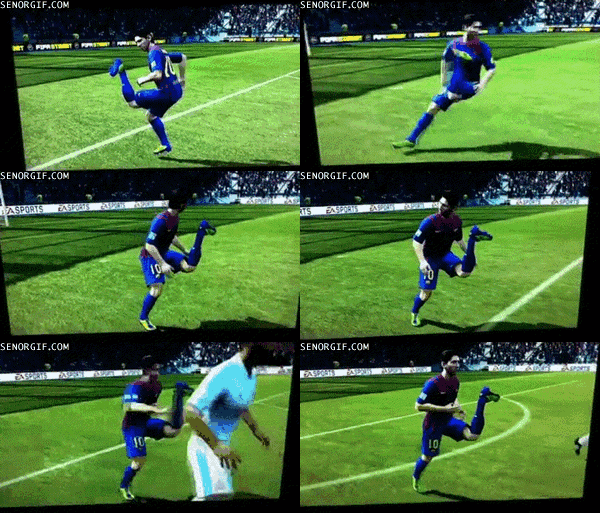
Female players looked identical to male players in the field, which is to say that they looked like chubby men in skin tight jumpsuits

Female players looked identical to male players in the field, which is to say that they looked like chubby men in skin tight jumpsuits.

At least in sports games, the inclusion of female characters has been dire since the first Baseball Stars.  Tennis games and the occasional golf game have featured women, but the major U.S. team sports have been devoid of the option.  Arguably, the reason is because women don’t play these sports in the leagues that are being portrayed within the game.  There are no female MLB, NFL, or NBA players.  Baseball Stars proved in 1989 that this is not a good excuse.  Understandably, developers will not stick women on a roster where there aren’t any female players. However, there’s no reason to disallow created players to be female.  And don’t say it’s player models.  Most modern create-a-player modes allow for a wide variety of height, weight, and body shape.  

The absurdity of this was made evident when EA decided (much to their credit) to add female created characters to their NHL series in NHL 12.  After receiving a letter from a fan, who wondered why she couldn’t create herself in the game, EA received permission from the league and…they added few female faces and a wider range of create-a-player sizes when switching gender to “female”.  That was it.  that was all it took.
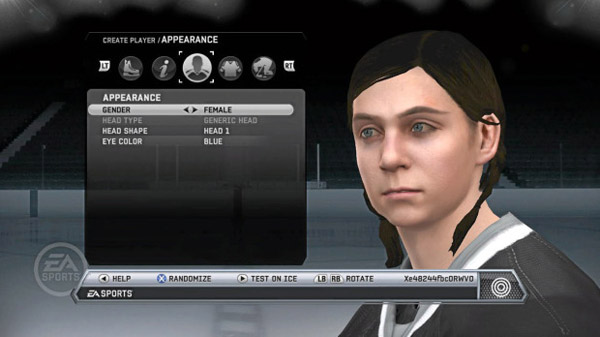
And all the sudden the other half of the population can see itself represented in your game, at barely any cost to anybody.

And all the sudden the other half of the population can see itself represented in your game, at barely any cost to anybody.

I feel like I should throw out some credit to another sports franchise, an old favorite Baseball Mogul, which for as long as it’s been around has had a feature in which you can determine the year women enter baseball.  When setting up a league, you can determine the year in which female rookies can be drafted/show up in minor league systems.  Again, this is an incredibly tiny thing, since Baseball Mogul is only a step above an interactive spreadsheet and adding female players only means changing the pool of first names that the spreadsheet pulls from for generating rookies.  But the fact that it’s such a small thing is an indictment on other developers who don’t put in the same functionality.

Yep.

Yep.

I will concede that sports games have the best excuse of any for the minimal representation of women. There may be licensing issues related to the league, or other similar hurdles to be cleared.  I believe that EA had to seek approval of the NHL to add female characters, and there’s no telling what the offices of Bud Selig or Roger Goodell would do with such a request. I would hope they would realize that it was a gesture that didn’t hurt them, didn’t hurt their league, and potentially create a whole new vector for a larger audience. But the world of professional sports can be just as pig-headed and pandering as the world of video games, so who knows.

That doesn’t mean there shouldn’t be a change. And because of games like Baseball Stars and NHL 12, it seems like maybe some of that change can happen in sports games. As far as I’m concerned, it’s not happening fast enough elsewhere.  Arguably the two biggest games so far of 2013, Bioshock Infinite and The Last of Us were extended escort missions in which the main character was an older, world-weary man protecting a young, naive girl.  And they actually represent progress because the female characters in them aren’t helpless and develop as characters. Saints Row IV, the fourth installment of a series in which your character is repeatedly turned into a walking toilet, unfortunately represents a high water mark for equal opportunity representation in big budget, big release games this year.  And that’s because it lets your character be anything from a young skinny black man to an old, fat white woman to Nolan North and doesn’t change the story or script one bit based on your choice.

If you're not using Laura Bailey or the cockney guy for your Saints Row 4 boss I don't know what's wrong with you.

With the exception of MAYBE the cockney guy the female voices in Saints Row 4 are the only way to go. Russian spy, southern belle, or Laura Bailey? What the hell are you doing playing a male character?

Gamer culture needs to change. Any culture that produces examples like these should be taken out behind the woodshed and shot like a rabid dog.  Unfortunately, it takes more than one bullet to take down a monstrous, societal behemoth like toxic gaming culture. It needs to be attacked on every end, from every angle, and that includes sports games, as unlikely as they might be.

Baseball Stars had the right idea. Maybe there are reasons that a women couldn’t make it in professional baseball. It may be decades before we know, because a whole lot of old men are going to have to die before it’s even considered.  But why can’t a woman make it in video game baseball?  Why can’t video games let us play in a better world?

Experiences in Old Sports Games: WWF No Mercy

In 1989, the owner of Titan Sports, Inc., admitted that professional wrestling was staged. This wouldn’t have been a big deal, except for the fact that the owner of Titan Sports, Inc. was named Vince McMahon and that his company was better known as the World Wrestling Federation, or the WWF.  At the time, the WWF was arguably the biggest it would ever be.  McMahon had built it from a loose conglomeration of regional competitions into something resembling a nationwide league.  Millions of people watched Wrestlemania every year.   The steroid scandal of the early 90s hadn’t reared its head yet, Hulk Hogan was a household name, and the USA was in the brief period when people with disposable income unironically wore mullets.

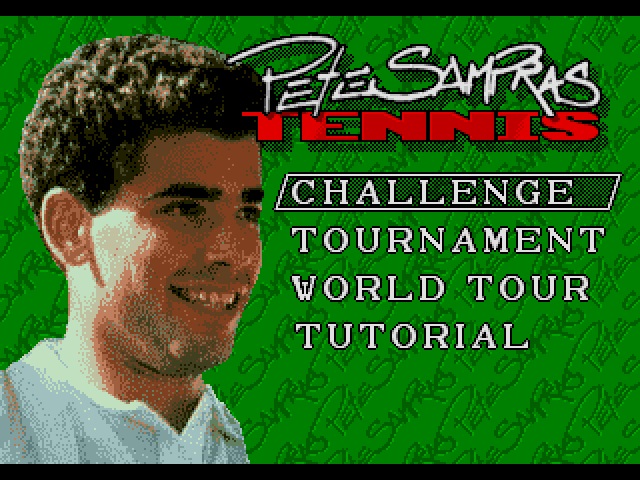
Pete Sampras's rival Andre Agassi proudly demonstrating just about everything you need to know about 1989.

Pete Sampras’s rival Andre Agassi proudly demonstrating just about everything you need to know about 1989.

McMahon didn’t reveal the secret of professional wrestling because it was the honorable thing to do, or because he wanted to prevent young fans from emulating the stunts of their WWF heroes.  No, he did it because he wanted to make a little bit more money.  New Jersey, the site of Wrestlemania IV and V, taxed the broadcast and exhibition of sporting competitions.  McMahon was willing to swear that there was nothing competitive about professional wrestling to get around the tax.  It didn’t work (you can read a court decision discussing these matters, and more, here) meaning that the WWF stayed clear of New Jersey until the tax was lifted in 1997.  When they came back, they were absolutely puzzled that they still couldn’t pump their own gas.

Of course, the fact that professional wrestling was not a sport was not a complete revelation.  In 1957, Roland Barthes wrote of the spectacle of professional wrestling.  He noted how the rules, the costumes, and even the very physiques of wrestlers were just a series of signs, pitted against one another in a performance that was far more drama than sport.  But, let’s face it, the typical WWF fan in 1989 didn’t read Barthes, and at the time the shows were almost plausible enough that they could be real.  This was pre-Undertaker, folks, and while the storylines were obviously scripted perhaps–just perhaps–the matches were not.

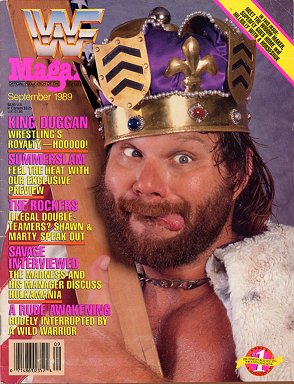
The September 1989 issue of WWF Magazine. Okay, no one could possibly have believed that this was real.

The September 1989 issue of WWF Magazine. Okay, no one could possibly have believed that this was real.

I won’t talk too much about professional wrestling itself, if only because Barthes did it a whole lot better 60+ years ago and nothing has really changed.  Check out The World of Wrestling, which I am only linking here because I assume that if MIT put it online then it’s probably okay to read without buying a copy of Mythologies.  Go check it out.  The important point I wanted to make was that, as early as 1989, the WWF was officially fake.  There were no pretensions to reality, except to the kids I went to grade school with but I suppose they can be forgiven for being unaware of New Jersey Tax Court filings.

The Ultimate Warrior reacts to reaching the limitations of structuralism and realizing, as Barthes did before him, that no matter how much rocket fuel he loads the spaceship with, his powerslam will never produce a transcendental signifier.

The Ultimate Warrior reacts to reaching the limitations of structuralism and realizing, as Barthes did before him, that no matter how much rocket fuel he loads the spaceship with, his powerslam will never produce a transcendental signifier.

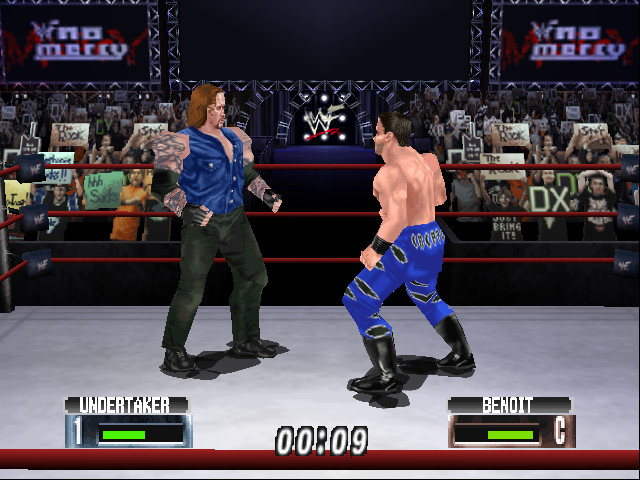
The real subject this week is the WWF: No Mercy for the N64.  No Mercy was the sequel to the previous THQ WWF joint, Wrestlemania 2000, released in 1999 because everyone was going by Madden years at that point.  THQ, via developer AKI, had previously worked on games for the WCW/nWo wrestling license.  Many people consider No Mercy the last truly great professional wrestling game, as THQ afterward moved primary development from AKI to Yuke’s, who worked on the contemporaneously released Playstation wrestling titles.  God help me, I also played a bit of a recent Yuke’s title, WWE ’13, and it seems perfectly acceptable, if a bit workmanlike, but some people stand by the AKI N64 titles.  AKI continued to ply their trade, though, and went on to develop the Def Jam: Fight for New York, a fighting game featuring Snoop Dogg and Ludacris, so I think the world won out in the end.

What’s most interesting about WWF: No Mercy, and honestly all WWF/WWE games as a whole, is their utter, slavish devotion to kayfabe.  Kayfabe, for those who are unaware, is the official, unofficial term used to refer to the illusion of professional wrestling as reality.  Kayfabe is the believe that the rivalries are real, the matches are not pre-determined, and everything that that happens in the ring is a true, competitive sporting event.  In WWF: No Mercy  there is no acknowledgment of what people have known since 1989 (and before), which is that wrestling is a staged performance that is more about telling a story than athletic competition.  WWF: No Mercy presents wrestling as nothing other than any other sport.  It features a campaign not terribly different from Pete Sampras Tennis, pitting the player’s chosen wrestler against a series of opponents in a quest for a championship.

Too soon?
Too soon?

The player controls only the performer, and wrestles only against other performers.  The AI similarly does not act as an actual WWF wrestler, working off a script and struggling to portray an inevitable victory or defeat as the result of a competitive match.  In the WWF and WWE video games, the wrestlers do face off in a competitive match.  Either side can win or lose.  There is no script, no bible… Not even Faces or Heels. The player can inhabit any wrestler, whether good or evil, and bring them victory.  The player can even create wrestlers to challenge the existing WWF superstars.

Getting ready to introduce the nWo to the power of the BwO.

Getting ready to introduce the nWo to the power of the BwO.

The closest that WWF: No Mercy comes to an awareness of wrestling’s true nature is the bizarre Guest Referee mode, in which the player takes control of a wrestler who, for some reason, has been given the job of referee.  In this mode, the player can observe and referee a match, calling both submissions and disqualifications for remaining outside of the ring during a  match.  The goal appears to be to arrange a situation in which both wrestlers lose simultaneously, giving the referee the win.  Of course, your ref can play dirty, smacking the two wrestlers around to create this situation.  At least in this single mode, the game acknowledges that the matches are not controlled by the skills of the participants, though it chooses to do so in a roundabout fashion.

#1reasonwhy

#1reasonwhy

Why is this?  Throughout almost the entire history of WWF/WWE video games, none has portrayed professional wrestling for what it really is.  Yukes’ later Smackdown v. Raw and WWE games on the current console generation come close, allowing players to script out story lines in a (rather impressive) comprehensive mode that includes scripted cutscenes and dialog.  However, the matches are still won and lost by the skill of the player.  And the WWE Universe mode, implemented in recent versions of the game, buys into kayfabe to the point where roughing up an opponent during a match can lead to legitimate, non-accidental injury. In the real WWE, both wrestlers are doing everything they can to prevent injury, which given the stunts they are performing is the real, impressive measure of their athletic talent.

It’s not necessarily easy to imagine how a game would successfully break kayfabe, acknowledge that matches are staged, and incorporate this into gameplay.  But it’s also not impossible.  Losing a match as a professional wrestler takes as much–if not more–skill than winning a match.  Selling a loss isn’t easy.  The player would still be required to wrestle “better” than her opponent to a certain point in the match, but also take enough hits to make a throwing the match at the last second believable.  Prior to 2010, wrestling games could have incorporated the application of fake blood as a gameplay mechanic.  There could be storyline penalties for no-selling a loss and winning anyway.  Hell, losses could be forced on the player in a dusty finish.  The goal might be to win a championship, but it also might rather be to get over on the fans, and earn their adoration or hatred as a face or heel.  It would be more interesting gameplay than what WWF: No Mercy has to offer in the ring, which is really just a slow, grapple heavy fighting game, and especially more interesting than Yukes’ system.  So Why Not?

Being able to turn off "attitude" undermines everything that the WWF was attempting to do in the late 90s.

Being able to turn off “attitude” undermines everything that the WWF was attempting to do in the late 90s.

In The World of Wrestling, Barthes describes a professional wrestling match as a display that “takes up the ancient myths of Suffering and Humiliation”.  The act of one man putting another in a hold, immobilizing him while his face contorts in agony, symbolizes an agony that goes beyond defeat.  It represents torture and submission in a way that no touchdown, homerun, or even bloody hockey fight can convey. There is duration and struggle to these moments, and they are used to multiple effects.  These moments of submission can be a great injustice, like when a heel breaks the rules and catches his opponent off guard with a well-placed folding chair.  But they can also signify redemption when the heel gets what’s coming to him in the end.

The blocky figures of the wrestlers represents how boys are forced into rigid stereotypes of masculinity from a young age.

The blocky figures of the wrestlers represents how boys are forced into rigid stereotypes of masculinity from a young age.

When professional wrestling is treated as a voyeuristic morality play, the idea of putting the player in the position of the actor suddenly becomes problematic.  No one wants to suffer, but suffering is part of life.  Whether it’s a hard day at work, or breaking up with a girlfriend, or being pinned to a soft mat in front of thousands of people by a man covered in gold paint, everyone accepts that they have to deal with a little pain.  But there’s nothing worse than faking pain.  Getting hurt is bad, but it happens.  Accepting that you are hurt is worse, but it is just an acknowledgment of an obstacle to overcome.  Pretending to be hurt, though, is inexcusable.  And, for the most part, professional wrestling is built on the backs of men who pretended to be hurt.

Losing a fixed fight isn’t the most awful part, though.  The real reason that a wrestling game will never subvert kayfabe and present the sport accurately is that no one wants to win a fixed fight.  Throwing a match realistically is an interesting gameplay idea, and fixed fights resulting in losses are a storyline staple of RPGs.  But players simply would not accept, under any circumstances, a game in which the victories were staged. No one wants to believe that the hard work put in to achieving success was in any way pre-determined by a larger, powerful system that they will never have control over. Wrestling video games are ultimately built on the same deception as the myth of the American dream.

More than that, victory in professional wrestling is supposed to be an act of justice.  The heel is brought before the crowd and humiliated.  Eventually, the face always wins (or the heel becomes a face, but that’s a whole different recipe that the Rock is cooking).  A video game that forces the player to actively participate in the forgery of righteousness hits too close to home for the intended audience.  It would serve as a reminder that retribution is often more symbolic than meaningful.  Whether it is the trial of a murderer, the bombing of a country that used chemical weapons, or a cringe-inducing hold that leaves the Iron Sheik pretending to be crippled, violence does not create justice.  We like to believe that it does, but at best an act of violence is a deterrent and at worst it is an accelerant towards greater strife.

These acts of violence are inflicted upon a target, but they are directed at the audience who watches from afar.  And that audience–the people who play games like WWF: No Mercy–are not interested in participating in the kabuki.  They want to watch.  They want to believe that it’s real, or at least that it means something. That is why they cannot be allowed to participate. As soon as you let them participate–as soon as you let people in on the portrayal of the act and make them the perpetrators of fake or meaningless violence–they are turned off by the idea.  No one would buy that video game.  No one bought Spec Ops: The Line, after all.

Simply, a WWE game that broke kayfabe would be too subversive.  It would reveal too much about why we inflict violence and perceive victory .  And that’s why it needs to be made.

Experiences In Old Sports Games: Madden 2003

On the morning of September 11, 2001, I was seated in my junior year English class, listening to someone struggle to read a portion of The Scarlet Letter. I look back on that moment and I wonder two things. First, how much has the world changed  because of what happened in New York, Washington DC, and the skies above Pennsylvania that morning? Second, why in God’s name were we wasting time by reading aloud in a high school level English class?

Since the events of that morning, we have lived in what Op-Ed columnists call a “Post-9/11 World”. They use this phrase to denote a loss of innocence, or perhaps an abandonment of naïveté, brought about by a vicious attack carried out in a method that only Tom Clancy saw coming.

My first day in the Post-9/11 World was not my proudest. I deal with tragedy the same way I deal with everything else, by making jokes, and my sixteen year-old self didn’t possess nearly enough tact to handle this properly. Just hours after the collapse of the twin towers, I pitched an updated version of the classic cartoon “Rocky and Bullwinkle” which would reflect a new geopolitial era. Boris and Natasha were replaced by Bashir and Nadirah. They hailed not from Pottsylvania, but the middle-eastern nation of Pottistan. Their nefarious plans to destroy American monuments were foiled by the heroic moose and squirrel as well as their own ineptitude, like when they failed to blow up the St. Louis riverfront because their twin-engine biplane kept flying through the Arch rather than into it.

For his next trick, Rocky is going to turn Bullwinkle into an open-ended authorization for use of military force.

For his next trick, Rocky is going to turn Bullwinkle into an open-ended authorization for use of military force.

Never mind that I predicted a decades-spanning, open ended conflict with an ill-defined religion and culture, this wasn’t something I should have been discussing openly. But I wasn’t alone in my poor judgment. A lot of bad decisions were made on that day, and in the coming weeks, such as the passage of the Patriot Act and the institution of God Bless America during the seventh inning stretch.

Everything changed on that day.  Al-Qaeda became a household name.  The United States entered two wars, one of which didn’t really have anything to do with 9/11 other than geography.  Immigration to the United States plummeted. The climactic scene of every romantic comedy, in which the protagonist rushes through the airport to stop their one true love from boarding a plane to the other side of the country, had to be awkwardly rewritten.

Released just three weeks before 9/11, the film Summer Catch ends with a climactic airport scene in which Freddie Prinze Jr. dashes to an airport gate and stops Jessica Biel from leaving by impressing her with a home-made box cutter.

Released just three weeks before 9/11, the film Summer Catch ends with a climactic airport scene in which Freddie Prinze Jr. dashes to an airport gate and stops Jessica Biel from leaving by giving her four ounces of perfume and his lucky box cutter.

This brings me to the topic of this week’s piece: Madden 2003, the first post-9/11 entry in sports gaming’s biggest franchise. Now, I know what those of you who do not play Madden are saying: how the hell is Madden 2003 the first game in the series to release after September 11, 2001?  With the exception of Madden II, which did not release in 1 A.D., and this week’s Madden 25, which I sure hope did not release in 2024, games in the series have always been named with the year following release.  The reason for this is that John Madden suffers from a strange physical disorder that affects how he perceives time. He rarely speaks of it, because the nature of the disorder leads him to believe that he has already spoken about it at length and, as a consummate professional, he never wishes to bore people by telling the same story twice.

Imagine four turkeys stuffed inside one another.  Say a direct copy of the smallest turkey materialized around the table.  The outer turkey becomes the inner turkey.  Time works the same way.

Imagine four turkeys stuffed inside one another. Say a direct copy of the smallest turkey materialized on the outside. The exterior turkey becomes the interior turkey. Time works the same way.

Madden is, by its nature, an iterative series. That is the criticism most often levied against it, that each new title offers little more than a roster update and a few tweaks on the same game.  In many ways, Madden 2003 was a particularly incremental installment. It built heavily off of the version released two years prior, 2001, which was the first in the series to be developed for the PS2 generation. But there were some significant changes, and ultimately Madden 2003 is a reaction to the loss of control felt by millions of Americans following the events of September 11, 2001.

More than ever, Madden 2003 was a pure power fantasy for the typical American football fan. It allowed players to exert control over the sport that they love, filling the void left by the control they no longer believed they had over their own lives. The standard customization options from 2002 remain intact, with create-a-player and create-a-team modes giving football fans the ability to reinterpret the fabric of the league, and build a new universe free from the cold, harsh truths of reality forced upon them by the actions of terrorist and governmental actor alike.

Create-a-player allowed you to put anyone you wanted in the game.

Create-a-player allowed you to put anyone you wanted in the game.

2003 expanded this customization to playbooks. For the first time, fans could build their own formations and plays. For Americans who felt that the rest of their lives were suddenly being directed by the brutal playbook of Osama bin Laden, this was a welcome relief. Players could map out receivers’ routes, and then test them on the fly before implementing them in a real game, which appealed to the cautious nature of a country still reeling from a national tragedy.

Jets vs. Washington if you know what I mean

Jets vs. Washington if you know what I mean

Mini-camp and “Football 101” modes were added to the game, evidencing early attempts to improve the accessibility of the Madden franchise. One of the most common critiques of the series is its high barrier of entry. Iteration upon iteration has led Madden to become one of the most complicated video games outside of strange ASCII-based PC RPGs. These modes eased players into the complexity. The mini-camp games in particular, which picked out one very specific part of the game and called on players to repeat it for a higher score, were very helpful in teaching the mechanics of early 2000 era Madden. They also spoke to a strong need for preparedness that emerged after a deadly terrorist attack caught the entire nation off guard. On September 10, the entire country was like a rookie pounding the “Ask Madden” button on defense and we never saw the tight end streak coming. No one wanted to see that happen again.

Football 101 demonstrates that players with red/green colorblindness are subhuman and unworthy of instruction on the game of football.

Football 101 demonstrates that players with red/green colorblindness are subhuman and unworthy of instruction on the game of football.

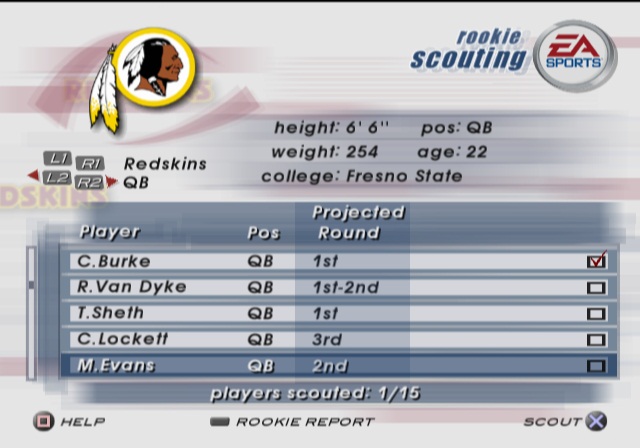
While the aforementioned features appealed to our need for greater control, modifications to the Franchise mode reflected the stark awareness of an unpredictable world. The draft was now coupled with scouting reports that offered only a window into the potential of upcoming rookies. Player progression was now dynamic, rather than dictated by a single “potential” rating assigned to each player upon creation. This allowed for draft steals and busts, and acknowledged that if it was impossible to predict that foreign nationals could take control of multiple jetliners and steer them into otherwise well-guarded buildings, it was unrealistic to be able to predict the development of virtual footballers.

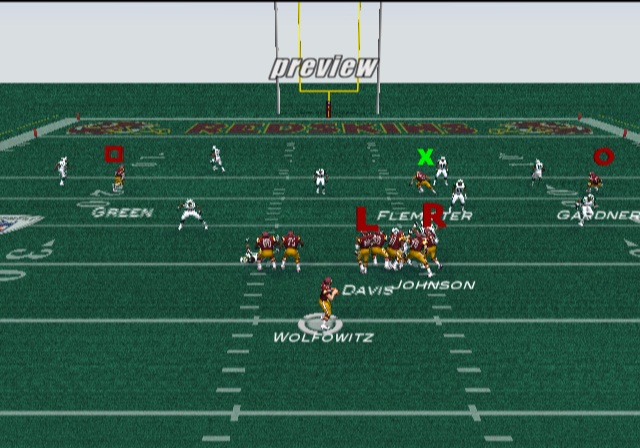
Ah yes I will draft this 6'6" quarterback in the first round that is exactly what I will do.

Ah yes I will draft this 6’6″ quarterback in the first round that is exactly what I will do.

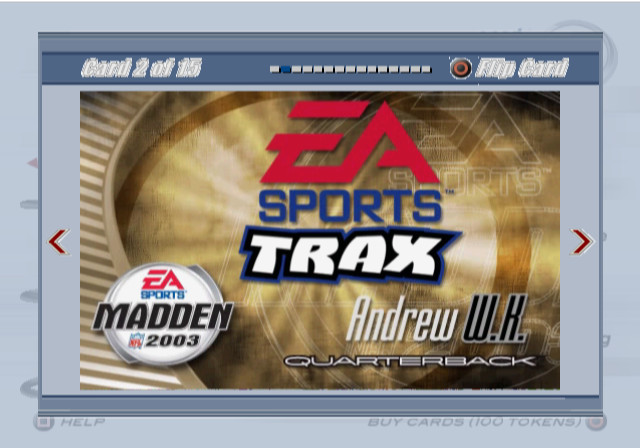
With Madden 2003, EA introduced a new feature that would eventually be used throughout its sports and racing titles “EA Trax”. This was just a fancy name for a partnership with a number of music labels, allowing EA to use licensed songs in its products, and labels to advertise bands in popular EA games. Generally, EA Trax were a mixture of well known artists with up and coming bands sprinkled in. In Madden 2003, popular mainstream artist Bon Jovi headlined, but the game was used to promote a number of bands that (at least in 2002) were less known, including the Nappy Roots and OK Go. But anyone who played a lot of Madden 2003 probably remembers only one song:

Madden cards were the gamification of games before Steam trading cards were even a twisted seed in Gabe Newell's mind.

Madden cards were the gamification of games before Steam trading cards were even a twisted seed in Gabe Newell’s mind.

The immaculate blond coif of Jon Bon Jovi aside, the real coup of EA Trax was Andrew W.K.’s 2001 hit “Party Hard.” It was the first song that played every time the game booted up, and set a frenetic pace for everything that would follow, even if it was often the somewhat dull task of roster management.

Now, I could write an entire blog post about Andrew W.K., who is a classically trained pianist, new age hippy, and the son of the law professor who wrote my Property casebook but made his name playing head-banging hard rock anthems. Everything about him, from the calculated formulaic nature of all his songs to the bizarre hoax/controversy claiming he was an actor playing a part, makes Andrew W.K.’s career almost feel like a satirical performance art piece. Some people pore over the 9/11 Commission report and say that there is a cover up because jet fuel can’t melt steel girders. I look at Andrew W.K. and assume something is wrong because no one man could ever party that hard.

If you examine the pixels, it is clear that one of these Cheetos is actually the wreckage of a cruise missile.

If you examine the pixels, it is clear that one of these Cheetos is actually the wreckage of a cruise missile.

The biggest change to Madden, however was online play.  For the first time in the history of the franchise, players could hook up their consoles to the internet and challenge each other.  This was provided, of course, that they were some of the few who owned the PS2 network adapter.  This wasn’t a surprising development.  While the internet and internet gaming had been around for years, it was only around this time that broadband connections were becoming available and affordable to most Americans.  The adoption of internet play by Madden, the most mainstream of mainstream video games (despite its complexity) was indicative of the penetration of the internet into our everyday lives.

Whatever you do, do not image search "internet penetration" on the internet.

Whatever you do, do not image search “internet penetration” on the internet.

The internet as we know it–the fast, mostly reliable internet that provides us with streaming video and games that aren’t lagged to hell and web-based e-mail and bronies–is largely a product of the post-9/11 world. Its development from the days of AOL free trial CDs to device the size of a pack of playing cards streaming video through the air coincided with the rise of an era of paranoia, war, and fear. This is something that most people had forgotten until recently, and we were only reminded by the revelations about the extent to which the government was monitoring internet communications.

Now, of course the NSA isn’t watching you play Madden, and if they are, there certainly aren’t several agents laughing about your decision to go with that slant route on third down, falling just short of the marker even though you had to squeeze the pass into tight coverage. That’s absurd. They are watching people play FIFA because under the minimization procedures approved by the Court, enthusiasm for soccer is sufficient to determine that a communication is not based in the United States.

pw2

While it’s easy to write off Madden as a piece of cultural detritus consumed only by the popped-collar bottom feeders between downing bottles of Smirnoff Ice “ironically”, there is always something to learn about society from examining its most popular entertainment products. Whether it is EA Tiburon using the QB vision cone in 06 to comment on how media focuses the attention of the masses away from class conflict, or the glitchy, sensitive Infinity Engine in 13 and now 25 serving as an artistic representation of the damage caused to players’ bodies by the everyday contact of football, Madden can teach us about the the way we perceive the world.

Experiences in Old Sports Games: Pete Sampras Tennis

The George Foreman Grill launched in the year 1994, when I was only nine years old.  We had one early on in my home, and then when I moved out to go to college it was relatively quick purchase.  As such, I think it’s fair to say that I’ve either owned a George Foreman Grill, or lived in home containing a George Foreman Grill, for at least half of my life.

I’ve used the George Foreman Grill–either the one we had growing up or the one I purchased later on–maybe twenty times.  On its face, the George Foreman Grill seems like  fantastic idea.  A simple way to cook lean meat dishes?  Easy toasted sandwiches?  Sign me up.  But the reality of the product isn’t nearly as glamorous as its promise.  Burn anything and it’s a hassle to clean.  There’s no way to adjust the temperature, so it’s a crapshoot whether you can fully cook anything thick before the outside sears onto the “non-stick” surface. And that fat that’s draining out of your chicken or hamburger?  Turns out that wasn’t all that bad for you anyway.

I don’t know why I bought my own George Foreman Grill.  At that point, I should have known that it wasn’t really my thing.   I was aware that I preferred a cast iron skillet.  So why did I get one?  It was probably hope.  Hope, and this man’s smiling face:

Note how one hand is touching the hot surface of the grill, and yet the other hand is wearing a protective mitt.

Note how one hand is almost touching the hot surface of the grill, and yet the other hand is wearing a protective mitt.

Celebrity endorsement is a transformative act in which the celebrity allows a product to take on some of the qualities generally ascribed to the celebrity.  When I use the word “celebrity”, I do not mean it to refer to the person George Foreman, but the symbol George Foreman.  The nature of fame and exposure is that certain facets of personality and identity are either expressed, suppressed, or made up out of whole cloth.  George Foreman the celebrity has qualities that are not wholly representative of George Foreman the person.  In 1994, he symbolized toughness, longevity, and athleticism.  Now, after almost two decades of peddling grills, he is probably better known for his salesmanship.

When George Foreman allowed his name to be put on the grill, he loaned the grill some of his meaning as a celebrity.   Subconsciously, people associated it with the same significance they associated with George Foreman.  In turn, competitors have sought out similar endorsements over the years, leading to the Hulk Hogan Ultimate Grill, the Evander Holyfield Real Deal Grill, and the Paul Wall Fast Life Grill.

WITH THIS PATENTED TECHNOLOGY, THE FAT AND GREASE JUST DRAINS INTO MY MOUTH.

WITH THIS PATENTED TECHNOLOGY, THE FAT AND GREASE JUST DRAINS INTO MY MOUTH.

For a long time, sports video games traded on the power of the celebrity endorsement.  Of course, they didn’t just use any celebrities. They used players or managers from their respective sports.  There are tons of examples: Ken Griffey Jr. presents Major League Baseball, named after the Seattle CF phenom in 1994.  Wayne Gretzky 3d Hockey, the arcade (and later N64) game that endorsed by the Great One.  Nester’s Funky Bowling, named after Nestor Carbonell from LOST, for the Virtual Boy.

You don’t see it so much these days, with almost all sports titles being as minimalist as to only include the league and the year.  The exception, of course, is the grandaddy of them all, Madden Football, but for a long time every other sports title bore the name of a famous figure.  This brings us to today’s old sports game:

Momma Sampras warned you your face would stick like that.

Momma Sampras warned you your face would stick like that.

Tennis has appeared in some form on just about every video game system known to man and also the Ouya. It holds a special place in the history of video games. Everyone knows about Pong, which first popularized the coin-op arcade machine and the home video console, even if it was predated by Computer Space and the Magnavox Odyssey on both fronts.  But the sport of tennis was also the inspiration for Tennis For Two, a 1958 oscilloscope device that has at least a tenuous claim to be the first video game.  If nothing else, Tennis for Two is easily the first computer game to simulate physics, specifically gravity. Unfortunately, no one could figure out how to display the Havok logo on startup of an oscilloscope, so Tennis for Two never saw the light of day outside of a laboratory.

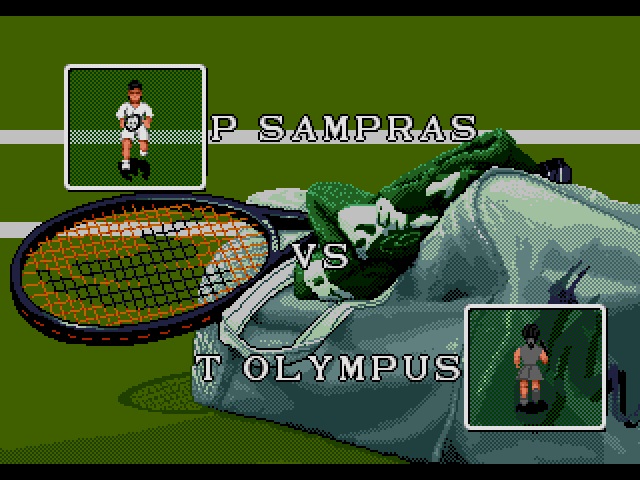
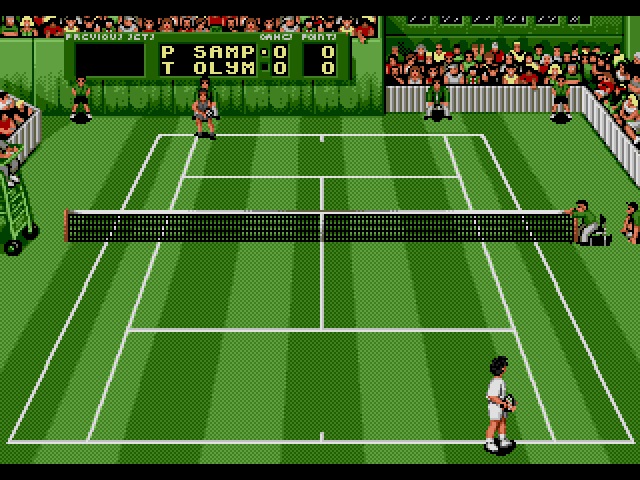
Pete Sampras Tennis came out for the Mega Drive and Genesis in 1994 which was the same year as the George Foreman grill, and it was approximately just as useful for cooking a chicken breast evenly all the way through. Unlike the grill, which was specially formulated to appeal to the twin American desires of eating more meat and buying things from television that enable the eating of more meat, Pete Sampras Tennis was only given a limited release in the United States. Its sequels, on the Mega drive and PlayStation, didn’t even make it across the Atlantic .  It was developed by Codemastersa U.K. development house and publisher which has been around forever.

Did you know that Pete Sampras Tennis was the inspiration for the God of War series?

Did you know that Pete Sampras Tennis was the inspiration for the God of War series?

Codemasters has some decent successes in their length history-specifically the Game Genie and the Dirt series-but they could cure cancer tomorrow and to me they’d still be the monsters who allowed Leisure Suit Larry: Box Office Bust to exist. Many Codemasters games never made it to the United States and stayed in Europe forever. Sometimes this was a good thing. Be sure to call up your grandparents and thank them for their sacrifices, because without them we’d all be speaking German and waxing nostalgic about Dizzy Kart for the ZX 64.

Pete Sampras Tennis doesn’t necessarily take any risks, and the AI is terrible, but it generally succeeds in representing the game about as well as any other title at the time. The control pad moves your player around the screen, and the three Mega Drive/Genesis buttons each give different strengths for a swing, letting you choose to lob the ball, shoot it, or try and nail it with some topspin.  Basic stuff, but a step above, say, Jimmy Connors Tennis for the NES, released the year before.

F U

Several characters are available, both male and female, but the only real tennis player featured is, naturally, Pete Sampras.  What, did you expect he would let Andre Agassi into his game?  It’s a well known fact that Pete Sampras and Andre Agassi had a long-standing rivalry.  In 1994, it was so bad that Pete Sampras visited the set of the children’s film Andre during post-production and literally murdered half of the crew before he discovered that it was about a friendly sea lion and not Agassi.  The only reason that Sampras didn’t go to prison was because the judge’s kids made him see Andre in the theaters and the killings were dismissed as justifiable.

Pete Sampras is an American.  This is a game developed in Europe, for a European audience, and yet it trades on the celebrity of a man halfway around the world.  It–or its Europe only sequels–could have been Stefan Edberg Tennis or Boris Becker Tennis. Yet an American was chosen, despite the target demographic being almost entirely from other countries. The simple reason is that Sampras transcended nationality. He was the best player of his time, and 1994 was hardly a time of great anti-American animosity.

This fundamentally conservative game portrays most of the USA with lady liberty, a symbol of freedom, but assigns to California a picture of a government-funded bridge.

This fundamentally conservative game portrays most of the USA with lady liberty, a symbol of freedom, but assigns to California a picture of a government-funded bridge.

But why wasn’t Pete Sampras Tennis, a game featuring one of the biggest American athletes in the world, successful in the United States of America? Codemasters making poor decisions aside, tennis simply didn’t rate in the USA during the mid-90s. Americans simply didn’t care about the game, and generally haven’t with the exception of the careers of John McEnroe during the 80s and the Williams sisters in the late 90s/early 00s.

Why is this? Ultimately, tennis is perceived as a high class sport. Matches are silent, players are expected to act respectfully, everyone is wearing white, and no one would dare sew a Pennzoil patch onto their jacket. It’s generally accepted that talent and hard work alone are insufficient to succeed, and that the teachings of a highly paid professional are required to even be a decent amateur player. While this is true of many sports, Americans hate this shit. They want to believe the story of the poor kid from Montana who fine-tuned his baseball swing chopping wood or the quarterback who kept his arm fresh chucking toilet paper roles as a stocker at the grocery store.

Americans hate to be reminded that class exists. A key part of the American national mythology is that everyone is born equal and has the same opportunities to succeed. It’s bullshit, and all it takes to know that it’s bullshit is the the fact that George W. Bush of all people was elected to the highest office in the country on two separate occasions, but all the popular spectator sports in the United States feed into this mythology.

Pete Sampras approved every single pixel in this representation of his hair.

Pete Sampras approved every single pixel in this representation of his hair.

Not tennis. Professional tennis embraces its status as a privileged sport for privileged people. It has adopted the trappings of an aristocratic duel, rather than the brawls and street fights that Americans prefer to see. See my last post on hockey, and try to imagine how Tony Twist would fare on the courts of Wimbledon. Americans don’t want to see that shit. They don’t want to watch a man named Federer (only two letters away from Federal, so he’s probably trying to take your guns away) who speaks multiple languages fluently, and was coached at age 10 by a man named Adolf at The Old Boys Tennis Club in Switzerland.

Ultimately, unlike George Foreman, Pete Sampras wasn’t the kind of celebrity that would be embraced by Americans enough to lead to a successful product. Sampras was, like Federer, a symbol of privilege. He represented country club training and the luck of a prodigy. He wasn’t like Foreman, a poor kid from Houston who dropped out of school and made it big throwing punches then became a Baptist minister. Sampras was known for taking up tennis before he could read. That’s genetics. Foreman was known for battling the odds to make a comeback at age 38. That’s hard work, and Americans love hard work up until the point when it tries to unionize.

It’s a shame, because if Codemasters does anything right, its simulation/arcade hybrid sports titles. Their F1 series is quite beloved, though F1 is ignored in America for largely the exact same reasons as tennis [citation: Talladega Nights: The Ballad of Ricky Bobby. Dir. Adam McKay. Perf. Will Ferrell, Sacha Baron Cohen. Sony Pictures. 2006. Film.] They hitched their hopes of American success to the wrong American. If only they’d found the right celebrity endorsement, maybe we’d still be buying Codemasters tennis games.

Next time, think about who Americans admires. I suggest going out of the box and shocking the states with the one thing they can’t get enough of: those guys on Duck Dynasty.

Experiences in Old Sports Games: Blades of Steel

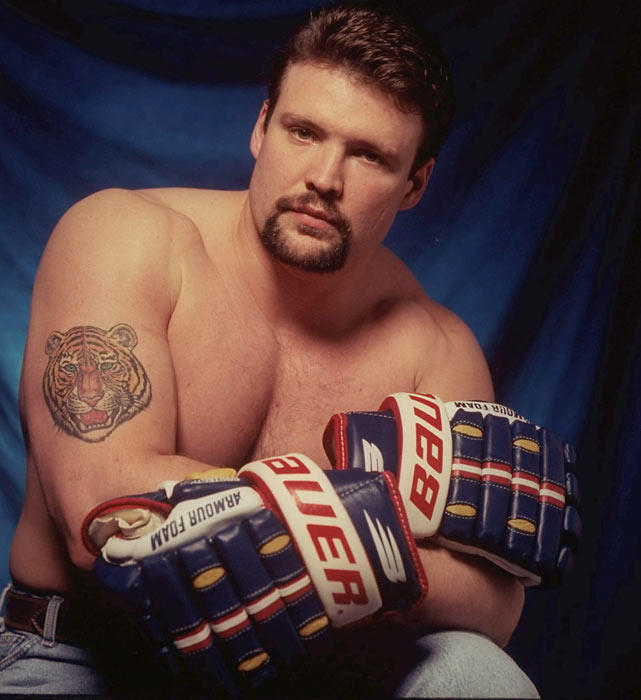
From 1994 to 1999, the St. Louis Blues employed a man named Anthony Twist for the purpose, at least in theory, of playing hockey as a winger. Tony Twist, as he was known to friends, fans, and foes, was not a particularly skilled hockey player. He was better than me, and probably better than most people, but compared to other people who were similarly employed for the purpose of playing hockey, he was pretty terrible. That was because his job wasn’t really to play hockey. Hockey was a front, like a New Jersey waste management company or the NBA, for more nefarious business.

This man is named Tony and he has a tattoo of a tiger.  Surely this is a man with good judgment.

This man is named Tony and he has a tattoo of a tiger. Surely this is a man with good judgment.

Tony Twist was an enforcer. His job wasn’t puck control, or scoring goals, or blocking the net. His job was to beat the living shit out of someone on the other team. Everyone knew it. During games, the crowd would go wild when Twist took the ice because they knew he was out there to throw down his gloves and throw up his fists. And he wasn’t alone. Almost every team had an enforcer like Twist, and they usually ended up fighting each other

To people that know hockey, this is all perfectly normal. To those that don’t, I probably sound like I’m making all of this up. I’m not. Fighting in hockey is accepted as a part of the sport in North America. It is like the seventh inning stretch in baseball, except that it’s actually appropriate to sing “God Bless America” during a hockey fight. 

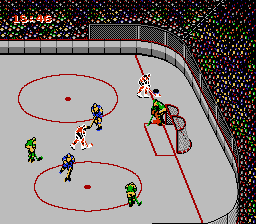
This brings me to the topic of this week’s games, Blades of Steel for the NES and its erstwhile descendant, Blades of Steel ’99 for the N64.

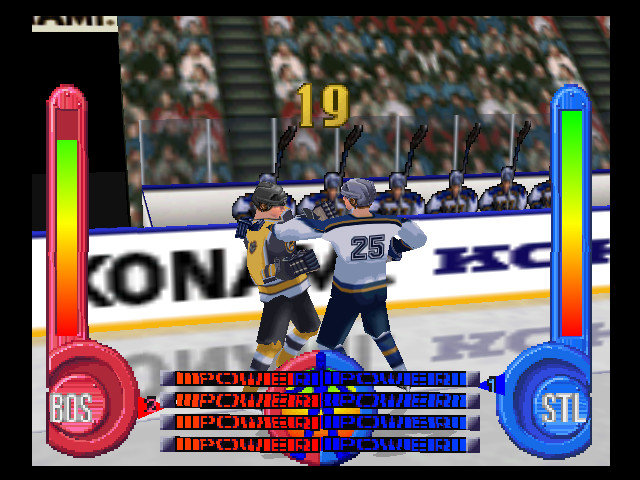
I think these two players are about to go SSJ3 in order to defeat the Edmunton goalie, Majin Buu.

I think these two players are about to go SSJ3 in order to defeat the Edmunton goalie, Majin Buu.

The very name Blades of Steel invokes violence. Back in the dark days of the late 80s and early 90s, I can picture a kid going to the local video rental store and leafing through the NES games. The box art is missing from most, and an original manual is even harder to find.  She leafs through the generic clear plastic cases until she sees a title that intrigues her: Blades of Steel. Now, this kid loved the original Ninja Gaiden for the NES just like any sane person, so she gets excited. Surely this is another ninja game, or maybe a samurai brawler. At least she can be sure it contains swords and action, right?  She rents the game, runs home, and finds out that she was wrong.  It’s a fucking hockey game. The weekend is either ruined, or another poor soul is halfway on her way to becoming a hockey fan.

This title isn’t accidental. It is meant to invoke the violence of hockey, which ran rampant when it was released. It was intended to telegraph the fact that Blades of Steel was the first hockey game to include fighting as a game play mechanic. And this wasn’t just a gimmick.  Ask anyone what they remember about Blades of Steel. Most people will give you a strange look, and perhaps try to figure out if you are lost or somehow mentally disabled, because you are asking them about a goddamn NES game, you weirdo.  But pester them long enough to convince them to pity you and they will tell you that the most memorable part of the game was the fighting.

Finally Canada gets what has been coming to it ever since the seventy-two resolutions.

Finally Canada gets what has been coming to it ever since the Seventy Two Resolutions.

Despite its name, Blades of Steel is not Base Wars or Mutant League or even Blitz. It isn’t licensed, but otherwise it holds itself out as an accurate representation of North American ice hockey.  Yet straight-up getting into a fight–which is against the rules–is a game play mechanic that can help you win. Only in hockey.

Unlike the massive annualized franchises of the day, Blades of Steel never received a proper sequel, but its impact on the landscape of hockey games was felt harder than the impact of Colton Orr’s fists on Todd Fedrouk’s already fractured skull. NHL Hockey, the predecessor to EA Sports’ legendary NHL series, released for the Mega Drive two and a half years later and featured a fighting system. It was removed for NHL 94 and 95, but returned in 96. From then on out, it was a focal point of upgrades to the game, and now uses a modified version of EA’s Fight Night engine. The NHL 2k series always had fighting, and the short lived Wayne Gretzky 3d was rumored to have Mortal Kombat-style fatalities (it didn’t).

FINISH HIM!!

FINISH HIM!!

Konami didn’t revisit the Blades of Steel name until a decade later, releasing the following for the Nintendo 64:

Blades of Steel 99  was a bad game.  There’s no getting around this.  It played terribly, the graphics were muddy, and just…  Everything that was wrong with gaming in the late 90s was distilled down into a toxic sludge, then poured into this game.  Clumsy models, awkward colored lighting, terrible rock “music”.  Just look at that video above.  My god.  It’s like Trent from MTV’s Daria moved to Canada and suffered a grand mal seizure.

Unlike the first Blades of Steel, which was released in the early days of sports games when licenses were hard to come by, Blades of Steel 99 features full NHL and NHLPA licenses.  This means that you can play as awful, blocky representations of all your favorite players from your favorite team, with correctly colored uniforms and logos that looked accurate if you squint and tilt your head.

This is actually a technically amazing feat, as there are only five polygons on screen.

This is actually a technically amazing feat, as there are only five polygons on screen.

Being as this game was released in 1999, and featured the rosters of the 98-99 season, This means that my favorite enforcer is right there on the St. Louis Blues roster, ready to smash faces into boards, then smash fists into faces, then probably smash old beer cans into his fists to toughen them up, because he’s crazy and crazy people do shit like that.

No one at Konami must have watched the St. Louis Blues because that "fight" rating is WAY too low.

No one at Konami must have watched the St. Louis Blues because that “fight” rating is WAY too low.

Even though Sir Anthony of Twist’s renowned pugilistic skills are poorly represented in Blades of Steel 99, fighting is still part of the game.  As seen above, it’s even one of the six skills players are graded on.  This is no surprise, as hockey games–and especially the original Blades of Steel–were known for their brawling as much as their hockey.

But why? In almost any other sport, the fight is forbidden. There are occasional scraps in baseball, but they are few and far between. Football, which might as well be a heaping serving of violence placed into a spoon and heated into liquid for the American public to shoot into their veins, strictly forbids fighting.  More to the point, the NFL has been incredibly strict as to how football is portrayed in video games. Midway had to repeatedly tone down the late hits and even celebrations in NFL Blitz to keep its license, and only went full crazy with Blitz: The League after losing it.  Why is hockey so different, to the point where the NHL is perfectly fine with playable brawls, “fight” ratings, and even the incorporation of a boxing game engine later EA NHL titles?

POWER POWER POWER

POWER POWER POWER

To understand the meaning of hockey fights, we have to understand desire.  In Violence and the Sacred, philosopher René Girard explains that desire is mimetic.  Now, if you’re like me, when you see the word “mimetic” you assume that it has something to do with treasure chests that sprout teeth and attack when you get near them.  Fortunately, that’s a useful framework to discuss Girard’s ideas.  When we desire something–whether it is a physical object like the copy of Saints Row IV sitting in a warehouse until Tuesday or an abstract concept like love or acceptance–our desire is not innate.  Rather, it is learned.  That is to say that when you approach the treasure chest, it is because you have learned that a treasure chest symbolizes something to be sought and desired, rather than feared.  This is why it is so surprising when it suddenly attacks you.

Girard posits that we don’t learn to desire the treasure chest from experience (at least not at first) but through imitation.  We see that other people seek out treasure chests, and we learn that treasure chests are good and that we will be happy and that, most importantly, those treasure chests will not suddenly attack us.  Unfortunately, this leads us to desire things that other people already want, because we are imitating those people, and puts us in conflict with them.  Girard loved the Oedipus complex because it could be read as an allegory of this process.  Also René Girard, like most French philosophers, is really kinky.

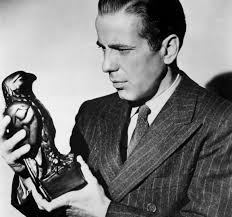
Holy shit, this bird statue actually represents MY MOTHER

Holy shit, this bird statue actually represents MY MOTHER

Hockey is all about the puck.  If your team has the puck, you are on top of the world.  You’re in position to get a goal.  If the other team has the puck, well, you better do everything short of killing your father and sleeping with your mother to get a hold of it.  In Hockey, the puck is the object of desire.  But that puts players in conflict with players on the other team and conflict leads to violence.  This is the novelistic truth of hockey.

Now, of course, you’re asking how this differs from any other sport.  Plenty of sports have something like the hockey puck–a Desired Object–over which the teams struggle to maintain control.  Soccer is damn near hockey with a large, kickable ball and you don’t have boxing matches break out in every other game of FIFA.  We’re still stuck with the same damn question: why is hockey different?

There are a couple ways in which hockey differs from every other major sport that involves chasing a Desired Object around the field of play.  First, hockey is played on ice with skates–blades of steel–attached to the players’ feet. Second, everyone has a giant goddamn stick.  Most hockey sticks are about as tall as I am, which means that players are armed with a dangerous weapon should they want to use it.

Two minute penalty for attempting fellatio on a member of the opposing team.

Two minute penalty for attempting fellatio on a member of the opposing team.

Returning to Violence and the Sacred, Girard hypothesizes that as the rivalry over a desired object increases, eventually the object actually drops from view.  The rivalry becomes more important than the object, leading to violence.  Now, instead of imitating desire of the object, people imitate the desire for violence.  This can lead to a terrible downward spiral in which everyone dies and no one gets the object, so basically the end of every dark heist film ever.

Fortunately, or unfortunately depending on who you are in this process, there is a braking mechanism to prevent this.  Imitating desire for conflict rather than the desire for an object eventually leads people to coalesce and fight against a single enemy.  This enemy, or victim, or scapegoat depending on which work of Girard’s you are reading, is then destroyed and peace returns to humanity.  It’s kind of fucked up for the scapegoat, but humanity gets to move on through the cycle.  New desires are inflamed.  Violence rises again, and a new scapegoat is created.

Girard believed that this cycle was the origin of ritualistic sacrifice.  From the Greeks to the Aztecs to the allegory of Christ, religion and culture throughout human history is full of the idea that one person can take the weight of humanity’s horrible tendencies upon their back, and appease the Gods with their sacrifice.  Believe it or not, hockey fights can work the same way.

Hockey enforcers will tell you that they protect the team’s star players.  By engaging in fights, and taking the hits and the penalties, they prevent violence from being enacted upon their teammates.  Normally, if you put a bunch of men in their 20s and 30s in a highly competitive situation, then give them sticks, people are going to get hurt.  Enforcers act as a braking mechanism on this violence.  Hockey fights between these enforcers are the kind of ritual sacrifices described by Girard. Enforcers put on their own version of a passion play. Their job is to fight.  Their job is to get hurt.  And then their job is to sit in the penalty booth so that everyone else can play the game.

I wish I was color blind.

I wish I was color blind.

In adding fights to video game hockey, Blades of Steel recognized the role of fights in North American ice hockey. It is ritual violence, meant to symbolize the open hostilities that the two teams have come to feel for one another. Unfortunately, unlike the surrogate rituals provided by religion, hockey fights are also real violence, and the enforcers who participate an end up hurt or worse. And violence that is meant to prevent greater injury ends up glorifying violence itself. No one gasped in horror every time Tony Twist took the ice, though that would be the proper response to the appearance of a man about to perform a brutal, bloody ritual to maintain the relative peace.

I wonder how many kids in St. Louis grew up wanting to be like Tony Twist, absorbing the mimetic desire for violence without the context. To a young boy, who doesn’t understand that beating up people and getting realistic tiger tattoos isn’t cool, Twist is a dangerous figure to imitate. Maybe this explains the popularity of UFC, which explains a rise in brain damage, which even further explains the existence of Smurfs 2. Or maybe we’re lucky, and they all played enough Blades of Steel to know that fighting doesn’t lead to success, it leads to a terrible future where everyone steals your ideas and you turn into a terrible Nintendo 64 game.

Experiences in Old Sports Games: RBI Baseball

We all know about the 1980s.  Even if we’re too young to remember them, there are countless Cracked and Buzzfeed lists flooding the periphery of our daily internet consumption to remind us of hair metal, Top Gun, and men wearing acid washed jeans.  Like every semi-recent era of human history throughout human history, the 1980s are simultaneously reviled and embraced throughout pop culture.

The first game I have chosen to examine for my ambitiously dumb project of reviewing old sports games is R.B.I. Baseball, released in early 1988 on the Nintendo Entertainment System. R.B.I. Baseball, which was essentially a re-worked and Americanized version of the Japanese Pro Yakyuu Family Stadium, was a revelation in baseball video games. It was the first console game to feature the names of real MLB players. And unlike the prior effort on the NES, titled simply Baseball, R.B.I. was actually playable and enjoyable. I don’t intend to focus on games as well-known as R.B.I. Baseball in the future, but I wanted to start with something familiar.

Just like we all know the 1980s, we have all heard or read Percy Bysshe Shelley’s 1818 sonnet “Ozymandias.” Perhaps it was forced upon you in high school English class, as your first introduction to romantic poetry beyond the creepy-in-retrospect couplet you passed to your freshman lab partner on the day you dissected a frog. Perhaps you clicked on the wrong link of the Watchmen wikia and accidentally read something that wasn’t illustrated. Or maybe you’re just really hyped about the last season of Breaking Bad.

“Ozymandias” tells of a fallen statue in a ruined land, erected by a tyrant who boasted that his material power would last forever. It didn’t, and the monument to his reign ended up as broken as his kingdom. Some believe that Ozymandias is based off of Ramesses II, who had no way of knowing any better, since he ruled a thousand years before the discovery of irony by Qin Shi Huang in 210 B.C.

While the kingdom of Ozymandias does not survive, the intent of the sculptor who created the statue lives on.  The tyrant is remembered by the artist who portrayed him, with “wrinkled lip, and sneer of cold command.”  What was commissioned as a monument was, in fact, a mockery of the tyrant.  He could not see it, because the flaws it portrayed were the truth.  Now, only the critique live on, while the statue has fallen to ruin along with the kingdom.

R.B.I. Baseball is, on the surface, a monument to the conservative movement that swept the United States in the 1980s.  But like the statute of Ozymandias, it speaks truth to power and reveals the flaws of an ideology that were beginning to emerge in the late years of the decade when the game was released.

The conservative victory in America during the 80s didn’t originate in America (or in the 80s, for that matter).  It was adapted from a successful product released overseas in the prior year.  Margaret Thatcher, who rose to power leading to her election to Prime Minister in 1979, was the Pro Yakyuu Family Stadium to the R.B.I. Baseball that was Ronald Reagan.  Reagan was elected in 1980, promising a new start for a country stuck in economic and geopolitical turmoil.  A former actor, Reagan was charismatic and charming.  He endeared himself to America, and in the process ushered in an era of deregulation, increased hostility to the Soviet Union, and the rollback of social programs that continues to this day.  He was known as The Gipper, probably because during his later years he was known to interject in cabinet meetings with a frantic yelp that sounded like “Gip!” to the untrained ear.

GIP GIP, MR. WEINBERGER

GIP GIP, MR. WEINBERGER

The dream of Reagan’s reforms can be seen at every level in R.B.I. Baseball, starting with the very circumstances of its release.  Reagan loved deregulation more than Jack Zduriencik loves baseball players who can nominally play a position but are probably career DHs.  Nintendo, however, was a different story.  Nintendo tightly regulated releases on its NES system.  Using a lockout chip, which required all NES games to go through an approval process it limited the number of games any publisher could release in a given year, and forced them into restrictive licenses.

Tengen, the manufacturer of R.B.I. Baseball, opted, Reagan-like, to pursue deregulation of the NES.  It acquiesced at first, licensing a number of games (including the first run of R.B.I. Baseball) through proper channels.  But once they had their hands on the NES lockout chip, they reverse engineered it and began releasing unlicensed games.  That’s why, if you owned a copy of R.B.I. Baseball, it probably looked like this:

It looks wrong. It's like walking in on your brother when he's nude and discovering that he is actually not a person but a well-coordinated pack of gray squirrels hiding in a trench coat.

It looks wrong. It’s like walking in on your brother when he’s nude and learning that he is actually not a person but a well-coordinated pack of gray squirrels hiding in a trench coat.

But the release history of R.B.I. Baseball wasn’t the only way in which the game reveled in the reforms of the Reagan era.  It strove to exemplify everything that the conservative movement achieved.  Baseball has always been a particularly individualistic sport–which is why player stats are so important.  But R.B.I. Baseball, like Ronald Reagan during his early years as a Cold War crusader, sought out all collectivism in baseball and stripped it from the batter vs. pitcher bones.

Fielding wasn’t rated, and was stripped down to a matter of only controlling the player closest to the ball.  It was by far the least important part of the game, which focused intently on the batter/pitcher matchup.  This was only exaggerated by the simplification of the pitching mechanics.  Since the NES controller had only two buttons–and one of them had to be used for pick-offs–the game “simulated” pitch movement by allowing the player to control the ball once it left the hand of the pitcher.

As such, it turned pitchers into ubermenschen, capable of abnormal and divine feats, violating the laws of physics.  It tore them down as human beings and recreated them as demigods with talents that could not be earned, only given from on high. As such, R.B.I. Baseball portrays baseball as less of a team sport and more of a clash of idols.

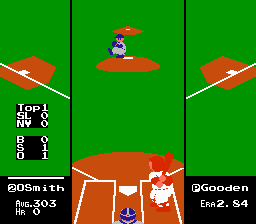
The pitcher looking away from the developing play represents the conservative fixation on restoring the glory of the past.

The pitcher looking away from the developing play represents the conservative fixation on restoring the glory of the past.

On top of this, R.B.I. Baseball doesn’t feature every team in the league. Only Boston, California, Detroit, Houston, New York (NL), St. Louis, Minnesota, and San Francisco are available, along with AL and NL All-Star teams. The eight teams represented in the game are the playoff teams from 1986-1987, an example of the social darwinism endemic to the title. Only winners are allowed to exist.  Everyone else was just the crud Michael Douglas scraped off the bottom of his shoe and fed to Charlie Sheen in my Wall Street follow-up that was apparently “too weird” for fanfiction.net.

Speaking of Wall Street, every single player in R.B.I. Baseball is white.  Color has been purged from the league.  Baseball is restored to an era in which anyone who didn’t pass a paper bag test was relegated to a different league that was much more awesome because it had Satchel Paige and Josh Gibson.  Sure, African-American players are in the game, but they’ve been whitewashed more than the cast of a high budget Hollywood adaptation.

Are you kidding me with this?

Are you kidding me with this?

So at this point, R.B.I. Baseball must seem like just another product of the conservative zeitgeist, like Red Dawn, Dallas, and the McRib.  As I alluded before, it’s not that simple.  As described in “Ozymandias” a work can both immortalize and critique the same subject matter.  R.B.I. Baseball was such a work.

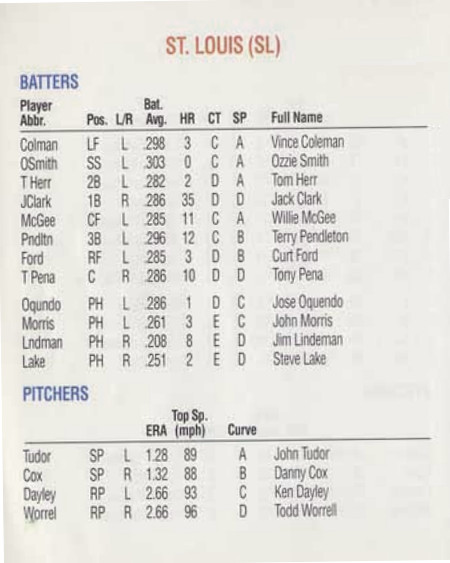
To understand how R.B.I. Baseball is subversive of its subject material, one must understand that R.B.I. is a remarkably prescient game.  It was released in 1988, at the tail end of an era of baseball in which speed and contact ruled the day, and yet HR was clearly the most important rating given to players within the game and listed in the manual.

Manualsample

Making switch hitters into lefties is unsurprising. The view that one must either fully support the RIght or be a “lefty” is a remnant of Benito Mussolini’s “O con noi o contro di noi.”

Power rules all.  Speed merely functions on the basepaths, and has little to do with success at the plate.  Contact rating, oddly enough, only modifies power in certain circumstances (See here for the best explanation I could find).

With this in mind, everything about R.B.I. Baseball falls into place.  It is not meant to be viewed by its contemporaries, but by those who come later and understand the chaos wrought by the values it satirically promotes.

RBIs are now known to be a terrible stat for measuring individual players.  They are incredibly team dependent, which runs counter to everything R.B.I. Baseball stands for.  RBIs are known to be basically useless, outside of a needless desire to conform to tradition.  The use of RBI in the title is a signpost to intelligent fans–remember, Bill James had been publishing his Baseball Abstract over ten years in 1988–that while the game might be fun, its philosophy is not to be taken seriously.

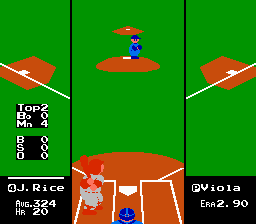
White Jim Rice is not amused by what I have to say about RBIs.

White Jim Rice is not amused by what I have to say about RBIs.

The strange Tengen cartridges pictured earlier are another example of how R.B.I. Baseball speaks out of both sides of its mouth.  On one hand, it is emblematic of the deregulation of the era.  Nintendo’s centralized licensing economy was bested by the invisible hand of the free market.  But the truth is far darker than such Randian fantasies.  Tengen agreed to work under Nintendo’s license, then used that opportunity to steal the design for the lock-out chip.  R.B.I., published both under the original licensing deal and later with Tengen’s illegitimate chip, stands for the proposition that deregulation is accomplished through theft.

Every element of R.B.I. Baseball is laced with such subtle irony.  The criteria for inclusion as a team–making the playoffs in 1986 or 1987–excludes the New York Yankees.  Can you imagine a game released today that didn’t feature the New York Yankees?  Granted, the 1980s were hardly the pinnacle of the  Yankee era, but they were still the team of Babe Ruth, Lou Gehrig, Yogi Berra, and so many championships that people occasionally had to take George Steinbrenner seriously.

As I noted before, the hitting ratings rely heavily on power, and far less on speed or contact.   In the years since the game’s release, and the advent of ROM hacking, people have broken open the RBI rating system to reveal the full picture of the ratings system.  All credit to the excellent Nightwulf R.B.I. Editor on this one:

Still a Cardinals fan, even if I'm blogging about "video" "games".

Still a Cardinals fan, even if I’m blogging about “video” “games”.

As you see, contact is represented by a two digit number in the late teens or early twenties.  Speed numbers are three digits, and there is only apparently a difference of 122-148 between Jack Clark, who once lost a foot race to the Stan Musial Statue in front of Busch, and Vince Coleman, who shot a man in Reno just to see if he could sprint to Vegas before he hit the ground.  Power, on the other hand, is rated in the 700s and 800s.  Baseball’s traditional scouting scale, from 20-80, is strange enough.  This is just madness.  Like the voodoo economics of the 80s, it seemed make everything work at the time but once we had some perspective, it was just throwing increasingly large numbers at a television screen and yelling loud enough that no one noticed when they didn’t add up.

R.B.I. Baseball is ultimately a paper tiger, and not the good kind like the life-sized cardboard cutout of Miguel Cabrera I use to scare away burglars and people who want to talk to me about advanced fielding statistics.  This is not a criticism of the game.  It was designed to be shallow, simple, and propped up by math that not only fails to check out but can’t even make it to the express lane without having a seizure.  It is a monument to the policies of its era, and yet also a scathing critique of their values.

My name is the Tax Reform Act of 1986, quoin of coins.
Look upon my works, ye Mighty, and default.

Take that, late stage capitalism.

Take that, late stage capitalism.

The Meaning of Madden

No one gives a shit about sports video games. Granted, they sell extremely well. The top franchises-Madden, FIFA, MLB The Show-all bring in plenty of money. Even games based on staged sports do well, as evidenced by the success of the yearly WWE entries and NBA 2K series.  But no one cares about sports video games. They occupy a space long-derided by serious sports fans and serious video game fans alike.

To the sports fan, a video game is a dilution of the experience. It may technically reproduce every aspect of a football or baseball game, but ultimately the simulation rings hollow. Besides, why don’t you just go outside and play the game for real, loser?

Alex Rodriguez

This image basically sums up baseball right now.

To the video game fan, sports games represent everything wrong with the medium.  They were the unoriginal, uninspired, mass-market, annualized plague on gaming even before the was a new Call of Duty and Assassin’s Creed on the shelf every November.  They are regurgitated every year, with little more than a roster update and a few new features to slap on the box. Besides, why don’t you just play a real game, like Shadow of the Colossus, mouthbreather?

So despite the fact that sports games are some of the most successful titles, and have kept Electronic Arts afloat after a coke-fueled bender in which the board decided to bet the future of the company on BioWare’s writing staff, they don’t get much attention from either of their core audiences.  No matter how entertaining or technically proficient, they are not placed alongside the classics in any evaluation of video games as a medium.  Instead, they live in the ghetto of casual gaming, in a sketchy-looking apartment complex just down the street from the Candy Crush Payday Loan.

But I care about sports games. Here’s why: sports games are some of the few video games not completely lost to the hyperreal.  If Umberto Eco ever sat down with a Xbox for a few hours, he’d probably update Faith in Fakes with a new final essay that just read “Fuck you, I’m out” and run screaming into the woods never to be seen again.

To become a Model Reader of this text we must first choose no items, Fox only, Final Destination.

To become a Model Reader of this text we must first choose no items, Fox only, Final Destination.

An example: the most recent two releases in the Medal of Honor series purported to be based upon the actual details of modern military operations. The questionable ethics of this aside, these games were nothing of the sort.  They were imitations with no original, copies of copies of copies, so removed from any representation of reality that they became grotesque parody. The new MoH aped almost everything from the Call of Duty single player campaigns, which as linear parades of over-the-top set pieces, do nothing but try and continually reproduce the Invasion of Normandy sequence from, naturally, Medal of Honor: Allied Assault.  As if this wasn’t bad enough, Allied Assault was just a pastiche of the battle as portrayed in the film Saving Private Ryan.

That is just an example, and while there is plenty more to say about how modern military shooters affect our view of war, that’s another story. This is about sports video games, which is clearly more important on both a personal and global scale.

Actual screenshot from The Walking Dead: Survival Instinct

Most video games are basically power fantasies, and sports games are no exception. Even if your arm topped out at 70 mph in high school, you can rack up strikeouts in MLB The Show. No matter your concussion history, you can make tackle after tackle in Madden 13. And while the most you accomplished in theatre was getting cast as the understudy of a chorus member in your high school musical, you can still lead your team to the Finals in NBA 2K13.

However, unlike most games, the fantasy that the sports game is attempting to provide is, theoretically, achievable in real life.  No one has killed a dragon, or saved a princess from a horde of sentient lizards and fungi, or single-handedly defeated Russia in a global war.  None of those things have ever happened.  Despite what the Heritage Foundation would like you to believe about Ronald Reagan, those lizards were not sentient.

But the events depicted in sports games are real.  Someone has thrown a touchdown pass, hit a home run, or done whatever it is that’s supposed to be cool in soccer. All those things are possible, but exceedingly difficult. The challenge in accomplishing those goals is in overcoming real world obstacles, and a big part of a sports video game is reproducing those obstacles.

And this is where sports games get interesting. Unlike Medal of Honor, in which developers are trying to make the experience more like Call of Duty’s take on two decades of the shooter genre, the creators of Madden are trying to make their games more reflective of reality. The closer the game gets to the actual sport, in theory, the more fans will enjoy it. But the physical inputs they are working with-the timing (sometimes intensity) of button presses and the movement of two control sticks-simply don’t have the margin for error associated with the corresponding physical activity triggered by those inputs. It’s way easier to press a button and aim a stick than it is to throw a ball. So they rely on tricks to increase the difficulty.

This is the reason MLB The Show added pressure sensitive throwing buttons to the fielding controls and pulse pitching. It’s the reason Madden implemented the ill-advised “vision cone” for quarterbacks. It’s why FIFA debuted a physics engine that led to some rather shocking images and video.

WHY DID WE PLAY AT BEING GODS?

WHY DID WE PLAY AT BEING GODS?

Not all of these developments work.  Some, like the vision cone, end up adding a layer of ugly, cumbersome game bullshit that put an additional barrier between the player and the desired results.  Some people still swear by the cone as a way to engage player skill and differentiate quarterbacks, but for the most part it was a failure.  Other developments, like the analog pitching in the otherwise properly-maligned MLB 2K series, have fared better.

This is also why sports games have ever more elaborate systems of evaluating players, and applying those evaluations to gameplay.  How do you give the user full control of the game, while also making it easier to play as Miguel Cabrera than it is to play as Rob Johnson?  This is a huge challenge that largely goes unappreciated.

Because the goal is to recreate reality, or at least provide the player with an experience that feels true to the sport, the decisions and care that go into a sports game is actually far more interesting than what goes into the next Halo or Elder Scrolls or whatever near-future third person shooter Ubisoft wants to make into the next big franchise this year.

So because I can’t think of any better ideas for this blog, I’m going to go back and play some old sports video games. And write about them.  It may be the dumbest idea ever, but at the very least it will set a nice baseline for other dumb ideas I might have in the future, like cat-sized Cardinals jerseys stitched with the name “Meowjica” or cheering for the St. Louis Rams.

MLB Expands “This Time It Counts” To Decide Future Of Egypt

In an effort to boost flagging interest in the All Star Game, Major League Baseball Commissioner Bud Selig has committed to using the midsummer classic to decide the fate of the Egyptian government.

“It’s the natural evolution of what we began ten years ago,” Selig said at the announcement. “Using the game to establish home field advantage in the World Series was enough to keep the public’s interest for a time, but after long discussions with the players union, I decided that the stakes had to be higher: the fate of a populous and historically significant sovereign nation.”

According to the amendment to the CBA, passed in the dead of the night at an emergency meeting on July 14, the outcome of tonight’s game will determine whether Egypt’s interim president, Hazem el-Beblawi, will remain at the head of the government or whether the ousted regime of Mohammed Morsi will be restored on the morning of the 17th.

Because the game will be hosted at Citi Field, a National League park, the NL was allowed to choose which side of the brutal conflict they would represent.

“It was a tough decision,” explained Yadier Molina, the leading vote-getter in the National League fan vote. “But we decided to go with el-Beblawi. It says something that, even after a revolution, a long time politician within the system was able to regain some control of the country. I think this speaks to both his vision for reform, and for stability.”

Tigers first baseman Miguel Cabrera, who will represent the American League, was pleased with how the decision shook out.  “I realize he abused his power, but Mohammed Morsi was the first democratically elected leader of the country. If we’re going to foster the spread of democracy across the middle east, we have to make the good with the bad, don’t we?”

The mechanics of how Major League Baseball intends to enforce the result of tonight’s game on the Egyptian government and people is still unclear. Some believe that Egypt will simply accept the results, as the outcome of the All Star Game is approximately as legitimate as any election that could take place in the near future. Others suggest that an elite squad of commandos led by St. Louis Cardinals pitcher Chris Carpenter will be involved.

Matt Carpenter Still Not Sick of Listening to Smash Mouth’s “All Star” On Repeat

Reports from within the St. Louis Cardinals clubhouse indicate that, despite multiple listening sessions throughout the last ten days, second baseman Matt Carpenter still can’t get enough of “All Star” by Smash Mouth.

The twenty seven year-old Carpenter heard the song for the first time in several years last Sunday, the day after he was announced as a reserve representative for the National League in the All-Star Game.

“I don’t know who put it on,” left fielder Matt Holliday said.  “Now, no one will admit to it.  I can tell you one thing, though: it was supposed to be ironic.  This wasn’t supposed to happen.  But Matt…  He just took it and ran with it.”

According to sources in the clubhouse at the time, Carpenter initially reacted with embarrassment.  He put his head down and went straight to his locker.  By the time Smash Mouth frontman Steve Harwell reached the end of the chorus, the Cardinals second baseman was swaying with the beat.

“It was like flipping a ****ing switch,” backup backup catcher Rob Johnson said.  “One minute, he’s acting like he’s not even there.  The next, he’s swinging his hips like he’s tryin’ to **** his locker.  Real enthusiastic like.  Powerful thrusts.”

When the song ended, Carpenter yelled for his teammates to play it again.  They humored him, but refused his demands for a three-peat.

“I thought he was joking,” Lance Lynn explained.  “I can barely listen to that song once without wanting to murder something.  I see blood.  I literally see blood, and then I get this ringing in my ears that I haven’t gotten since I gave up wearing the beard.”

When his teammates wouldn’t continue to play the song anymore, Matt Carpenter downloaded the 1999 pop hit to his iPhone.  Ever since, he has been coming into the clubhouse early and putting it on repeat over the speakers.

What started as a harmless joke has turned into a plague on the team, according to veterans and rookies alike.  “We got to the ballpark at the same time today,” Carlos Beltran muttered.  “I could have stopped him.  I just watched as he plugged in his phone.  I should have done something.  All I could do was watch.”

“Sounds about right,” added Adam Wainwright.

By conservative estimates, Carpenter has now listened to the song at least sixty times over the last two weeks.

“The ice we skate is getting pretty thin,” said Daniel Descalso, his eyes glassy with a thousand-yard stare typically seen only in war veterans and heroin junkies.  “The water’s getting warm so you might as well swim. My world’s on fire. How… about…yours…?”

While the entire team is thrilled with Carpenter’s all-star appearance, they are at a loss for what to do about his new found habit.  But his manager was quick to justify his behavior:

“When you think about it, it makes sense,” said Mike Matheny.  “He was 14 when that song came out.  Everything’s great when you’re 14.  I read the best part of the Bible when I was 14.  Do you want to hear it? It’s about Jesus.

When asked about his addiction to “All Star”, Matt Carpenter confirmed that the allegations were true, but tried to qualify them.

“Sure, I’ve been rocking the ‘All Star’, but I’ve been listening to a lot of Smash Mouth lately,” Carpenter said defensively.  “Anything wrong with that?  ‘Can’t Get Enough of You Baby’, ‘Waste’, ‘Walkin’ On the Sun’…  Really, all of Fush Yu Mang.  Ace stuff.”

“They’re a really underrated band,” he added.  “The Imagine Dragons of their time.”

Rob Johnson Fined For Describing His Promotion As “Double Bagging”

Mere hours after being promoted to back up St. Louis Cardinals backup catcher Tony Cruz, the team levied an undisclosed fine against veteran Rob Johnson for inappropriate remarks made to the press about his role on the Major League club.

When asked how much playing time he expected to get, and why he believed that the Cardinals thought they should carry three catchers on the roster, Johnson compared the added protection of an extra backstop to the practice of wearing two condoms at once, colloquially known as “double bagging.”

“Baseball is just like ****ing on Craigslist,” Johnson said just after exiting the plane from Memphis. “You don’t just plow some **** you never met without a condom, and you don’t go into a game without a second catcher.  If you’re not safe, some bad **** is gonna happen at home plate.  And what do you do when the only piece of *** who responded to your 2:30 casual encounters post looks extra nasty, but you gotta be at the park by 4:00? You don’t just kick her out of the back of your half-ton like you’re some kinda royalty. You go, but you go extra safe.  You wrap your **** up twice, just to be sure.  Looks to me like the NL Central just got extra nasty, so the Cards decided if they’re gonna **** it, they gotta double bag it.”

The team immediately issued a response to Johnson’s statement, noting that his remarks were “not in the spirit of the St. Louis Cardinals organization” and “an affront not only to fans, but to his teammates.”

Manager Mike Matheny echoed the team’s condemnation of the veteran catcher.  “I don’t know who he thinks he is,” Matheny said.  “I won’t have behavior like that in my clubhouse.  He should head right back to Memphis if he thinks that this team supports casual sex, profanity, or any form of birth control other than the will of the Lord.”

Jake Westbrook was similarly disgusted by his new teammate, noting that he would be a bad influence on all the young pitchers, especially Kevin Siegrist, who Westbrook believes has not reached puberty.

“Craigslist?  The only Craigslist I need is Allen Craig’s list,” said Cardinal first baseman Allen Craig, pulling out a well-worm piece of paper.  He then proceeded to muse wistfully about how he hadn’t “seen Amber since the night of the fire.”

Other teammates weren’t so quick to criticize.  “I think he sounds cool,” said reliever Seth Maness. “Like that guy from my high school who owned a van. Well, I think he went to my high school. I never saw him in classes. But he definitely had a van.”

When asked just how “nasty” he thought the NL Central race was getting, Johnson became agitated. “It’s like a warm can of Keystone Ice left open on the bar,” he told reporters.  “You don’t wanna  drink it because, ****, it’s not even full.  So you know someone else put their mouth on it. But the bartender is in the back taking a **** or something and you’re pretty sure you’ll smell any cigarette butts floatin’ on the top before you taste anything, so you risk it.

“That’s how nasty the NL Central is.”

Even outside of baseball, Johnson’s comments have caused controversy. The American Medical Association issued a statement, clarifying that the use of two condoms did not protect any better against pregnancy or sexually transmitted disease.  Noting that it is superfluous and reduces the overall effectiveness of the protective method, the AMA likened using multiple condoms to wasting a MLB roster spot on a third string catcher.